
Land and naval systems

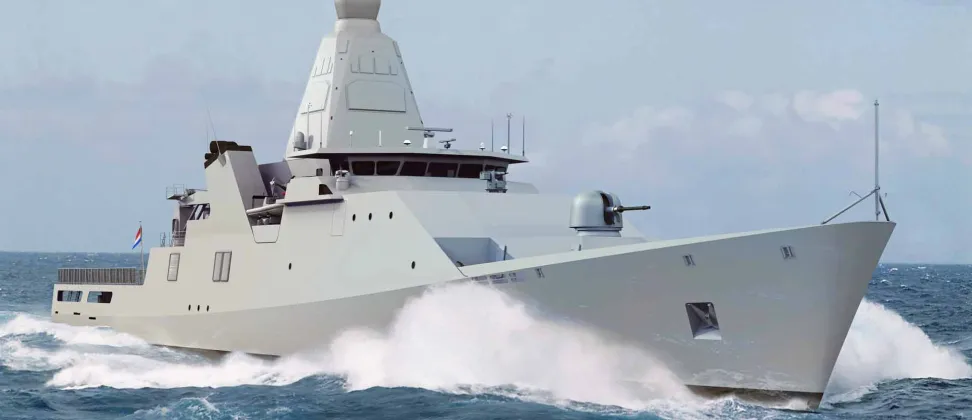
H. Franssen ©THALES

The “Land and Naval Systems” track is offered in the fourth and fifth semesters of the engineering program specializing in “Defense and Security.” It is held at ENSTA on the Brest campus.

Objective: to train engineers capable of designing and managing complex land and naval systems, ranging from land vehicles and drones to surface vessels and submarines, from the engineering of individual technological components to the design of system architectures, including the integration of defense systems onto platforms.

The program covers mechanical engineering, systems architecture, sustainability, information processing, and operational safety, integrating digital technologies and AI for threat detection and decision-making. The program prepares students to address the strategic and technological challenges of defense, security, and cutting-edge naval and land-based industries.

Key courses in Semester 4

  • Drones
  • Mechanical Engineering
  • Software and Computer Architectures
  • Structural Design in Naval and Land Environments (strength and durability, etc.)
  • Innovative Materials Subject to Severe Stresses (armor, thermal protection, etc.)
  • Image Processing

Main courses in Semester 5

  • Fundamentals of Land and Naval Systems
  • Land Systems Architecture: architecture and propulsion, vehicle dynamics, information and energy management
  • Naval Systems Architecture: surface vessels and submarines, stability and resistance to forward motion, sonar and acoustic detection
  • Land and naval drones: visual guidance, inertial control, robotic architecture
  • Systems engineering and operational safety: safety management and operational safety, weapons systems integration, multiphysics modeling of system architectures, surveillance and stealth, AI for decision-making.

Career prospects

By choosing this track, you will learn how to:

  • Design and operate the naval and land systems of the future, from drones to land vehicles, or surface and submarine vessels - with a comprehensive vision and using the skills acquired in mechanics and digital systems courses
  • Develop new architectures to optimize the autonomy, signature, response capability, and safety of these systems
  • Integrate defense and security programs in systems engineering, operational safety, and robotic architecture
  • Innovate in the naval, land, and advanced robotics industries, in propulsion, detection, automation, and applied AI, while adhering to prevailing standards and respecting the environment.
  • Hold strategic positions in government agencies, industrial groups, and their research centers, in support of the armed forces or in major civil society transportation and mobility projects.
© Arquus

Our latest news

Alumni | Training | Research
A thesis on characterizing the strength of a submerged textile structure

Noise pollution generated during the installation of offshore wind turbines is attracting increasing attention. An engineer trained at ENSTA in the specialty of “mechanical modeling of materials and structures,” Jeanne Cavoit wrote her thesis on the...

A thesis on characterizing the strength of a submerged textile structure

Noise pollution generated during the installation of offshore wind turbines is attracting increasing attention. An engineer trained at ENSTA in the specialty of “mechanical modeling of materials and structures,” Jeanne Cavoit wrote her thesis on the...

Alumni | Innovation
DeepFoil: Two ENSTA Graduates Are Reinventing Underwater Exploration

Graduates in architecture and naval hydrodynamics, Emillia Perdigon and Paul François have designed the DeepFoil, a flying underwater wing that allows for effortless movement underwater. Fueled by public enthusiasm and investor support, their project is...

DeepFoil: Two ENSTA Graduates Are Reinventing Underwater Exploration

Graduates in architecture and naval hydrodynamics, Emillia Perdigon and Paul François have designed the DeepFoil, a flying underwater wing that allows for effortless movement underwater. Fueled by public enthusiasm and investor support, their project is...

Innovation | Research
Gabriel Betton: Exploring the karst networks

Beneath our feet, in the darkness of the underground, a natural network spanning more than a third of France’s territory supplies drinking water to nearly 30 million people. But the quality of this vast freshwater reservoir is threatened by climate change...

Gabriel Betton: Exploring the karst networks

Beneath our feet, in the darkness of the underground, a natural network spanning more than a third of France’s territory supplies drinking water to nearly 30 million people. But the quality of this vast freshwater reservoir is threatened by climate change...