ENIT Offshore Campus (Tunis)

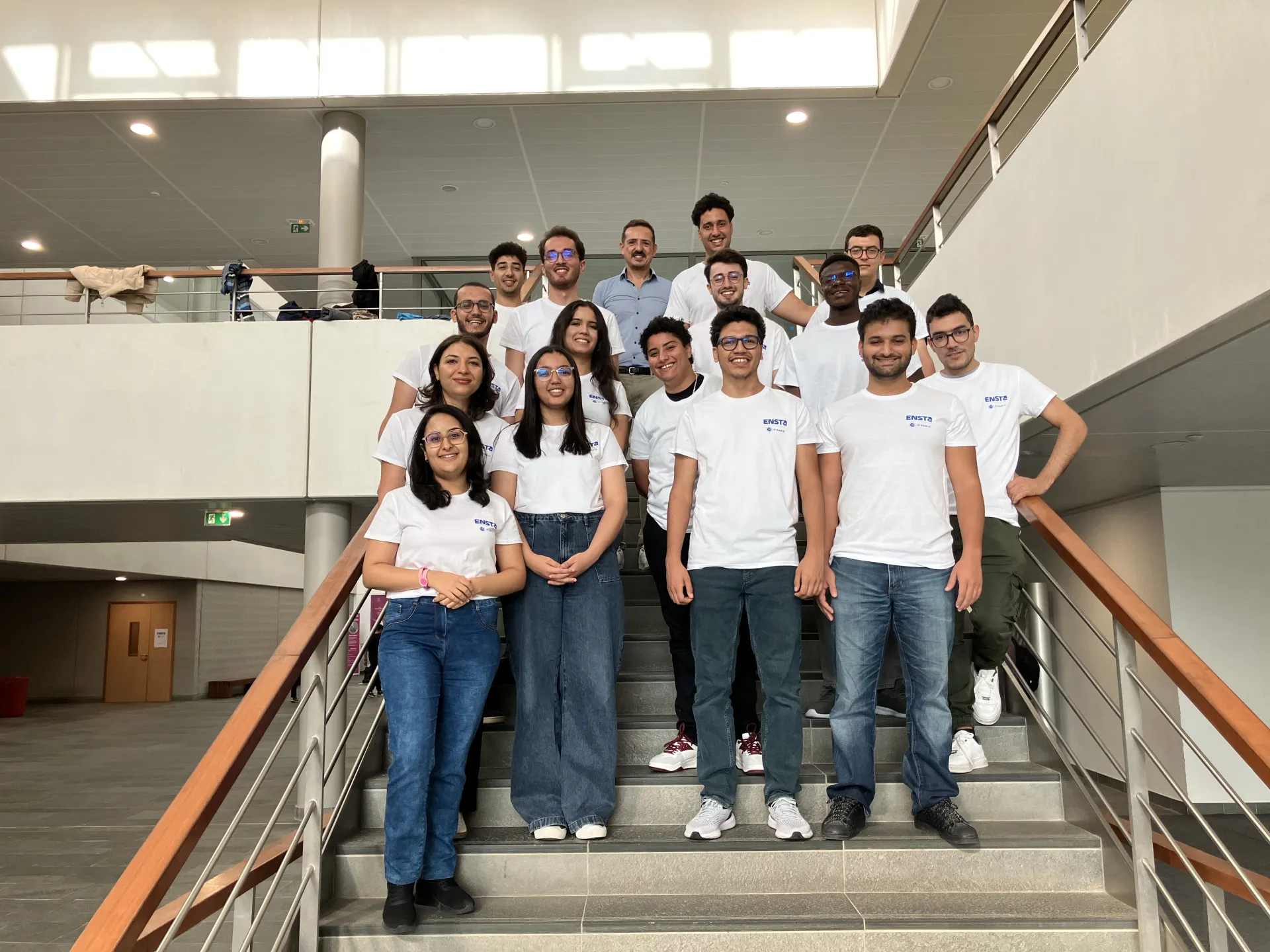
ENIT (National Engineering School of Tunis), one of Tunisia's top engineering schools, and ENSTA have shared a common ambition for over 15 years: to train highly skilled multidisciplinary engineers with an international outlook.

As part of an innovative partnership, the two schools have joined forces to develop a joint three-year program of excellence, delivered in Tunisia and France, leading to the award of an ENIT engineering degree and an ENSTA engineering degree. 
 

Who is the program for?

The program is aimed at students from scientific preparatory classes who have passed the Tunisian national entrance exam for engineering programs.

To enter this program, students must choose the ENIT-Advanced Techniques track at the end of the exam. Each year, the 18 places are filled by candidates ranked in the top 25 out of several thousand CPGE candidates in Tunisia.

Students who have entered other ENIT programs have the opportunity to join the ENIT-ENSTA program at the end of their first year of study, after selection based on academic criteria and motivation. 
 

What degrees does the program lead to?

At the end of the three-year program, students receive two degrees:

  • the ENIT Engineering Degree, Advanced Techniques program (or original program for students who entered in their second year after a first year at ENIT)
  • the ENSTA Engineering Degree 
     

How is the program organized?

The program lasts three years, during which time it is divided between Tunisia and France.

ENIT-TA students will arrive on the Paris-Saclay campus in September 2025.

Our latest news

Innovation | Research
Gabriel Betton: Exploring the karst networks

Beneath our feet, in the darkness of the underground, a natural network spanning more than a third of France’s territory supplies drinking water to nearly 30 million people. But the quality of this vast freshwater reservoir is threatened by climate change...

Gabriel Betton: Exploring the karst networks

Beneath our feet, in the darkness of the underground, a natural network spanning more than a third of France’s territory supplies drinking water to nearly 30 million people. But the quality of this vast freshwater reservoir is threatened by climate change...

Training | Innovation | Student Life
An ENSTA team wins the Energy4Climate 2026 Challenge

How can we best promote renewable energy production in France? That was the question posed by the 6th edition of the Energy4Climate – Agorize Challenge, to which a team of ENSTA students provided an answer that was both innovative and well-reasoned.

An ENSTA team wins the Energy4Climate 2026 Challenge

How can we best promote renewable energy production in France? That was the question posed by the 6th edition of the Energy4Climate – Agorize Challenge, to which a team of ENSTA students provided an answer that was both innovative and well-reasoned.

Innovation | Research
Digital Twins and Health: ENSTA Research on France Culture

Will it one day be possible to predict how our vital organs will develop and how they will respond to certain treatments, or even to surgery? These are the possibilities opened up by digital twins applied to healthcare, a field in which Alexandre Daby...

Digital Twins and Health: ENSTA Research on France Culture

Will it one day be possible to predict how our vital organs will develop and how they will respond to certain treatments, or even to surgery? These are the possibilities opened up by digital twins applied to healthcare, a field in which Alexandre Daby...