A thesis on characterizing the strength of a submerged textile structure

Alumni, Training, Research Marine Engineering

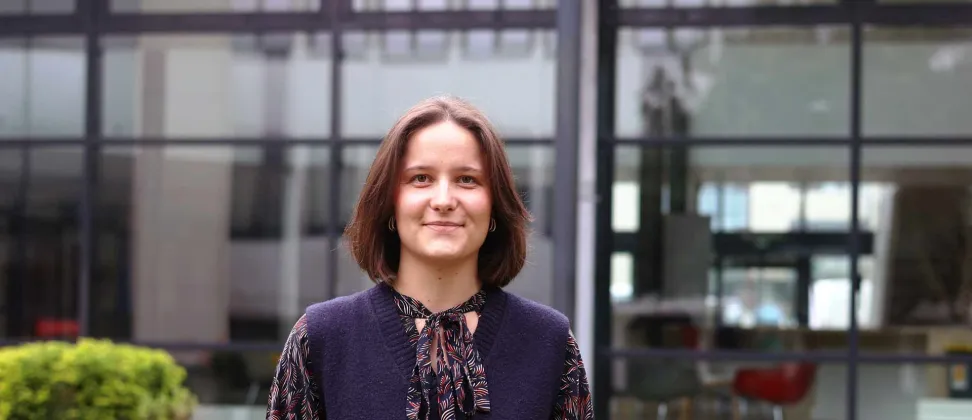
Noise pollution generated during the installation of offshore wind turbines is attracting increasing attention. An engineer trained at ENSTA in the specialty of “mechanical modeling of materials and structures,” Jeanne Cavoit wrote her thesis on the characterization of an innovative structure designed to limit noise propagation during offshore construction work. Her research, funded by the company Sealence, was co-supervised by the Institut de Recherche Dupuy de Lôme (IRDL) and Ifremer.

During her second-year internship as part of her general engineering program at ENSTA, Jeanne discovered the world of research and decided to pursue a thesis after completing her degree.

“I’ve always wanted to work in innovation; the thesis aligned with that goal, and I wanted to expand my knowledge to open up opportunities for R&D-focused roles later in my career.”

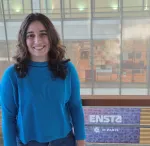
Jeanne Cavoit PhD Engineer

In her final year of studies, her professors offered her two thesis opportunities. The first was for the company Sealence, related to the Subsea Quieter project, and the second was in the field of aeronautics, focusing on composite materials.

“I chose the one with Sealence because it had a positive environmental impact and opened up a broad field of research where I would have the freedom to choose my own direction.”

The study of inflatable textile panels capable of reducing underwater noise

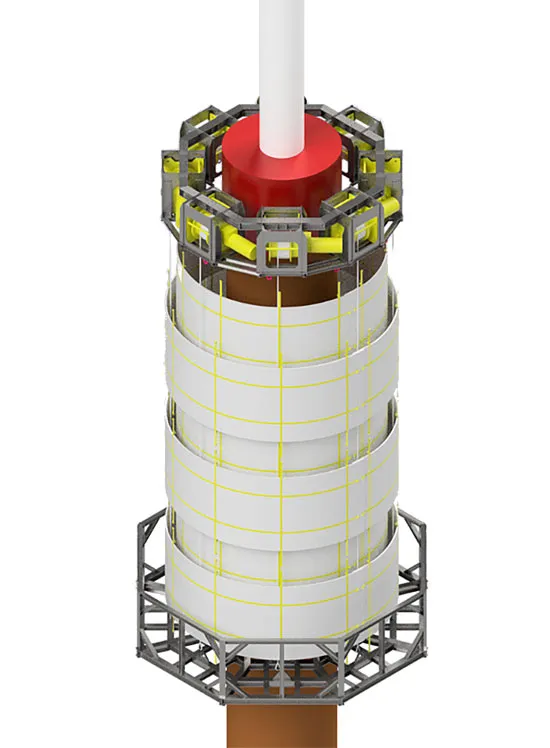
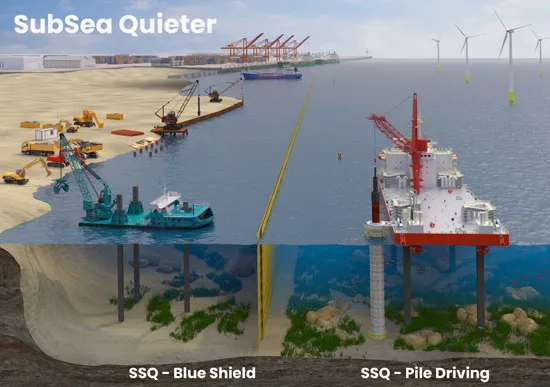
To limit the noise pollution affecting marine ecosystems generated during the installation of offshore wind turbines, the company Sealence (formerly Greenov) has designed a system of inflatable textile panels. Deployed around the pile during installation, they help contain the noise. The system, used successively on each pile, is deflated, folded, and then redeployed. To determine the structure’s lifespan, the company commissioned Jeanne Cavoit, as part of a CIFRE thesis with the IRDL and Ifremer, to conduct the mechanical characterization of the material.

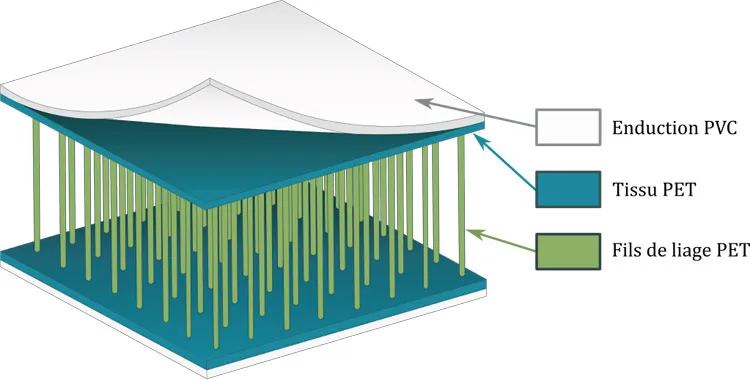
“The material is quite similar to what is found in inflatable stand-up paddleboards. When the pressure is sufficient, the structure is rigid and stable. In this thesis, there were many challenges. We had to take into account the complexity of the structure, which combines several materials, as well as the multiple stresses imposed on these materials.”


Indeed, the structure under study is subjected to various stresses throughout its lifespan: repeated inflation and deflation, random folding of the fabric when it is folded down, as well as exposure to a marine environment and UV radiation and high temperatures during container transport.

“That represents a lot of variables. So, with the approval of my supervisors at IRDL, Ifremer, and Sealence, I decided to focus on aging in a marine environment and the impact of folding. These were the two factors that seemed most critical for the fabric under study.”

To validate her models, Jeanne conducted numerous tests on test specimens in Ifremer tanks and using IRDL testing equipment.

“I had to test over 500 samples. The results show that none of these stresses are critical to the structure.”

The results thus confirm the solution’s reliability from a mechanical standpoint.

The thesis: a collective human adventure

Before starting my thesis, I had this stereotype of the isolated PhD student. But that’s not how it turned out for me. I shared my office with a fellow PhD student and had five supervisors who were very attentive,” she confides. Despite moments of self-doubt, the dialogue with her thesis advisors allowed her to step back and assess the progress she had made. A key element, according to Jeanne, for the success of a thesis.

Active during her studies against discrimination within a collective of ENSTA students and staff, she chose to continue her commitment during her thesis. Jeanne is developing a workshop with an English teacher to equip female doctoral students and enable them to respond in English to inappropriate remarks. “It’s important not to feel helpless,” she emphasizes. The workshop has since been offered to female students before they leave for their international internships.

For the next phase of her career, Jeanne has chosen to settle in Toulouse. She aims to pursue a career in research and development within an industrial company. Her journey, already marked by two awards—the 2022 Arnaud Metsue Master’s Prize from the French Society of Metallurgy and Materials, awarded for her thesis project, and the 2025 Mecamat Prize for Best Poster—points to a brilliant future.

Our latest news

Alumni | Innovation
DeepFoil: Two ENSTA Graduates Are Reinventing Underwater Exploration

Graduates in architecture and naval hydrodynamics, Emillia Perdigon and Paul François have designed the DeepFoil, a flying underwater wing that allows for effortless movement underwater. Fueled by public enthusiasm and investor support, their project is...

DeepFoil: Two ENSTA Graduates Are Reinventing Underwater Exploration

Graduates in architecture and naval hydrodynamics, Emillia Perdigon and Paul François have designed the DeepFoil, a flying underwater wing that allows for effortless movement underwater. Fueled by public enthusiasm and investor support, their project is...

Innovation | Research
Gabriel Betton: Exploring the karst networks

Beneath our feet, in the darkness of the underground, a natural network spanning more than a third of France’s territory supplies drinking water to nearly 30 million people. But the quality of this vast freshwater reservoir is threatened by climate change...

Gabriel Betton: Exploring the karst networks

Beneath our feet, in the darkness of the underground, a natural network spanning more than a third of France’s territory supplies drinking water to nearly 30 million people. But the quality of this vast freshwater reservoir is threatened by climate change...

Training | Innovation | Student Life
An ENSTA team wins the Energy4Climate 2026 Challenge

How can we best promote renewable energy production in France? That was the question posed by the 6th edition of the Energy4Climate – Agorize Challenge, to which a team of ENSTA students provided an answer that was both innovative and well-reasoned.

An ENSTA team wins the Energy4Climate 2026 Challenge

How can we best promote renewable energy production in France? That was the question posed by the 6th edition of the Energy4Climate – Agorize Challenge, to which a team of ENSTA students provided an answer that was both innovative and well-reasoned.