Gabriel Betton: Exploring the karst networks

Innovation, Research Defense and Security, Marine Engineering, Transport and mobility
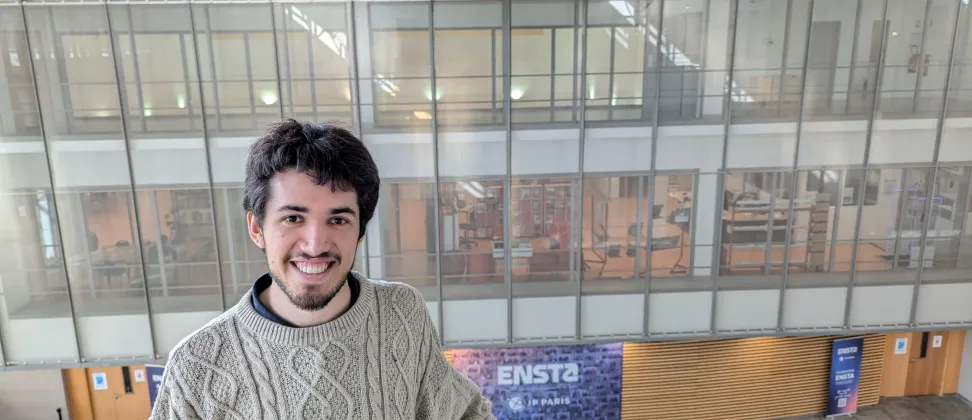
Gabriel Betton

Beneath our feet, in the darkness of the underground, a natural network spanning more than a third of France’s territory supplies drinking water to nearly 30 million people. But the quality of this vast freshwater reservoir is threatened by climate change and pollution. How can we explore these networks to protect the water flowing through them? Gabriel Betton, a PhD student at Lab-STICC, is working on developing a bio-inspired robot capable of navigating these networks completely autonomously.

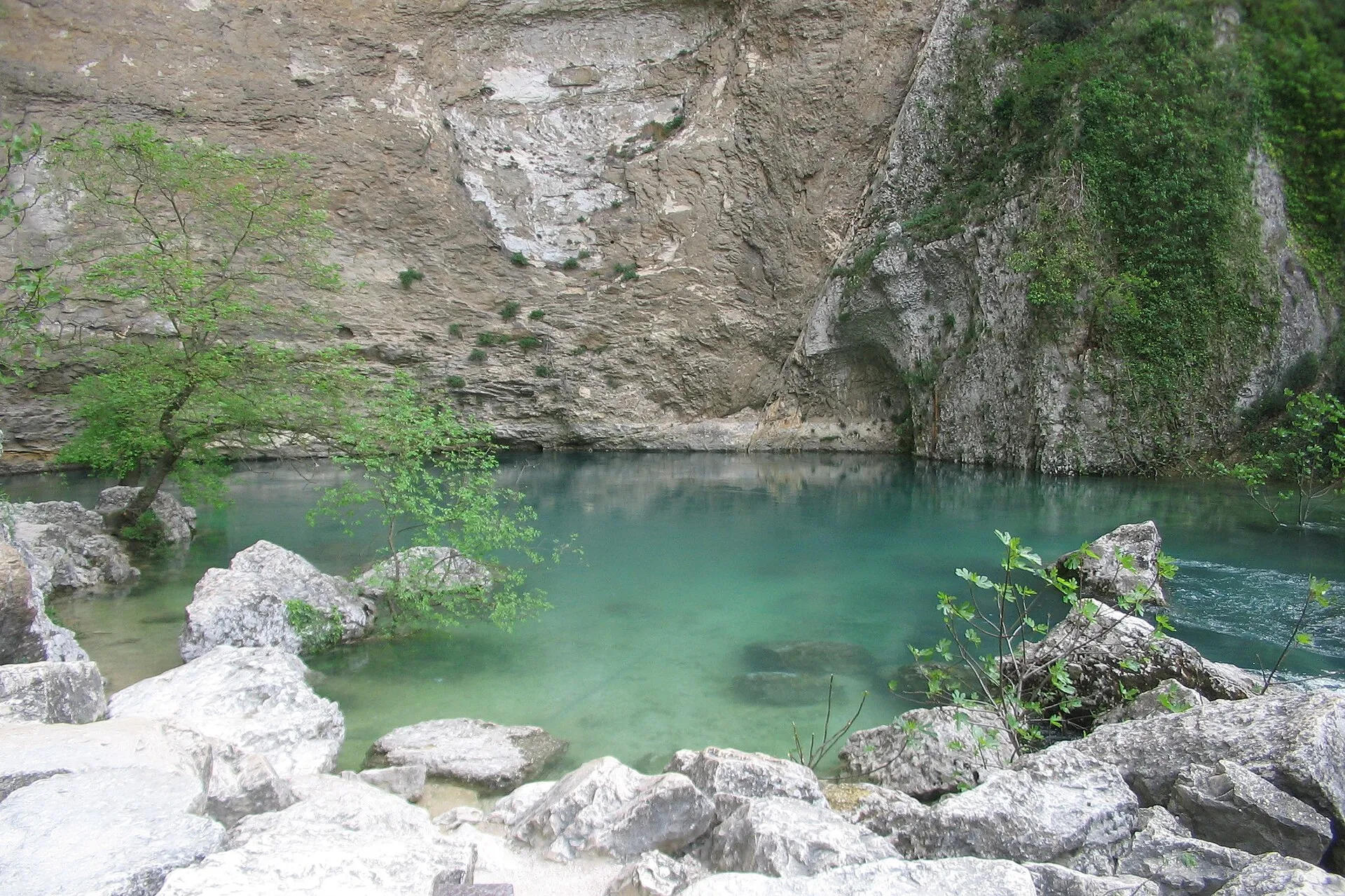
What does the entrance to a karst network look like? Often, it resembles a peaceful water source, making it hard to imagine what lies beneath: a vast network of dozens of kilometers of tunnels, galleries, and cavities carved into limestone and buried deep underground. If scuba divers were to attempt to explore these bottomless wells, they would very quickly reach their physiological limits, and the narrowness of certain passages would prevent them from proceeding.

Yet, there is a crucial need to understand the intricacies of these karst networks known as aquifers (literally, “water-bearing”), and how they respond to precipitation and pollution.

The Fontaine de Vaucluse, which is in fact the sole outlet of a vast karst aquifer network spanning over 1,100 km². Credit: By Rolin — Own work, CC BY-SA 3.0. Wikipedia

As Gabriel Betton explains, “hydrogeologists seek to model and understand the behavior of these aquifers during extreme weather events, such as droughts or, conversely, torrential rains. This involves precise mapping of cave systems to better understand their structure and the behavior of the water flowing through them.”

These findings help predict the movement of water bodies as well as the consequences of potential pollutant discharges, and trigger the necessary alerts to prevent contamination. Another issue for karst systems located near the sea is the rise of seawater through a system of communicating vessels—again, in the event of drought or excessive exploitation of the resource.

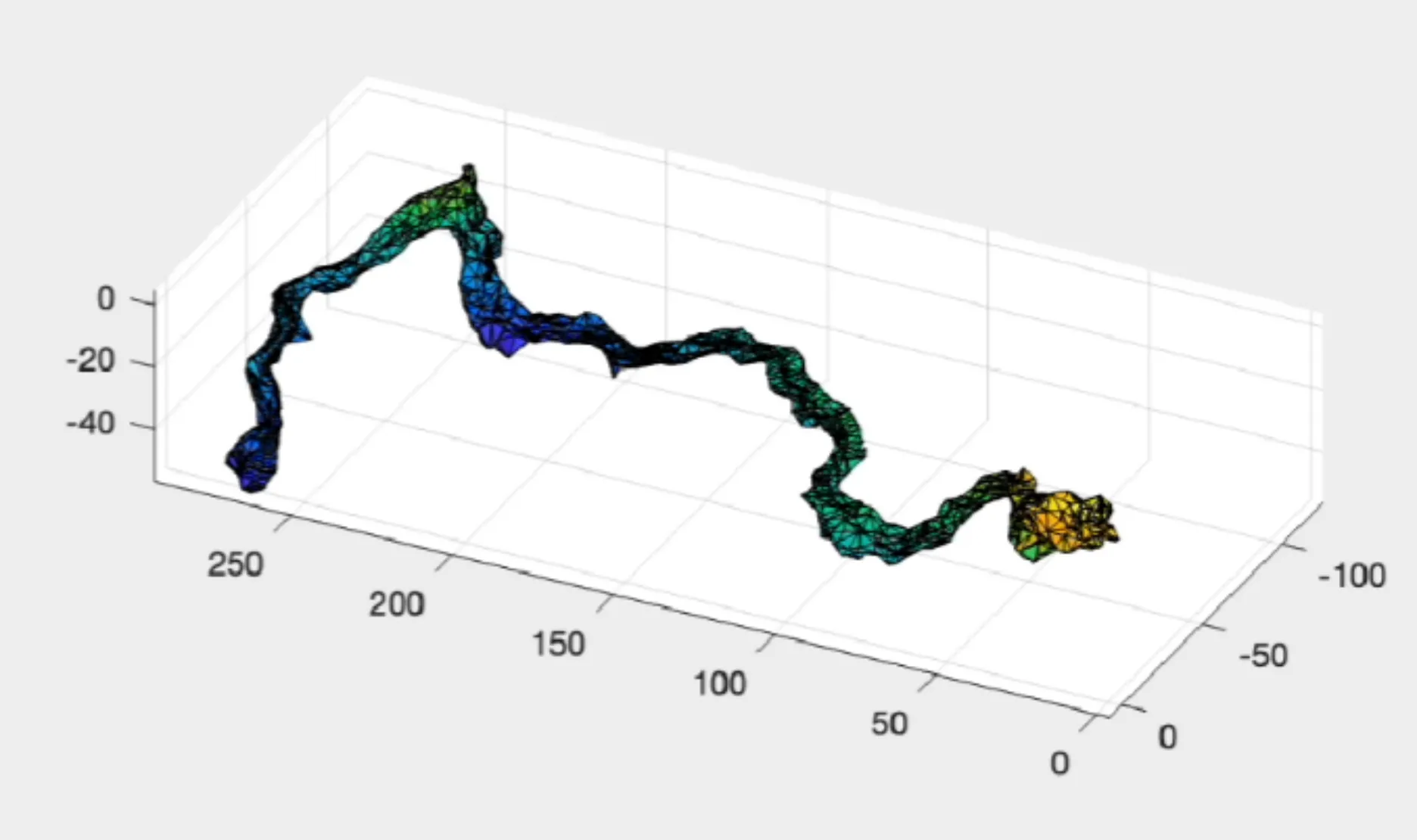
3D reconstruction of a karst aquifer using sonar mounted on the Navscoot, a measuring device designed by the EXPLORE team at the University of Montpellier.

While divers are quickly limited in their ability to explore, the solution could come from underwater robots, such as the one Gabriel Betton is working on as part of a project funded by the ANR Electro-Karst, which is integrated into one of the research areas of the ROBEX team at LabSTICC, with support from the University of Montpellier.

But karst networks are hardly any less hostile for robots than they are for humans. “The galleries and passages can sometimes make sharp turns. In this maze, it’s impossible to run a cable behind the robot to guide it without the risk of getting it stuck,” continues Gabriel Betton.

The exploration robot will therefore need to be fully autonomous, both in terms of energy and decision-making.

“The robot must be able to map the network by determining its position—a problem that is already difficult in terrestrial or aerial robotics, but even more so when you’re underwater or underground, where neither GPS signals nor radio waves can pass through, all while operating with inevitably limited computational resources,” notes the doctoral student.

The robot’s roadmap will be simple: stay in the center of the passage it is exploring, remember the junctions it has encountered so as not to get lost on the way back, and go as far as it can while ensuring it has enough energy to return to its starting point and deliver its data.
 

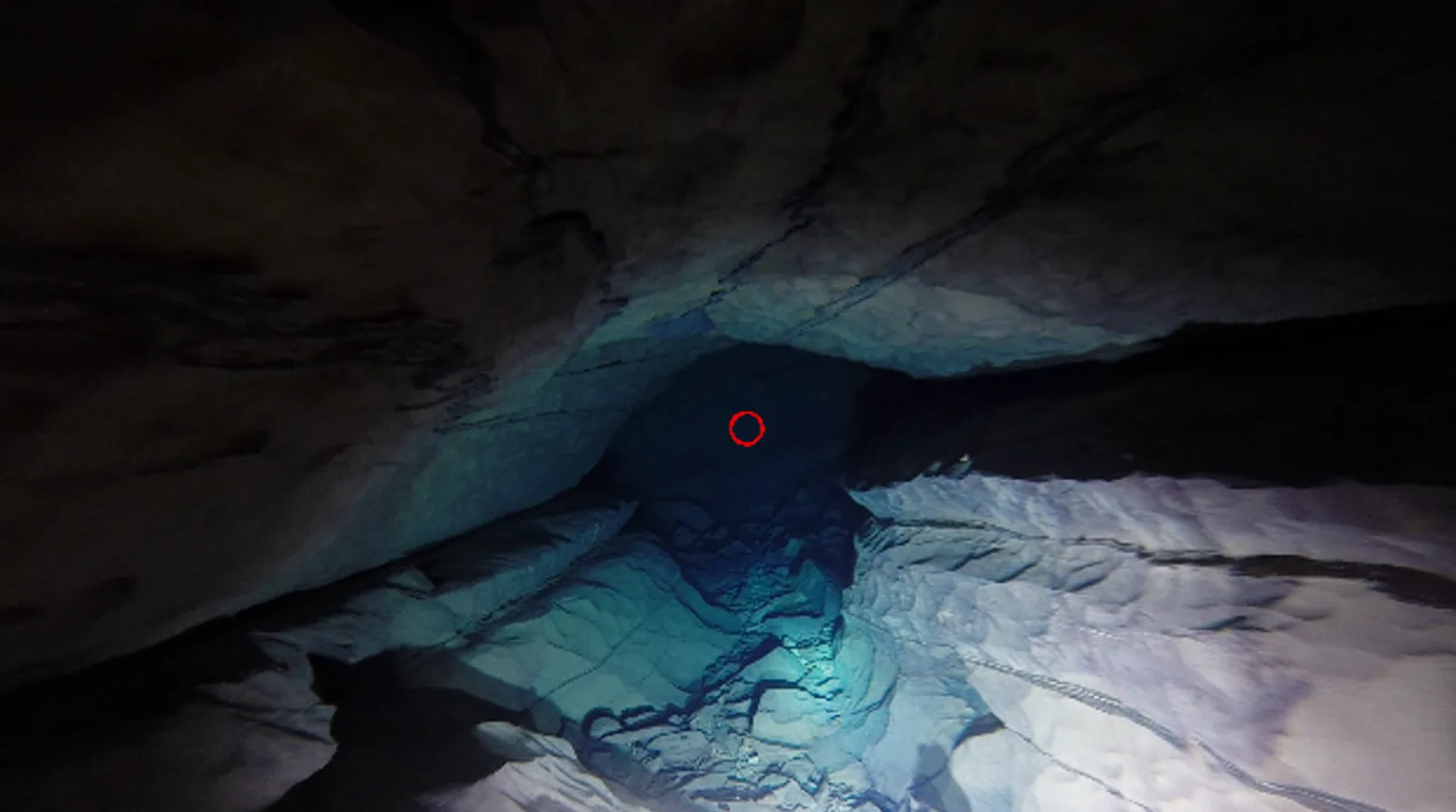
Photo of the interior of a submerged karst network, used to test centering algorithms

As we’ve seen, maneuverability will be essential for navigating the narrowest passages.

“To achieve maneuverability, the first solution that comes to mind is to equip the robot with sets of propellers in all three dimensions. But aside from being energy-intensive, the propellers risk stirring up sediment, rendering the camera we want to equip the robot with inoperable, since the image provides very rich information for mapping.”

Where many would have been tempted to throw in the towel in the face of so many conflicting requirements, Gabriel Betton decided to take inspiration from nature. He came up with the idea of a spindle-shaped robot, like a fish, and, taking the analogy to its logical conclusion, he wondered if it was possible to mimic their caudal fin.

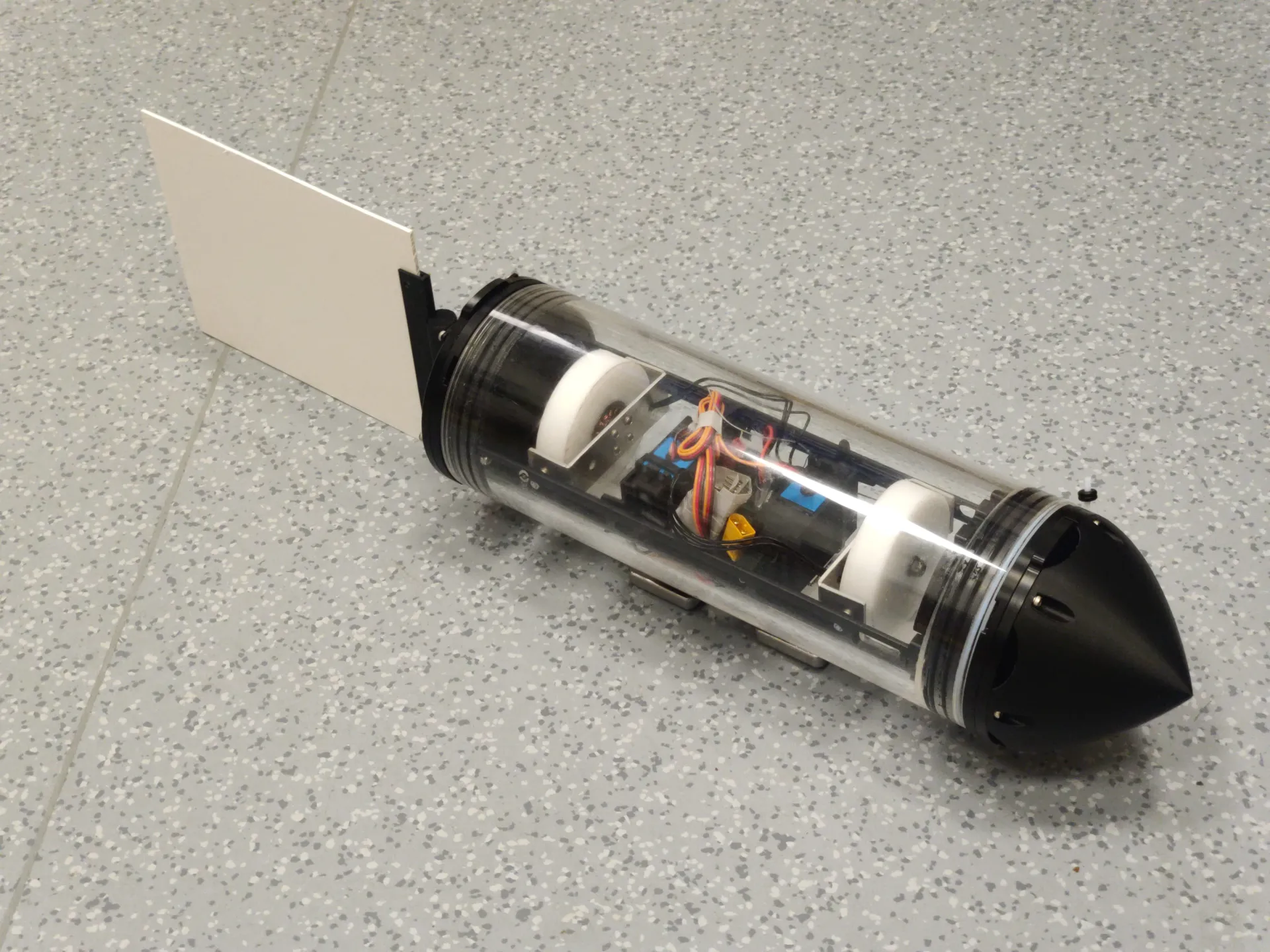
“In the end, we arrived at a sort of torpedo propelled not by a propeller but by a bio-inspired fin. It’s much more maneuverable than a propeller, it consumes very little energy, and the entire control and actuation system fits inside a sealed cylinder, with a spring linkage leading to the fin.”
 

Prototype of the karst exploration robot developed by Gabriel Betton
Demonstration of the maneuverability of Gabriel Betton’s bio-inspired karst exploration robot

Now that he knows how his robot will move, Gabriel Betton has just over a year left on his thesis to build a complete prototype, teach it to navigate the network using the camera, all while employing energy-efficient solutions. Solutions he will soon be able to test in the Grand bassin d'expérimentation Air-Mer, which will be inaugurated next June on the Brest campus.

Note: Gabriel Betton’s project was selected by the Institut Polytechnique de Paris as part of a call for pre-maturation projects aimed at identifying future technologies and high-impact applications. The same applies to the project by another doctoral student from an ENSTA laboratory, Alicia Amari, on magnetic bone scaffolds.
 

Our latest news

Training | Innovation | Student Life
An ENSTA team wins the Energy4Climate 2026 Challenge

How can we best promote renewable energy production in France? That was the question posed by the 6th edition of the Energy4Climate – Agorize Challenge, to which a team of ENSTA students provided an answer that was both innovative and well-reasoned.

An ENSTA team wins the Energy4Climate 2026 Challenge

How can we best promote renewable energy production in France? That was the question posed by the 6th edition of the Energy4Climate – Agorize Challenge, to which a team of ENSTA students provided an answer that was both innovative and well-reasoned.

Innovation | Research
Digital Twins and Health: ENSTA Research on France Culture

Will it one day be possible to predict how our vital organs will develop and how they will respond to certain treatments, or even to surgery? These are the possibilities opened up by digital twins applied to healthcare, a field in which Alexandre Daby...

Digital Twins and Health: ENSTA Research on France Culture

Will it one day be possible to predict how our vital organs will develop and how they will respond to certain treatments, or even to surgery? These are the possibilities opened up by digital twins applied to healthcare, a field in which Alexandre Daby...

Alumni | Company | Training
BALCO Boats: A Breton shipyard that combines tradition and innovation

A recent graduate of a work-study engineering program in mechanical design with a specialization in naval architecture, Teys Cocset founded BALCO Boats with Antoine Ballot: a shipyard based in Brittany that combines tradition and innovation.

BALCO Boats: A Breton shipyard that combines tradition and innovation

A recent graduate of a work-study engineering program in mechanical design with a specialization in naval architecture, Teys Cocset founded BALCO Boats with Antoine Ballot: a shipyard based in Brittany that combines tradition and innovation.