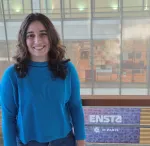
DeepFoil: Two ENSTA Graduates Are Reinventing Underwater Exploration

Alumni, Innovation Marine Engineering
©T. Keroullé

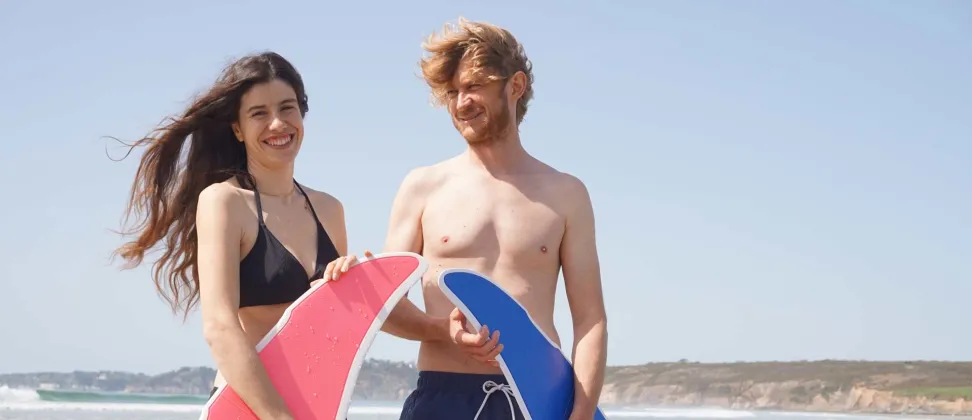
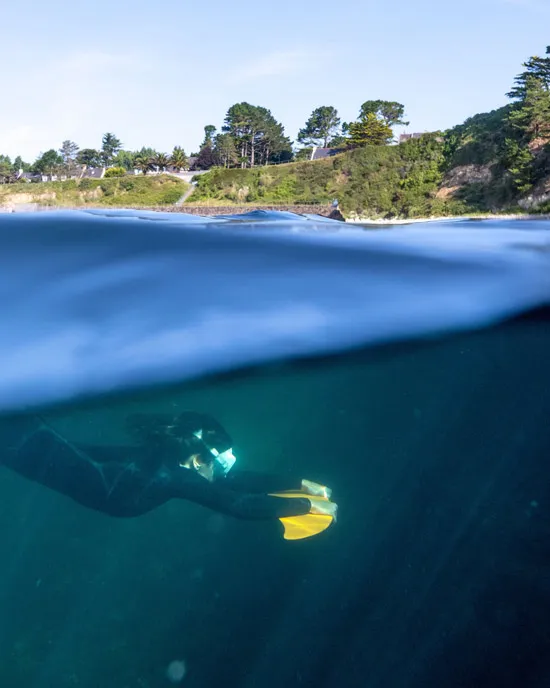
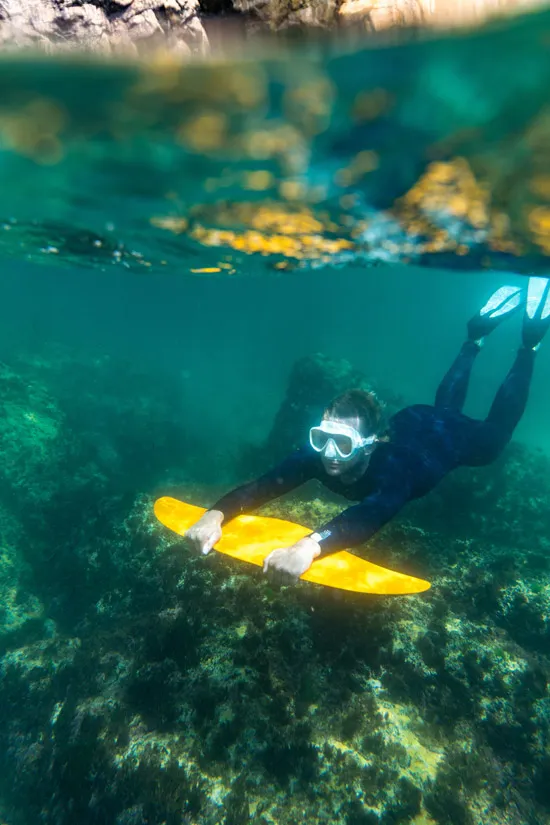
Graduates in architecture and naval hydrodynamics, Emillia Perdigon and Paul François have designed the DeepFoil, a flying underwater wing that allows for effortless movement underwater. Fueled by public enthusiasm and investor support, their project is poised to conquer the seas and the markets.

From the submarine to the DeepFoil

As they began their professional careers - Emillia Perdigon in marine renewable energy and Paul François in underwater acoustic stealth research - they conceived a concept for a small two-seater submarine. 

When you look at a submarine, it’s like an upside-down airship. So we sought to draw inspiration from this principle by combining maneuverability and lightness

Paul François Co-founder of DeepFoil, Nereïs Ocean

The Hydronef project quickly caught the attention of the French Navy and the Ministry of the Armed Forces, but after a few months of research and development, Paul and Emilia ran into issues with the project’s business model. The production cost of the Hydronef made commercialization in the civilian sector unfeasible. The technology is not dual-use and therefore cannot be profitable.

But the idea was there, and Emilia and Paul sensed that marine exploration was a dream for many. So, they reinvented their project and simplified it.   

“Every time we talked about the project, we could sense people’s interest. We started to wonder if we’d perhaps come up with something too complicated. So we simplified everything, keeping only the basic concept of the foil.”

Emilia Perdigon Co-founder of DeepFoil, Nereïs Ocean

The challenge of simplification

The two creators designed and developed an initial foil prototype, which they tested in August 2024. The first tests confirmed their intuition: “With the DeepFoil at arm’s length, you really feel like you’re flying underwater, just by kicking.”

In June 2025, after a few adjustments, they decided to gauge public interest in their product.

"We issued a press release that was published in the local editions of Ouest France and Le Télégramme. Within five days, we sold several units of the DeepFoil. That convinced us. We stopped taking orders and set up a waiting list. By July, there were already several hundred people on the waiting list."

©T. Keroullé

Next, they focused simultaneously on fundraising and the production process. Gradually, all indicators turned green.

Their friends and family were the first investors. Their local bank also supported them. Then, it was the turn of the TV show “Who Wants to Be My Partner?” to contact them and invite them to submit an application.

“They had heard about DeepFoil following a report on France 3 Bretagne. We were in the fundraising phase with a goal of 350,000 euros, covering the mold, inventory, patent filing… and we still needed to raise 40,000 euros. Ultimately, our project was selected by the show and convinced four investors.”

This TV appearance gave them great visibility, valuable time to discuss the project with experts, and the commitment of two business angels to their venture. At the same time, they identified a company in the Vendée region that would handle large-scale production.

A story that is just beginning

©T. Keroullé

Today, the team has grown. Emilia and Paul have recruited two marketing and communications specialists.

“The current challenge is marketing, and we couldn’t be on all fronts. We have all the expertise for the design and industrialization side. ENSTA trained us very well in foil design and even project management, but we were much less familiar with the areas Léa and Julie specialize in.”

Since April, the DeepFoil has been available at Decathlon stores in Brittany. Discussions are underway for the Mediterranean region. Gradually, sales will expand beyond mainland France: to the overseas departments and regions, and then internationally.

In a small notebook, Emila and Paul regularly jot down their ideas, driven by a desire to grow Nereïs Ocean. The DeepFoil is just the beginning.

“We love spending time in the water; it’s an important part of our daily lives. We still have plenty of ideas for growing the company, continuing to innovate, and offering a range of products connected to the ocean.”

To follow their adventure, visit the Nereïs Ocean website (in French)

Our latest news

Innovation | Research
Gabriel Betton: Exploring the karst networks

Beneath our feet, in the darkness of the underground, a natural network spanning more than a third of France’s territory supplies drinking water to nearly 30 million people. But the quality of this vast freshwater reservoir is threatened by climate change...

Gabriel Betton: Exploring the karst networks

Beneath our feet, in the darkness of the underground, a natural network spanning more than a third of France’s territory supplies drinking water to nearly 30 million people. But the quality of this vast freshwater reservoir is threatened by climate change...

Training | Innovation | Student Life
An ENSTA team wins the Energy4Climate 2026 Challenge

How can we best promote renewable energy production in France? That was the question posed by the 6th edition of the Energy4Climate – Agorize Challenge, to which a team of ENSTA students provided an answer that was both innovative and well-reasoned.

An ENSTA team wins the Energy4Climate 2026 Challenge

How can we best promote renewable energy production in France? That was the question posed by the 6th edition of the Energy4Climate – Agorize Challenge, to which a team of ENSTA students provided an answer that was both innovative and well-reasoned.

Innovation | Research
Digital Twins and Health: ENSTA Research on France Culture

Will it one day be possible to predict how our vital organs will develop and how they will respond to certain treatments, or even to surgery? These are the possibilities opened up by digital twins applied to healthcare, a field in which Alexandre Daby...

Digital Twins and Health: ENSTA Research on France Culture

Will it one day be possible to predict how our vital organs will develop and how they will respond to certain treatments, or even to surgery? These are the possibilities opened up by digital twins applied to healthcare, a field in which Alexandre Daby...