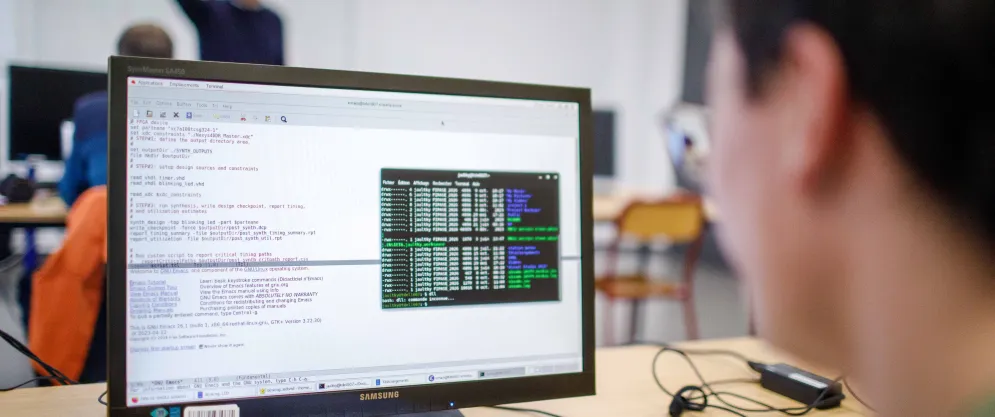
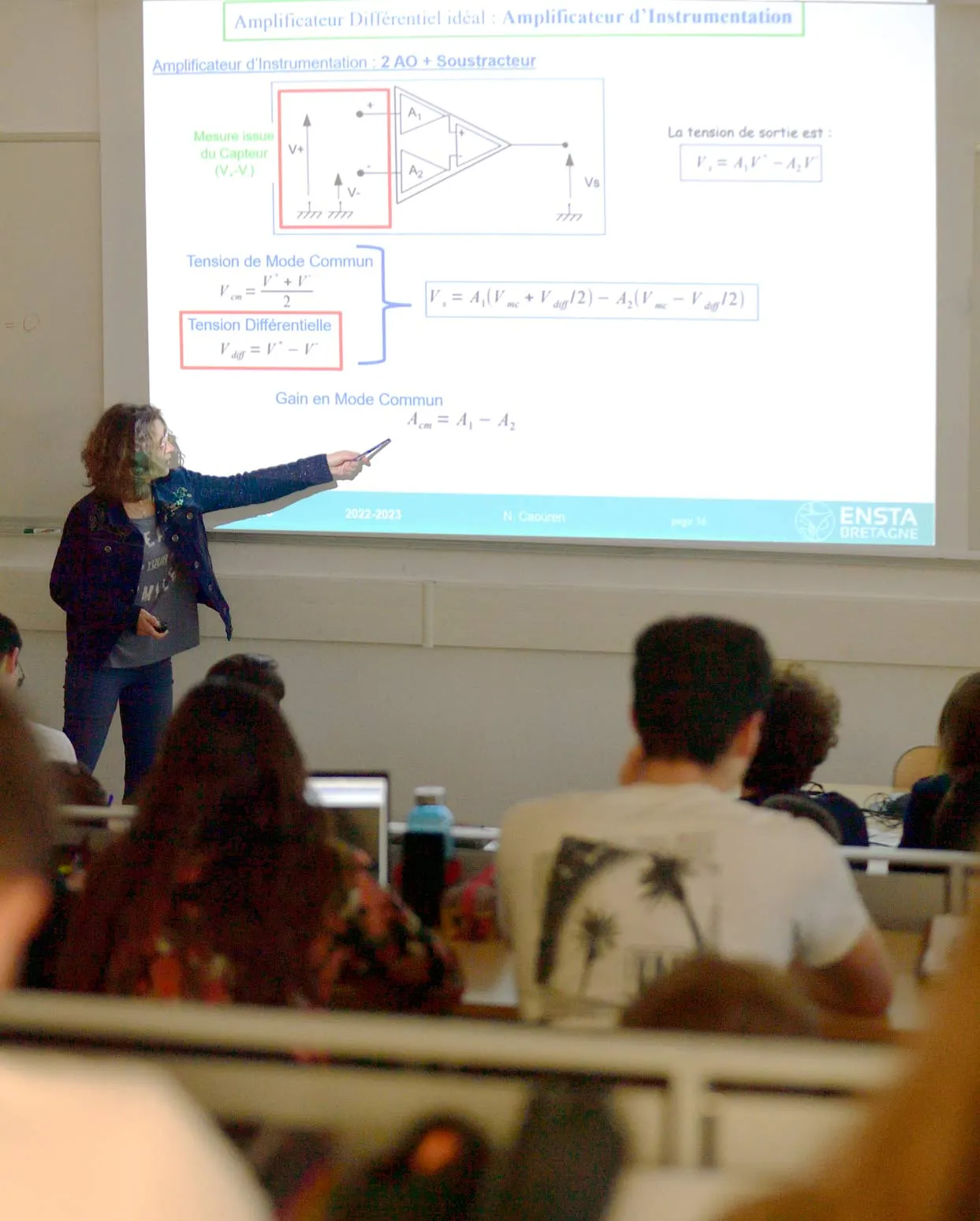
Become an embedded systems engineer: learn how to design and program these complex digital systems combining software, electronic hardware, business algorithms, and telecommunications. At the heart of many applications (digital, transportation, energy, space, defense, health, etc.), embedded systems are found in products ranging from the most common to the most complex, combining autonomy, compact size, robustness, and security.
Design complex real-time systems combining embedded electronics and computing
One of the best engineering schools in France, ENSTA has been offering a work-study program specializing in embedded systems at its Brest campus for nearly 20 years.
It allows you to master both the hardware and software aspects of embedded systems. The courses cover programming methods for real-time embedded systems and intensive computing, the design of artificial intelligence, software radio mechanisms and sensor networks, etc. The program is complemented by numerous projects.
You will gradually develop your skills in the fields of computer science and analog and digital electronics in order to master complex real-time architectures using high-level languages.
Automotive, aeronautics, mobile phones, game consoles, exploration satellites... the fields of application are very diverse.
Key points
A program combining complementary skills in software engineering, cutting-edge electronic hardware, business algorithms, and telecommunications.
A program recognized by many companies: SMEs and large groups
A progressive course of study allowing students to master the most complex digital systems
Humanities courses to learn how to manage a project and a team
A 12-week international mobility program
Close ties with research and innovation
A stimulating living and learning environment
A vast network of graduates
Program objective
To train design, R&D, and research engineers capable of designing complex digital systems for the most innovative industries.
A 3-year program
Year 1 / Fundamentals
The first year lays the foundation of fundamental knowledge for embedded systems. Courses focus on mathematical tools for signals and automation and the basics of computer programming: Python, then C language to deepen understanding of fundamental processor concepts.
As part of an electronic and digital prototyping project, apprentice engineers create a programmable electronic card based on a microcontroller.
Year 2 / Advanced studies
The second year provides an opportunity to deepen students' mastery of digital systems in its various aspects: the interface with the physical world in analog electronics, software and hardware programming in digital electronics, coding and encryption technologies for information and security, and the concept of filters and observers in automation and signals.
A project to build an embedded system without an operating system concludes the second year.
Year 3 / Expertise
Finally, the third year allows you to learn about complex and real-time architectures, systems on chips, software-defined radio, sensor networks, and artificial intelligence.
The final-year project is carried out in close collaboration with research laboratories working on topics related to digital electronics applied to the fields of software-defined radio, sonar and radar, marine robotics, and security.
During a professional sequence, engineering apprentices will gain international experience. This opportunity allows future graduates to prepare themselves to work in an international and multicultural environment. Mobility opportunities are available in research centers, allowing you to discover the challenges of innovation and R&D.
February 19, 2027: Closing date for applications. All documents must be submitted
March 31, March 30, April 1, 2027: Selection interviews
Mid-April 2027: Results
Fees
Tuition
As an apprentice engineer, the cost of your training is covered by the State, the Region, and the company. You do not have to pay any tuition fees. However, you are still responsible for paying the Student and Campus Contribution (CVEC).
Application
To validate your application, a €30 application fee must be paid*. Payment must be made before the deadline for submitting online registration forms via a secure online payment on your personal online space (Aurion). For any other payment method, please contact Laurent Gogé at agence-comptable.brest(a)ensta.fr.
* Non-refundable.
Presentation of the program: webinar replay (in French)
L’écoconception, ça vous concerne aussi !
Nous avons développé ce site internet dans le cadre d’une démarche forte
d’écoconception.
Si vous aussi, vous souhaitez diminuer drastiquement les besoins
énergétiques nécessaires à votre navigation, vous pouvez le parcourir
dans son Mode Eco. Celui-ci sollicitera très peu nos serveurs et vous
deviendrez ainsi un acteur majeur de l’écoconception.