A national library of dolphin vocalizations

Research Marine Engineering

Launched in late 2024, the PAMCéClass project, entrusted to ENSTA by the Offshore Wind Observatory and funded by the French Office for Biodiversity (OFB), aims to create a national library of vocalizations from several species of dolphins found along the French mainland coast. The goal is to develop a robust acoustic classification tool to better identify them and, ultimately, protect them.

The deployment of offshore wind farms along the French coast is systematically accompanied by environmental impact studies. Among the key areas of concern assessed is the presence of marine mammals.

Offshore wind power is one of the components of the French energy mix. The goals call for the deployment of 50 wind farms by 2050. To assess the risks associated with each project, impact studies are conducted on-site prior to construction, during construction, and after construction, including during the operational phase. These studies focus in particular on the impact of noise generated by construction or the operation of wind turbines on marine mammals, including dolphins.

To conduct this assessment, engineering firms—such as Biotope, the project’s partner firm—deploy autonomous acoustic recorders at sea, in a control area and in the construction zone, to capture the underwater soundscape, monitor conditions, and compare data.

“Currently, the freely available tools used to analyze and classify sounds do not allow us to differentiate between the dolphin species present along our coasts, even though conservation challenges vary from one species to another. There is a real need to develop a robust classification tool that is specific to our various marine subregions and accessible to everyone.”

Naïs Caron Delbosc Research engineer in acoustics at ENSTA, Lab-Sticc laboratory

The 5 key steps of the PAMCéClass project:

  1. Developing a standardized data collection protocol at listening stations by researchers from ENSTA/Lab-STICC
  2. Training project partners (associations and marine nature parks) in the basics of underwater acoustics and acoustic data collection
  3. Collect observational data coupled with acoustic recordings
  4. Centralize the data, analyze and manually annotate vocalizations to create a national reference library
  5. Develop a robust classification tool specific to our marine subregions

Passive acoustics, a non-intrusive method

“The hydrophone picks up sounds underwater, just as a microphone would in the air. In the recordings, detection methods (manual or automatic) allow us to identify the sounds dolphins emit: whistles, clicks, buzzes, and burst-pulses (burst-like pulses) used for communication, localization, and hunting. But the differences between species are subtle. We therefore need to combine visual observations with recorded sounds to create a database of dolphin acoustic signals, enabling the acoustic classification of species.”

Four organizations (AL LARK, GECC, MIRACETI, and Les Peuples de la Mer) as well as three marine nature parks (Iroise Marine Nature Park, Gulf of Lion Marine Nature Park, and Picardy Estuaries and Opal Sea Marine Nature Park) are involved in the project.

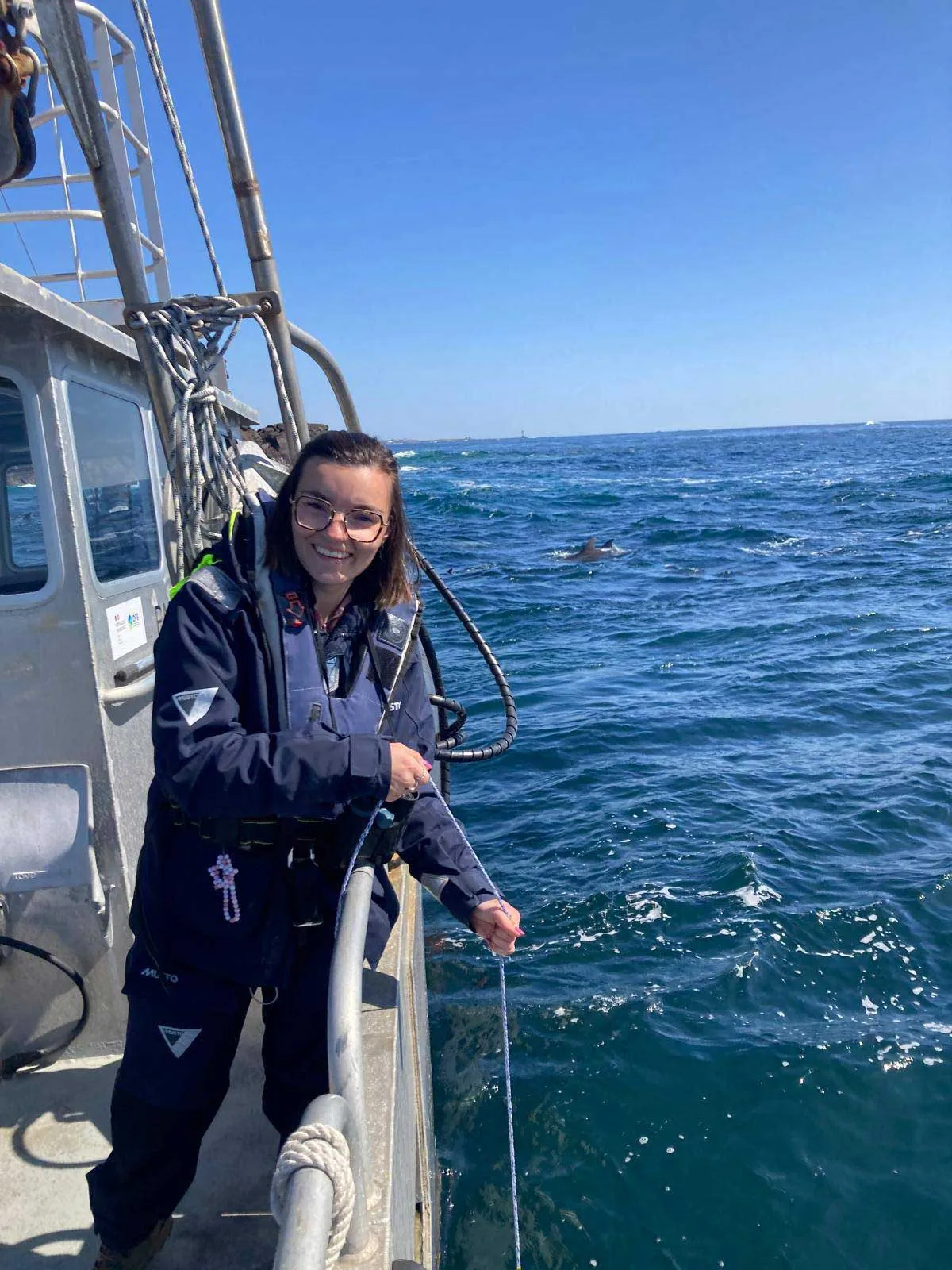
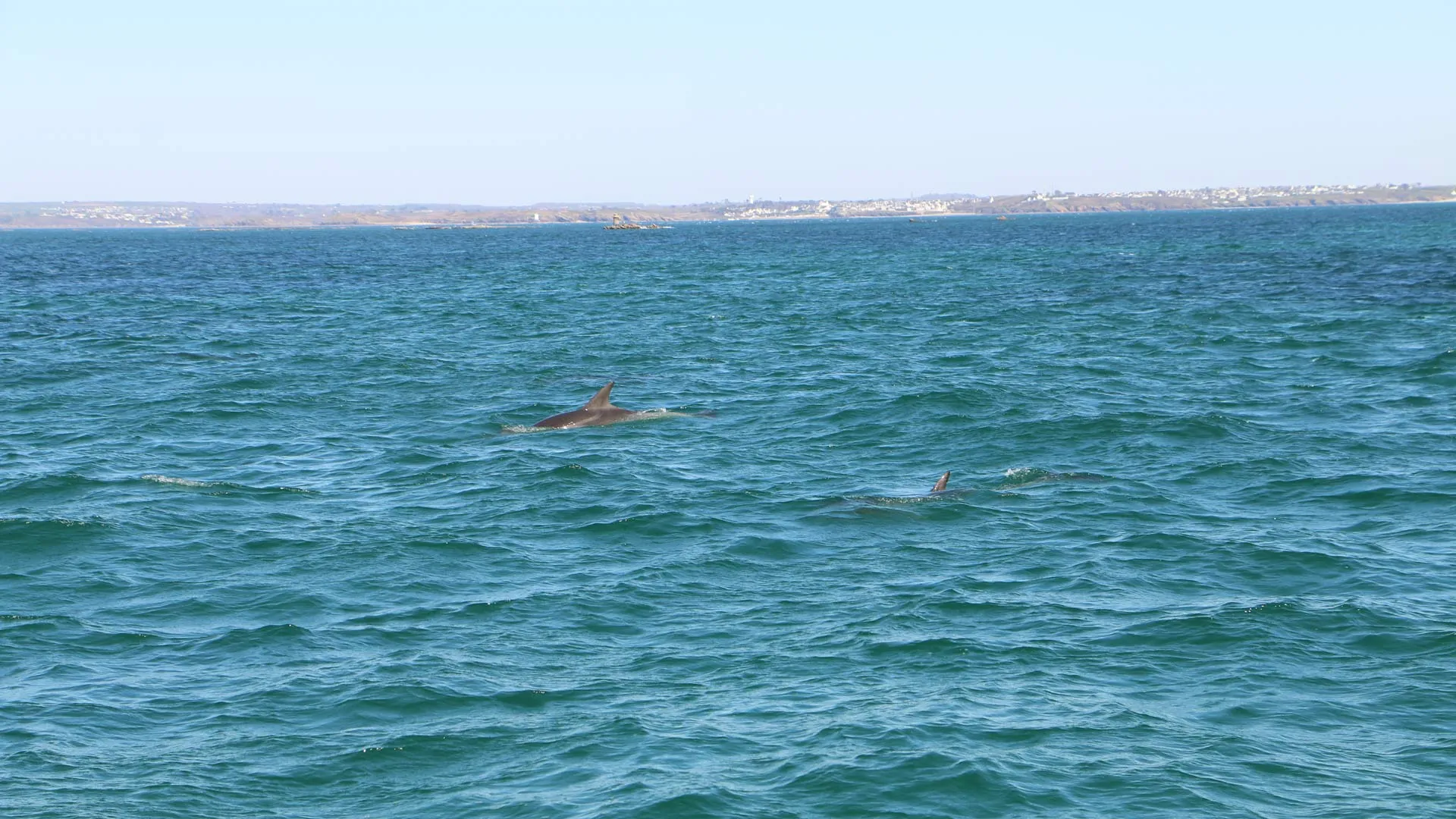
When dolphins are spotted in their respective areas, the protocol is implemented: the boat’s engine is shut off and the hydrophone deployed for a few minutes. During this time, information must be entered into a tablet (location, number of individuals, species, etc.). All data is then uploaded to ENSTA’s servers and analyzed by Naïs Caron Delbosc.

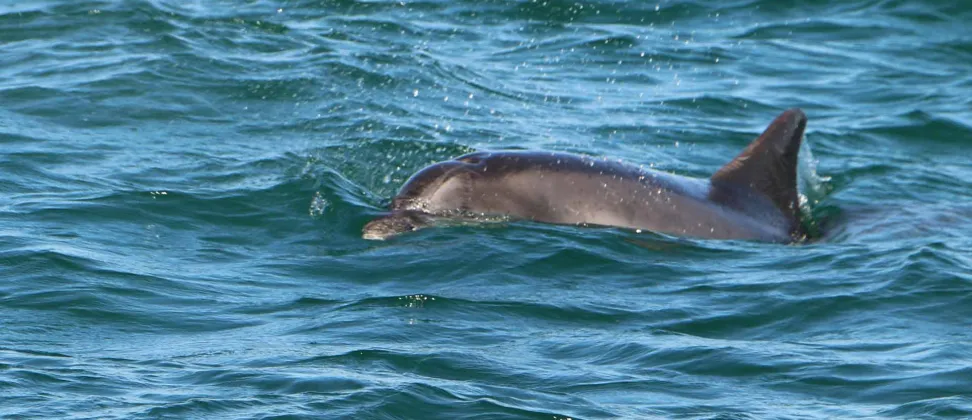
“We aim to distinguish five major species: the bottlenose dolphin, the common dolphin, the long-finned pilot whale, the Risso’s dolphin, and the striped dolphin.

” The harbor porpoise can also be found along our coasts, but its clicks are emitted at high frequencies, which makes it easy to identify. Globally, a single dolphin species can produce sounds with parameters that differ significantly, much like accents in different regions. Some differences may also appear from one coastline to another. The more observations and associated recordings we have, the more we will be able to develop an accurate and precise vocalization classifier".

The project will run for three years, until the end of 2027. Additional partners are expected to join gradually thanks to recent support from the Scientific Interest Group for the Île d’Yeu and Noirmoutier Wind Turbines (EMYN).

Our latest news

Alumni | Institute | Training
Graduation Ceremony in Brest: ENSTA Celebrates the Class of 2025, “Marie Marvingt”

March is graduation season for ENSTA’s community of young engineers, master’s students, and specialized master’s students across the school’s two campuses. Following the ENSTA Paris graduation ceremony, it was the turn of the 310 graduates from the ENSTA...

Graduation Ceremony in Brest: ENSTA Celebrates the Class of 2025, “Marie Marvingt”

March is graduation season for ENSTA’s community of young engineers, master’s students, and specialized master’s students across the school’s two campuses. Following the ENSTA Paris graduation ceremony, it was the turn of the 310 graduates from the ENSTA...

International | Research | Student Life
A promising first step into the world of research

From March 16 to 19, Edinburgh hosts HRI 2026, one of the leading international conferences on human-robot interaction. Among the scientific papers selected for presentation is one by a group of ENSTA students who initially had no other ambition than to...

A promising first step into the world of research

From March 16 to 19, Edinburgh hosts HRI 2026, one of the leading international conferences on human-robot interaction. Among the scientific papers selected for presentation is one by a group of ENSTA students who initially had no other ambition than to...

Research
Hybridization of metal 3D printing processes for more resistant parts

Bringing together three prestigious engineering schools under the supervision of the French Defense Procurement Agency (DGA), École Polytechnique, ENSTA, and ISAE Supaero, the QUADS2 project aims to hybridize two metal additive manufacturing processes...

Hybridization of metal 3D printing processes for more resistant parts

Bringing together three prestigious engineering schools under the supervision of the French Defense Procurement Agency (DGA), École Polytechnique, ENSTA, and ISAE Supaero, the QUADS2 project aims to hybridize two metal additive manufacturing processes...