Alicia Amari : a magnetic attraction to health

Innovation, Research

What drives a vocation? And is there only one way to answer that? The already rich career path of Alicia Amari, a doctoral student at ENSTA’s Laboratoire de mécanique et ses Interfaces, offers several possible answers. All of them converge on the idea that, thanks to research, there is always hope of repairing what has been broken.

When she was a senior in high school, at the time of deciding on her future studies, Alicia Amari hesitated for a long time between pursuing medical school and taking the preparatory classes to enter an engineering school.

“In the end, I chose the latter path because I loved math and physics above all else. But I did so with the idea of one day applying these fundamental sciences to the field of health,” recalls the doctoral student.

Where did this idea of putting science to work for health come from?


“When I was a child, I spent a lot of time with one of my grandmothers who had knee replacements. I remember very clearly the moment she had her surgery. I was both very impressed by the operation and also deeply comforted by the idea that the human body could be repaired in that way.”

After completing her preparatory classes, Alicia enrolled at the École nationale supérieure d’Arts et Métiers, from which she graduated in 2019 with a specialization in biomechanics and biomaterials.

“As a recent graduate, I needed practical experience and went to work in the industry at Materialise, a company that manufactures prosthetics using 3D printing. I was a clinical engineer there for cranio-maxillofacial surgery.”
 

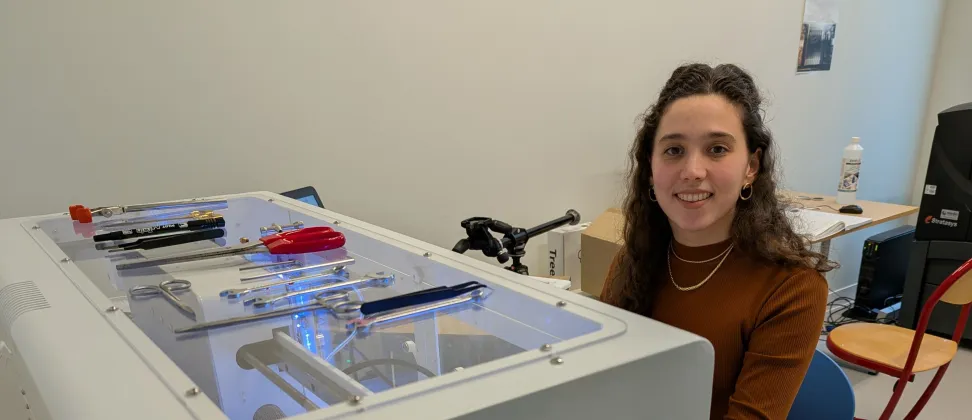
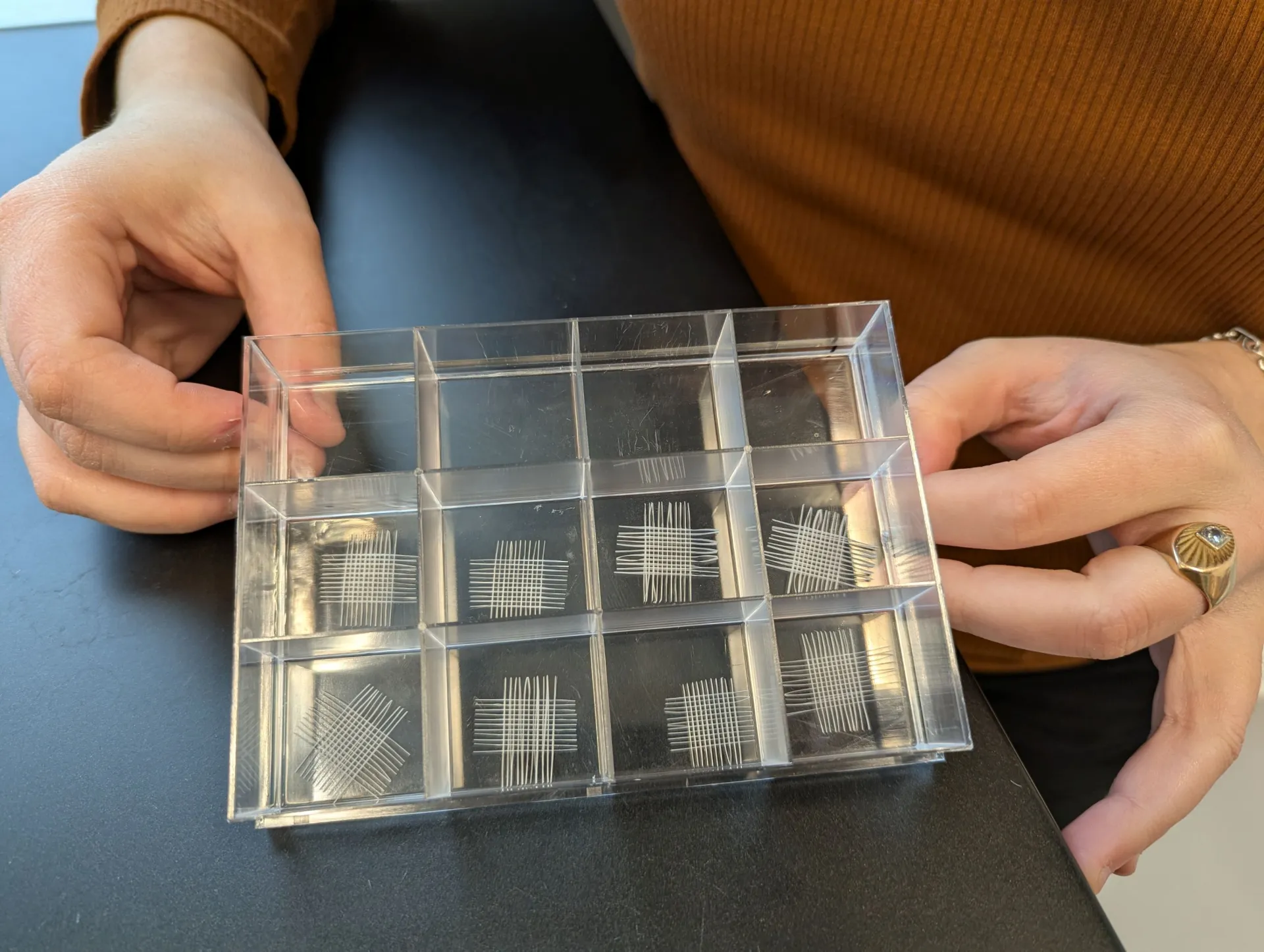
Alicia Amari with prototypes of structures she designs

From this experience, she took away an appreciation for the wide variety of cases in which 3D printing is revolutionizing treatments, whether it involves jaw surgery or the reconstruction of parts of the skull following the removal of cancerous tumors, congenital malformations, or ballistic trauma.

“I loved this profession, but after two years, I told myself that perhaps I could contribute to this field in a different way—for example, by embarking on research while drawing on the clinical experience I had accumulated. And it wasn’t too late to start a doctoral thesis.”


The turning point came from a meeting with Jean Boisson, a professor and researcher at the ENSTA Laboratoire de mécanique et ses interfaces

“I discovered that Jean Boisson was working on fascinating topics in biomechanics, exactly in line with my interests, and directly related to the applications I had been working on up to that point: creating solutions to help the human body replace what it has lost. He very quickly proposed a thesis topic to me.”

The central question this doctoral thesis seeks to answer is how to find solutions to address a bone loss of critical size—that is, one that cannot be repaired using standard consolidation techniques, such as metal plates used to hold the bone in place while waiting for natural healing.
 

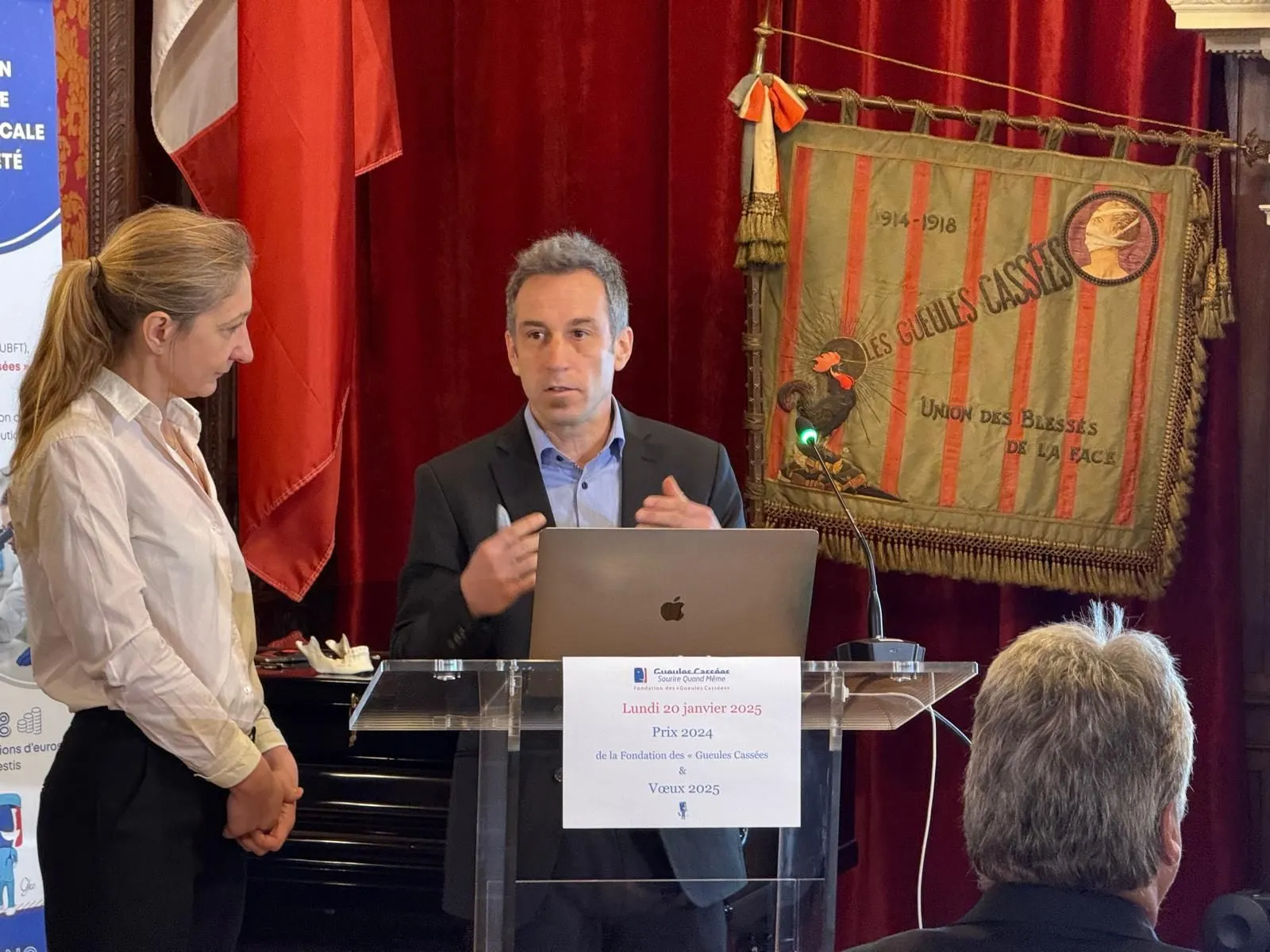
Jean Boisson, a professor and researcher at ENSTA, receiving the Fondation des Gueules Cassées award alongside Natacha Kadlub. Photo credit: Jean Rauzier

“When too much bone is missing, natural cellular mechanisms aren’t productive enough to compensate and regenerate. We need to use other methods,” explains the doctoral student.

A classic method, made famous by Philippe Lançon’s book *Le lambeau*, involves using bone from another part of the body that is less functionally important, such as the fibula (formerly known as the peroneal bone), the tip of the scapula (shoulder blade), or the iliac crest, to replace the missing section.

“This remains a very invasive surgery, with numerous risks of infection, and even graft rejection due to lack of vascularization,” notes Alicia Amari.
 

Another approach currently being extensively studied in the scientific literature is the so-called “scaffold” method. It literally involves placing a mini mechanical and biological scaffold around the area to be reconstructed, which will dissolve on its own after attracting bone-forming cells that have attached to the scaffold. To enable this process to occur, researchers add growth factors to the system to stimulate repair.

“These growth factors are biological agents that are difficult to validate from a regulatory standpoint. And the more there are, the harder it is,” notes Alicia Amari. “Our approach with Jean Boisson is different because we propose using a non-biological substitute to stimulate the cells: a magnetic field. ”

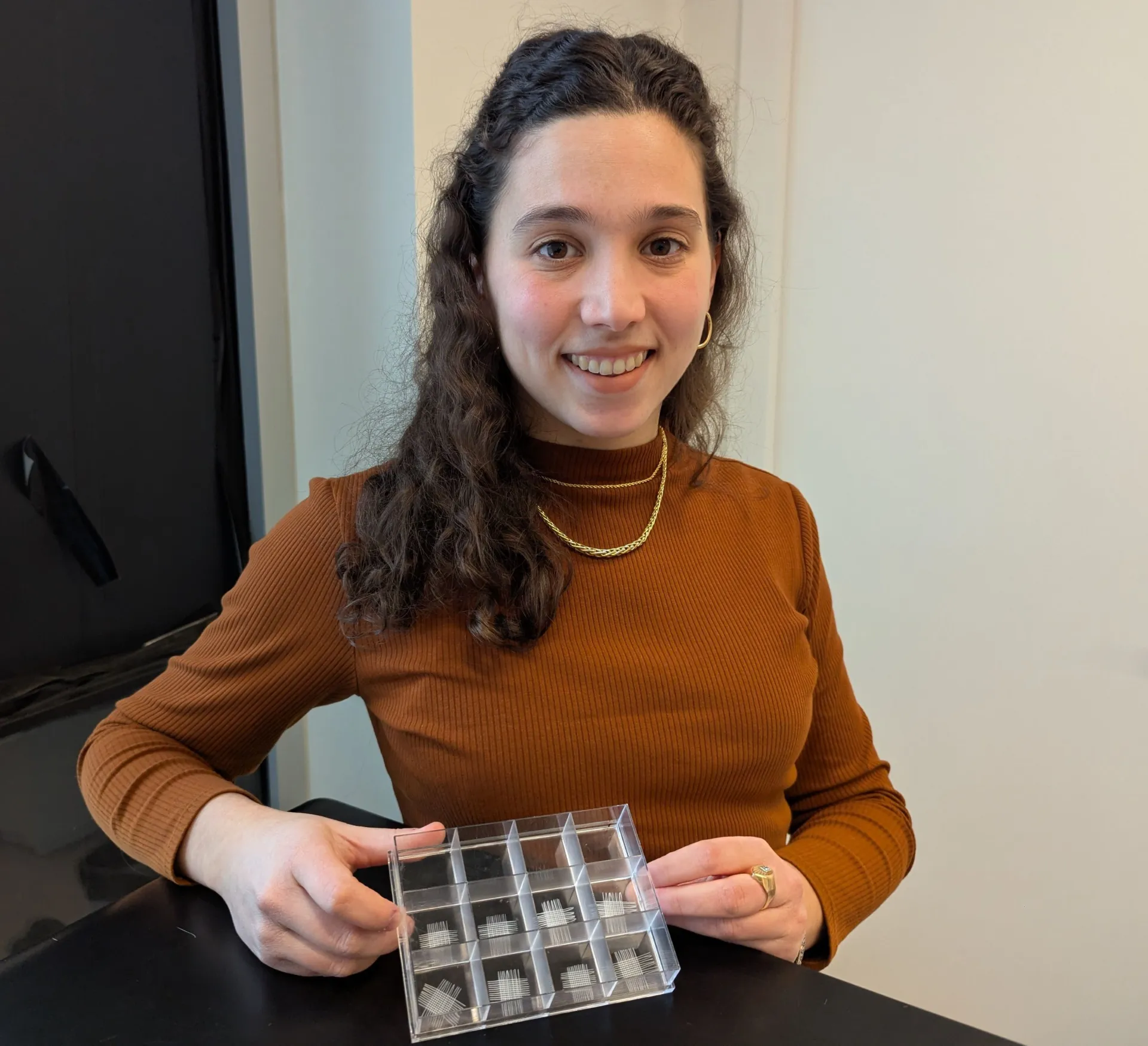
Prototypes of lattice structures at different resolutions to determine which ones are best suited to accommodate cells capable of filling bone defects.

Currently in the second year of this thesis funded by the Agence d'innovation de défense (AID) through the Centre interdisciplinaire d'études pour la défense et la sécurité (CIEDS), Alicia is conducting promising experiments using a machine funded by the Fondation des Gueules Cassées on 3D printing, at a micrometric scale, of scaffolds incorporating magnetic particles. The results are very encouraging and could eventually lead to numerous applications.

Depending on the mechanical properties we give the material, it is possible to stimulate not only bone growth but also skin growth, a critical factor in the treatment of severe burn victims.

And by learning to finely control these magnetic fields, we can also imagine using them to guide, for example, stents or small prostheses within the human body, while minimizing the invasiveness of surgery,” concludes the doctoral student.

With patients’ health and quality of life as her guiding principle, Alicia Amari is still only at the beginning of her journey in research for healthcare applications. But it is certain that, regardless of the difficulties and challenges inherent in any innovative scientific endeavor, she will emerge enriched by new experiences and will have advanced knowledge for the benefit of society.

Our latest news

Innovation | Research
Gabriel Betton: Exploring the karst networks

Beneath our feet, in the darkness of the underground, a natural network spanning more than a third of France’s territory supplies drinking water to nearly 30 million people. But the quality of this vast freshwater reservoir is threatened by climate change...

Gabriel Betton: Exploring the karst networks

Beneath our feet, in the darkness of the underground, a natural network spanning more than a third of France’s territory supplies drinking water to nearly 30 million people. But the quality of this vast freshwater reservoir is threatened by climate change...

Training | Innovation | Student Life
An ENSTA team wins the Energy4Climate 2026 Challenge

How can we best promote renewable energy production in France? That was the question posed by the 6th edition of the Energy4Climate – Agorize Challenge, to which a team of ENSTA students provided an answer that was both innovative and well-reasoned.

An ENSTA team wins the Energy4Climate 2026 Challenge

How can we best promote renewable energy production in France? That was the question posed by the 6th edition of the Energy4Climate – Agorize Challenge, to which a team of ENSTA students provided an answer that was both innovative and well-reasoned.

Innovation | Research
Digital Twins and Health: ENSTA Research on France Culture

Will it one day be possible to predict how our vital organs will develop and how they will respond to certain treatments, or even to surgery? These are the possibilities opened up by digital twins applied to healthcare, a field in which Alexandre Daby...

Digital Twins and Health: ENSTA Research on France Culture

Will it one day be possible to predict how our vital organs will develop and how they will respond to certain treatments, or even to surgery? These are the possibilities opened up by digital twins applied to healthcare, a field in which Alexandre Daby...