

A professor from ENSTA on a post-earthquake mission in Venezuela

International, Research Defense and Security
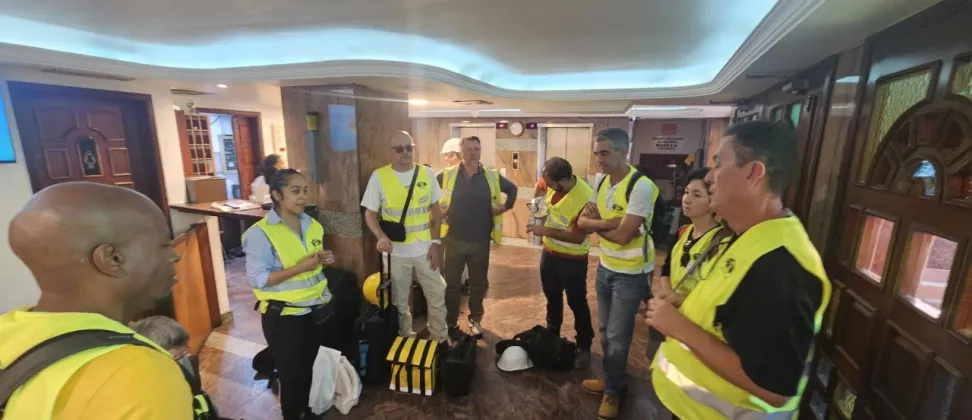
Part of the AFPS mission in Venezuela, with Jean-François Semblat in the centre. Credit: Jean-Yves Bonnaire - FRBTP

Following the twin earthquakes on 24 June, the French Association for Earthquake Engineering dispatched a post-earthquake mission to Venezuela from 29 August to 6 September 2026. Jean-François Semblat, a professor at ENSTA and deputy director of the Faculty, was part of the mission as a specialist in soil response to seismic shocks.

The team, comprising 11 specialists from various disciplines ranging from seismology to architecture and crisis management, aimed to gather as much knowledge as possible from their local counterparts regarding events of this magnitude. Whilst mainland France is generally considered to be an area of moderate seismic activity, the situation is quite different for the overseas territories, particularly the Caribbean arc, which faces conditions very similar to those in Venezuela.


From a scientific perspective, the mission focused particularly on the orientation of seismic tremors, the response of building foundations, the interactions between groups of buildings depending on their height, and also the response of industrial facilities.

“In my field of expertise, the main objective was to share lessons learnt from what had happened and to draw conclusions regarding the potential implications for the adjustment of earthquake-resistant standards or construction methods. I was particularly interested in the phenomena of soil liquefaction and the ‘jelly bowl’ effect*, in which I specialise.”

Jean-François Semblat Professor at ENSTA
Jean-François Semblat
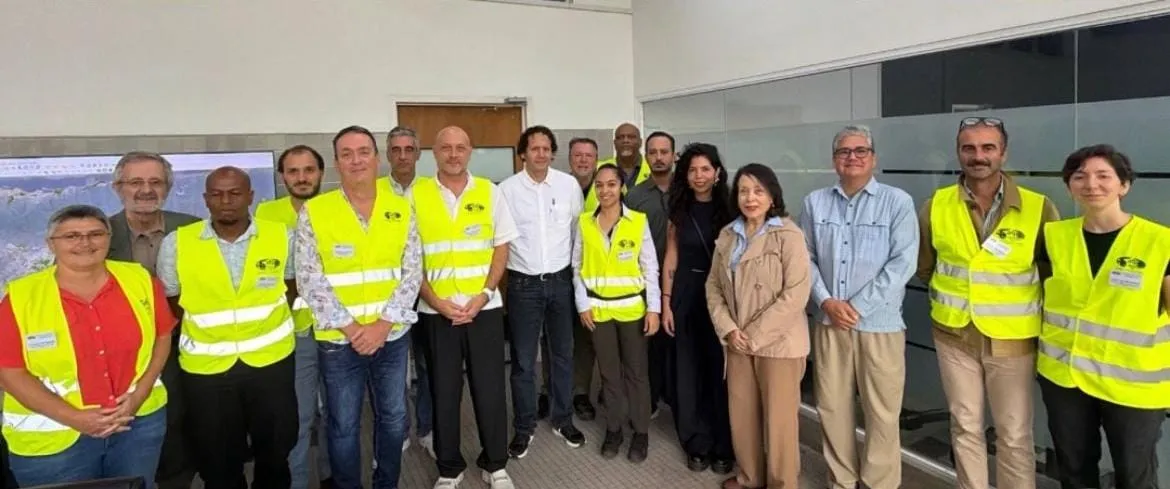
The team with Venezuela’s Minister of Transport, Francisco Garces (in the white shirt, centre)

This mission by the French Association for Earthquake Engineering will shortly lead to the publication of a report and a debriefing meeting at the Ministry for Ecological Transition.

* See the definition of “the ‘jelly bowl’ effect” by François Semblat in a previous article.

Expert opinion: Jean-François Semblat on soil liquefaction during earthquakes

Our latest news

Alumni | Institute | Company | Training | International | Student Life
ENSTA has moved up to 6th place in the ranking of engineering schools by Le Figaro

ENSTA has climbed further up the rankings and is now tied for sixth place in *Le Figaro*’s engineering school rankings, moving up one place from last year’s ranking.


ENSTA has moved up to 6th place in the ranking of engineering schools by Le Figaro

ENSTA has climbed further up the rankings and is now tied for sixth place in *Le Figaro*’s engineering school rankings, moving up one place from last year’s ranking.

Alumni
Agence 402 : AI in the service of sovereignty

Enabling major French groups to utilise artificial intelligence in their confidential operations whilst ensuring the security of their sensitive data: this is the mission set by Agence 402, co-founded by Bertrand Paturel, ENSTA 2021.

Agence 402 : AI in the service of sovereignty

Enabling major French groups to utilise artificial intelligence in their confidential operations whilst ensuring the security of their sensitive data: this is the mission set by Agence 402, co-founded by Bertrand Paturel, ENSTA 2021.

Alumni | Institute | Training | Research | Student Life
Fathi Trigui : solidarity at the heart of the ENSTA Foundation’s missions

From research engineering within a major industrial group to consultancy, the career path of Fathi Trigui, now an associate director at BearingPoint, illustrates the diversity of opportunities opened up by an ENSTA education. He now wishes to put this...