

New Space : what impact will this have on the established players ?

Innovation, Research Defense and Security, Transport and mobility
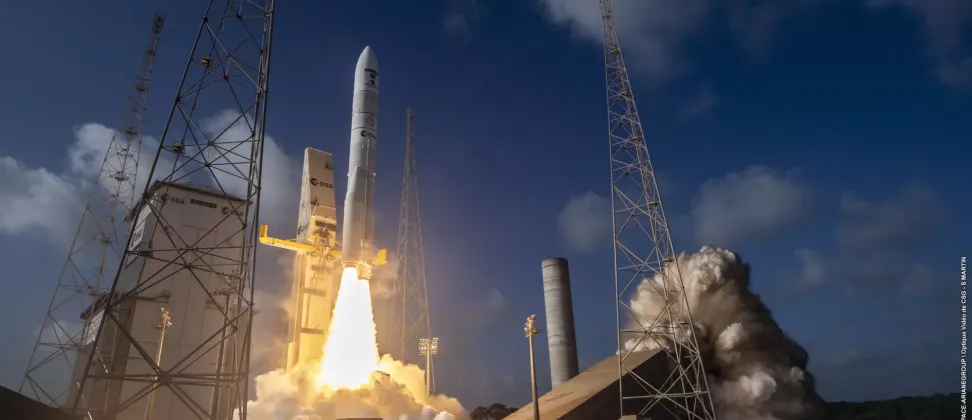
Ariane 6 successfully launches the MTG-I2 weather satellite. Credit: ESA-CNES-Arianespace-ARIANEGROUP

Having emerged in the mid-2000s as a genuine revolution in access to space, ‘New Space’ and its key players have matured. How have traditional players in the space sector coped with this external shock? This is the question examined in a recent research article published in the journal ‘Économie appliquée’ and co-authored by ENSTA professor Didier Lebert.

In this article, co-authored with Pierre Barbaroux, an economist at the École de l’Air’s research centre, Didier Lebert set out to determine whether it was possible to measure the impact of the growth of New Space companies on the technological knowledge bases of long-established European firms in the sector.

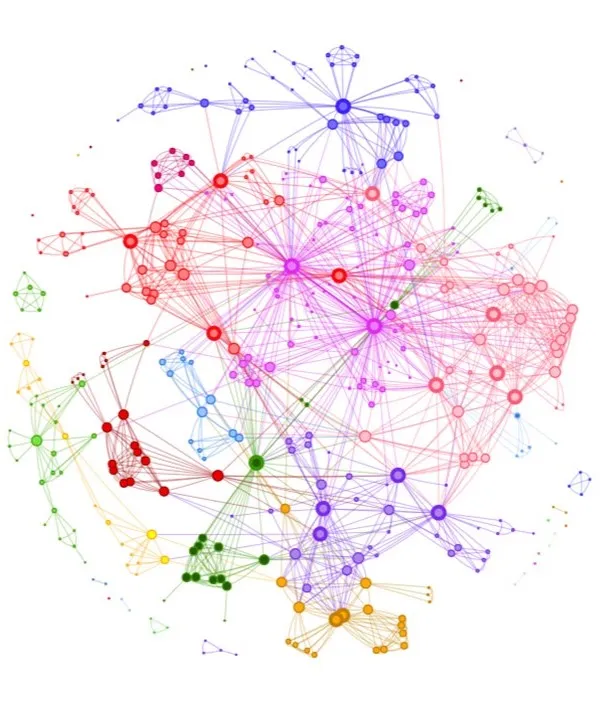
By representing the various technical systems of each player in graph form, they were able to trace these influences with great precision.

To take just this one example, Arianespace’s strategy towards technical systems originating from NewSpace is highly considered and exploratory. These technical systems are integrated only very gradually, when they are in line with the organisation’s core, long-standing expertise.

Didier Lebert ENSTA Professor in the Unité d'économie appliquée
Didier Lebert ©StudioFredH/ENSTA

To put it another way, European space industry players are by no means abandoning their solid knowledge base – upon which the proven reliability of their launch systems directly depends – but are gradually developing it by incorporating what proves relevant.

This article is the result of work carried out under the CROTALE research contract (“CaRtOgraphie de l'innovaTion spatiALE”), carried out jointly by the Research Centre of the École de l’Air et de l’Espace (CREA) in partnership with ENSTA’s Applied Economics Unit, and supported by the Defence Innovation Agency (AID) through the CIEDS.

It lays the foundations for analysing the sector’s structure in order to interpret its transformations. The ultimate aim is to validate the method so that industry players can have a tool for assessing their own research and development, and potentially analyse that of their competitors or complementary players.

“Our methodology enables us to trace the journey from the very first scientific publication on a subject to how it evolved into a patented technology,” concludes Didier Lebert.

ArianeGroup’s technology knowledge base for 2016–2021 (nodes: technologies; colours: technical systems)

References: Barbaroux, P., Lebert, D. (2026). The transformation of the space launch vehicle industry: a comparison of US and European R&D policies. Economie Appliquée (8): 145–180.

Our latest news

Innovation | Research
SEARENITY, the magnetic hull-cleaning robot designed to decarbonise maritime transport

ENSTA is one of the partners in the SEARENITY project, which was selected under the ‘CORIMER Low-Carbon Ships’ call for proposals (funded by Ademe, France 2030). The project aims to develop an autonomous robot capable of continuously cleaning ship hulls...

SEARENITY, the magnetic hull-cleaning robot designed to decarbonise maritime transport

ENSTA is one of the partners in the SEARENITY project, which was selected under the ‘CORIMER Low-Carbon Ships’ call for proposals (funded by Ademe, France 2030). The project aims to develop an autonomous robot capable of continuously cleaning ship hulls...

Institute | Training
Training a generation of committed engineers

One afternoon in September, in the lecture theatres at ENSTA, groups of around ten students are discussing ideas whilst gathered around large sheets of white paper. Together, with the help of a facilitator, they are placing cards relating to climate...

Training a generation of committed engineers

One afternoon in September, in the lecture theatres at ENSTA, groups of around ten students are discussing ideas whilst gathered around large sheets of white paper. Together, with the help of a facilitator, they are placing cards relating to climate...

Alumni | Institute | Training | Innovation | International
Catherine Delcroix, building the future with the ENSTA Foundation

It has already been several years since, following a highly successful career in engineering, Catherine Delcroix could have retired to the Mont Blanc massif to enjoy a well-deserved retirement. But as one of the first women to graduate from ENSTA, she is...

Catherine Delcroix, building the future with the ENSTA Foundation

It has already been several years since, following a highly successful career in engineering, Catherine Delcroix could have retired to the Mont Blanc massif to enjoy a well-deserved retirement. But as one of the first women to graduate from ENSTA, she is...