
ENSTA at IROS 2026

Innovation, International, Research Defense and Security, Marine Engineering, Digital Science & Engineering, Transport and mobility

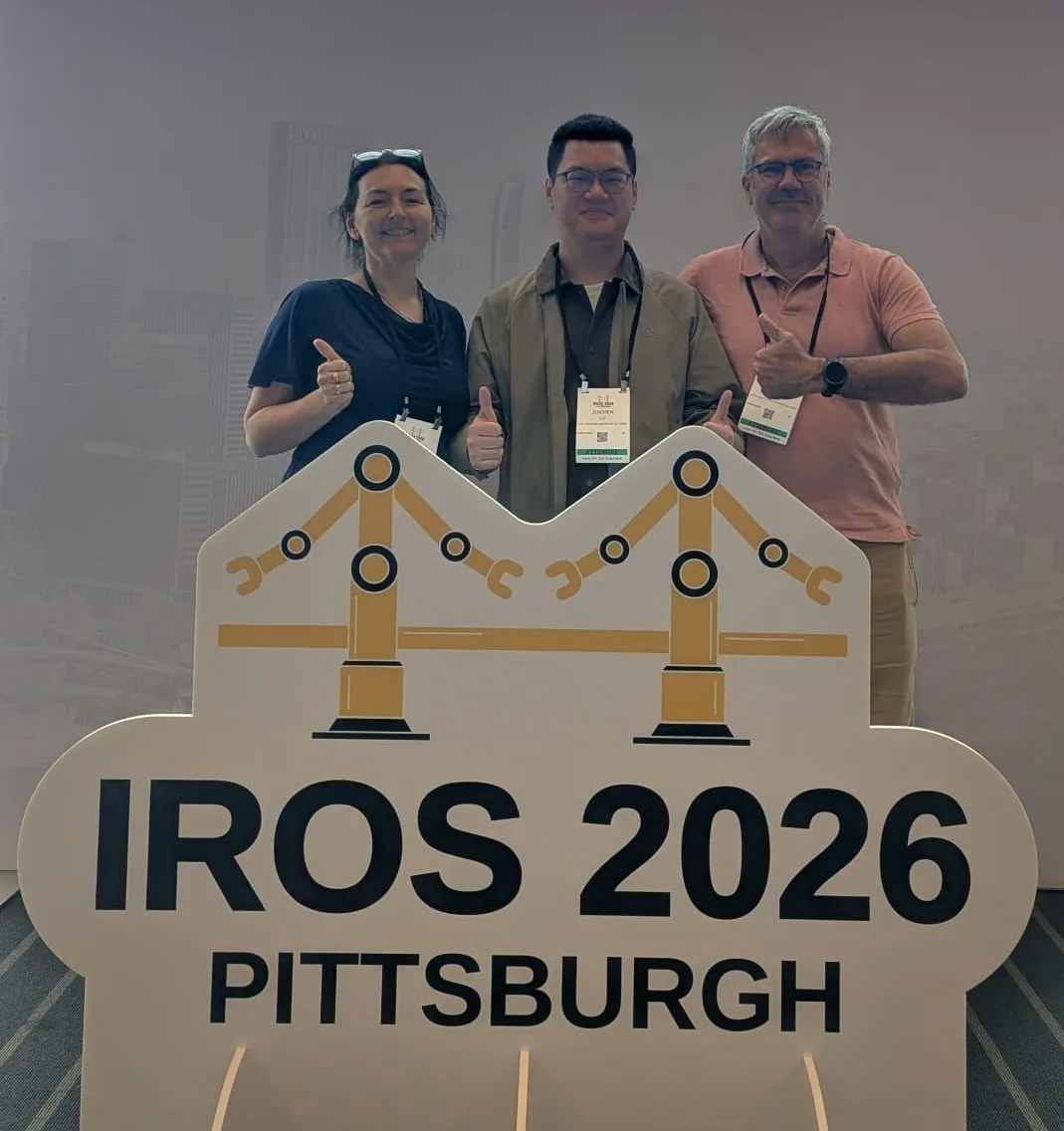
From September 27 to October 1, the 2026 edition of the IEEE IROS conference—one of the most prestigious scientific events in the field of robotics and intelligent systems—was held in Pittsburgh. Zhichen Lu, Benoit Clément, and Adriana Tapus were on site to present their work.

The International Regulations for Preventing Collisions at Sea (RIPAM or COLREG) establish a set of rules designed to prevent collisions at sea. Unlike traffic laws, these regulations do not define absolute priorities, but rather relative ones based on the situation and the nature of each vessel. In particular, they distinguish between the vessel that must give way and the one that must maintain its course and speed, while imposing on each a duty to prevent collisions.

These rules, which can be interpreted differently depending on the circumstances, may be a source of ambiguity, particularly in cases where one of the vessels involved is an autonomous robotic vessel, while the other is operated by humans.

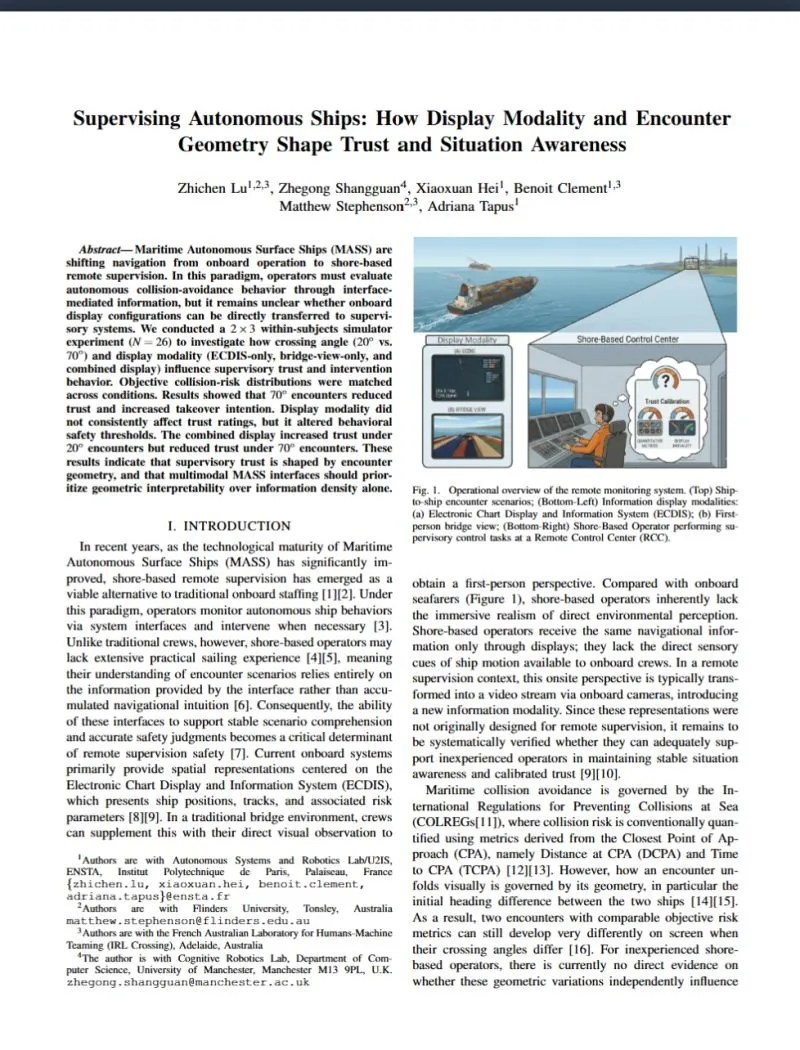
It is within this context that the research presented in the article titled “Supervision of Autonomous Vessels: How Display Modes and Encounter Geometry Influence Confidence and Situational Awareness” takes place; the authors studied shore-based supervision of autonomous vessels: how should an encounter between two vessels be presented so that the operator knows whether to let the system take over or intervene?

To investigate this issue, the authors conducted a controlled simulator experiment with 26 maritime training students, with an average age of 22. They had theoretical knowledge and simulator experience but no professional experience at sea. The protocol varied several parameters, such as the angle between the ships’ initial courses, the display mode (electronic chart, bridge view, or a combination of both), the timing of the evasive maneuver, and the role of the supervised vessel (the one that must yield or the one that must maintain its course).

One of the main scientific contributions of this article is an experimental demonstration that the effectiveness of a supervision interface depends on the geometry of the situation, and that the confidence expressed can mask significant differences in behavior. Encounters at 70° reduce confidence and increase the intention to take manual control. The combined display inspires the greatest confidence at 20°, but the least at 70°, likely due to the cognitive cost of correlating two spatial representations. Furthermore, operators with a bridge view cease their observation at shorter safety distances, without any change in their reported confidence. These results underscore the importance of designing interfaces capable of supporting operators’ situational awareness and facilitating timely human intervention when necessary.

The project’s longer-term goal is to develop a coherent set of rules to ensure collision avoidance at sea in hybrid situations, taking into account both human-machine interface issues—an area of expertise for Professor Adriana Tapus—and uncertainty and decision-making in complex environments.

Zhichen Lu is working on this topic as part of his doctoral dissertation, co-supervised by ENSTA and Flinders University in Australia.

According to Benoît Clément, an ENSTA professor and director of the Department of Computer Science & System Engineering, these activities began in 2017 as part of the creation of the Franco-Australian IRL CROSSING laboratory in partnership with the CNRS, IMT, Naval Group, Flinders University, and the University of Adelaide.

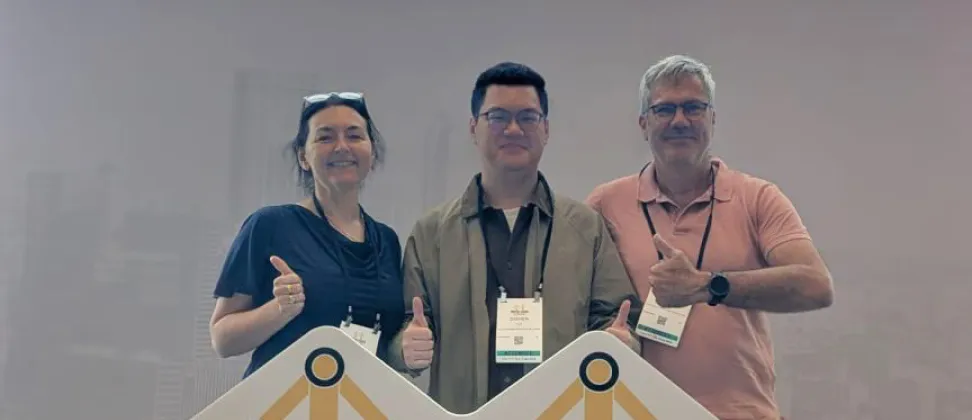
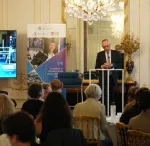
From left to right, Adriana Tapus, Zhichen Lu and Benoit Clément

Through the positive reception of our paper, as well as the various workshops in which we participated, we observed that autonomous marine navigation and human-machine interaction—two areas of expertise at ENSTA—are at the heart of current challenges in robotics, with significant scientific hurdles that we have yet to overcome.

Benoit Clément ENSTA Professor and Director of the Department of Computer Science & System Engineering

Participating in IROS 2026 thus highlighted ENSTA’s presence through three of its researchers and showcased its work at the intersection of autonomous robotics, human-machine interaction, and maritime safety. Discussions with the international robotics community provided an opportunity to present this research and discuss challenges related to human supervision, uncertainty management, and the application of COLREG in hybrid maritime situations. The interest generated by these issues underscores their importance for the development of safer autonomous systems and contributes to ENSTA’s international scientific reputation.

Réferences ; "supervising autonomous ships : how display modality and encounter geometry shape trust and situation awareness"

Our latest news

Alumni | Institute | Training | International | Student Life
Magali Maleh, Recipient of the ENSTA Foundation’s Excellence Scholarship

It takes a great deal of determination to stay motivated in your studies when you have to spend three hours a day commuting, with few career prospects in a sluggish economy. Magali Maleh, who grew up in crisis-stricken Argentina, knows this better than...
Magali Maleh, Recipient of the ENSTA Foundation’s Excellence Scholarship

It takes a great deal of determination to stay motivated in your studies when you have to spend three hours a day commuting, with few career prospects in a sluggish economy. Magali Maleh, who grew up in crisis-stricken Argentina, knows this better than...

Institute | Training | Innovation | Research
The education and the research at ENSTA at the core of the development of IP Paris

The Institut Polytechnique de Paris’s back-to-term press conference took place on Tuesday 29 September. In particular, it provided an opportunity to highlight ENSTA’s specific contributions and new developments in education that benefit the Institute.

The education and the research at ENSTA at the core of the development of IP Paris

The Institut Polytechnique de Paris’s back-to-term press conference took place on Tuesday 29 September. In particular, it provided an opportunity to highlight ENSTA’s specific contributions and new developments in education that benefit the Institute.

Innovation | Research
SEARENITY, the magnetic hull-cleaning robot designed to decarbonise maritime transport

ENSTA is one of the partners in the SEARENITY project, which was selected under the ‘CORIMER Low-Carbon Ships’ call for proposals (funded by Ademe, France 2030). The project aims to develop an autonomous robot capable of continuously cleaning ship hulls...

SEARENITY, the magnetic hull-cleaning robot designed to decarbonise maritime transport

ENSTA is one of the partners in the SEARENITY project, which was selected under the ‘CORIMER Low-Carbon Ships’ call for proposals (funded by Ademe, France 2030). The project aims to develop an autonomous robot capable of continuously cleaning ship hulls...