Maïmouna Bocoum: The Art of Exploring Across Disciplines

Alumni, Training, Research Engineering for health
Maïmouna Bocoum: The Art of Exploring Across Disciplines

A recent recipient of the Irène Joliot-Curie Prize, Maïmouna Bocoum began her distinguished academic career at ENSTA. While she has come a long way since then, she still occasionally consults her class notes when she needs to familiarize herself with a new discipline. For this remarkably creative researcher, the key to deeper discovery lies in one secret: she has never stopped learning.

Not all children who are fascinated by the experiments at the Palais de la Découverte and other science centers will necessarily become researchers. But almost all those who do become researchers retain a sense of wonder from their visits to these places of scientific culture, which undoubtedly played a role in shaping their calling. Maïmouna Bocoum is one of them.

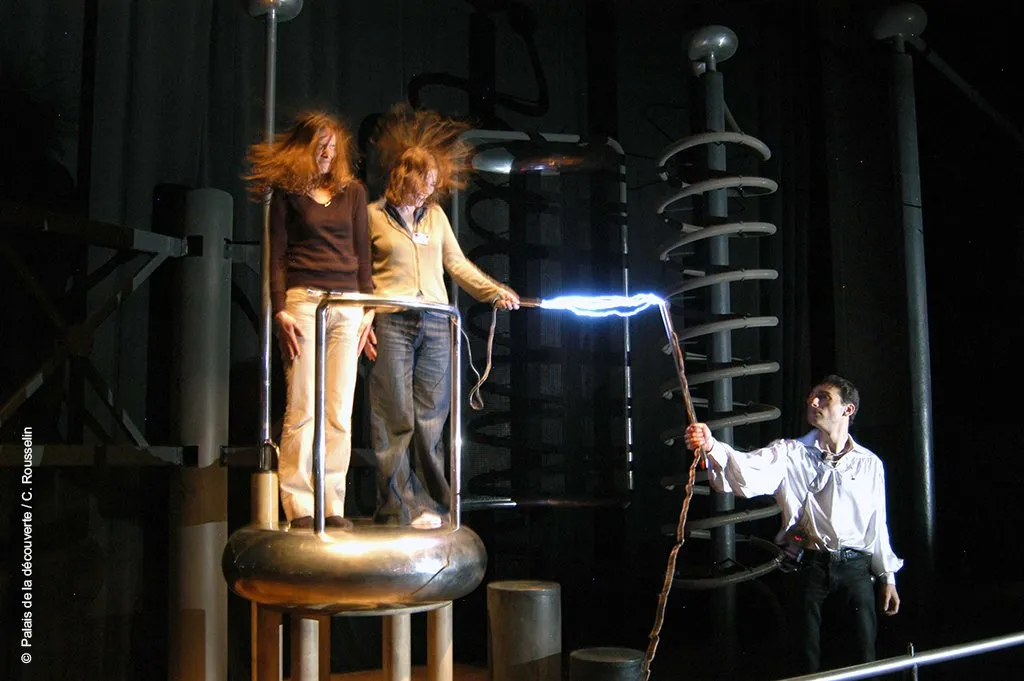
“As a child, my parents often took me to the Palais de la Découverte, and I have incredible memories of those visits. Especially the experiments on static electricity, or those on the diffraction of light. It literally fascinated me! ”

Static electricity experiment at the Palais de la Découverte. Credit : Palais de la découverte / C. Rousselin

In high school, this fascination with science shifted toward physics. Back home, Maïmouna would often reflect on the concepts covered in class, their implications, and the questions they sparked in her active mind. She wanted to understand, and she set herself on that path by choosing a science track; her excellent academic record then allowed her to enter a preparatory class.

When it came time for the entrance exams, she chose to enroll in ENSTA’s general engineering program, knowing that its science curriculum was of an excellent standard and would allow her to continue growing while still offering her a wide range of options after graduation.
 

“I was determined to attend a multidisciplinary school because I didn’t want to be confined to a single field. Of course, the school’s strong ranking was also a factor. At ENSTA, I found exactly what I was looking for: a generalist education that also allowed us to delve deeply into fluid mechanics, physics, and mathematics.”

Perhaps most surprising is that even today, nearly 15 years after graduating, Maïmouna Bocoum regularly returns to her ENSTA courses.
“The ENSTA courses are very well designed and of an excellent standard. Even at the research level, when I need to familiarize myself with a new field, I find everything I need there. These courses are a tremendous toolkit that I still use very frequently.”

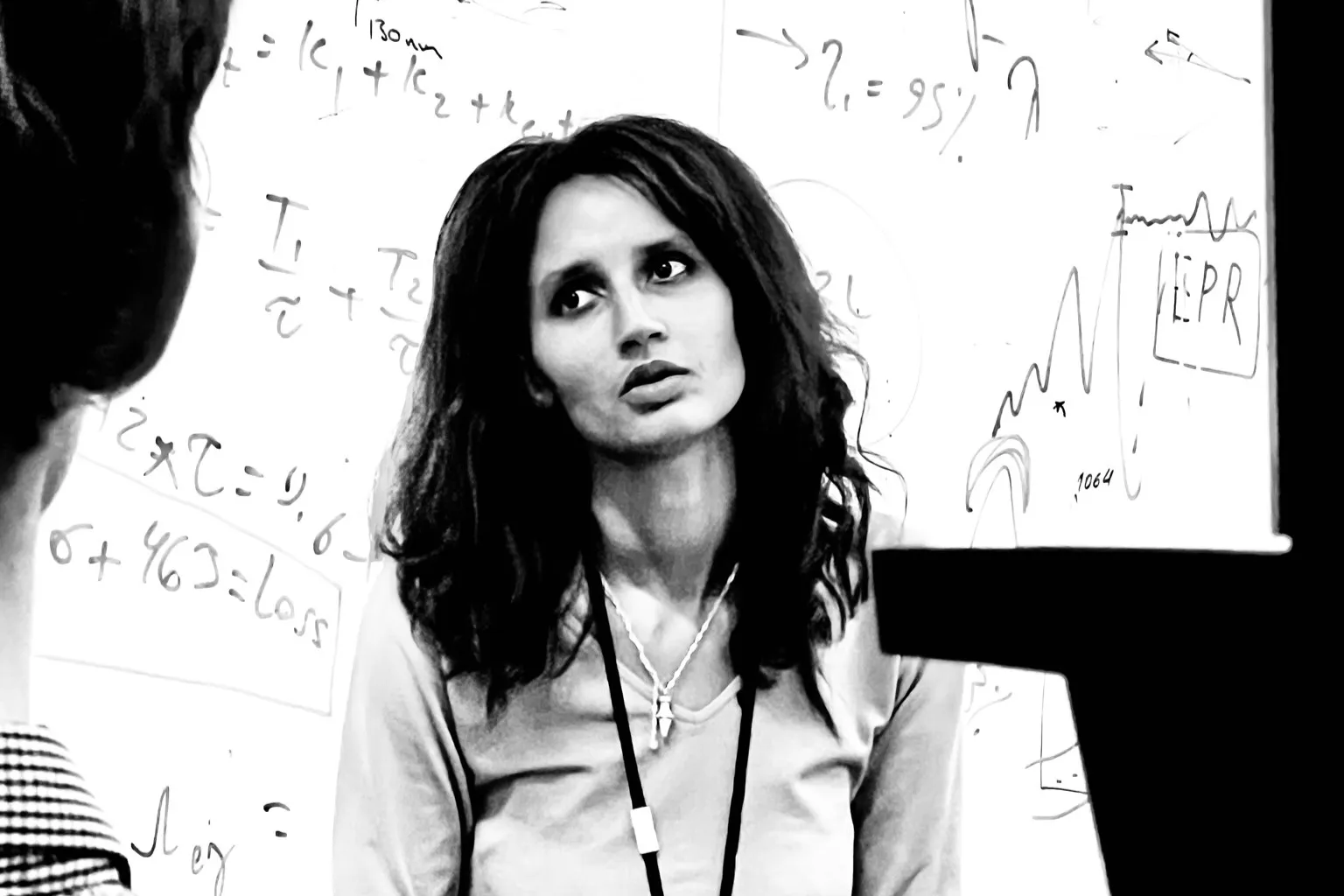
Maïmouna Bocoum

Armed with this solid foundation in math and physics and still driven by a passion for science, Maïmouna Bocoum quite naturally went on to pursue a Ph.D. at the Applied Optics Laboratory, one of the School’s 13 laboratories. There, she conducted research on the generation of very short light pulses—in the attosecond range, the smallest unit of time currently measurable—using a very dense plasma mirror that reflects light.

“The idea was to generate light pulses at frequencies much shorter than the optical frequency in order to probe fundamental processes of matter on very short time scales: electron movements, elementary chemical processes, and so on.”

But for Maïmouna Bocoum, her dissertation is just one step. Far from having quenched her thirst for knowledge, she is now pursuing a postdoctoral fellowship at the Langevin Institute in a field that is entirely new to her: acousto-optics.

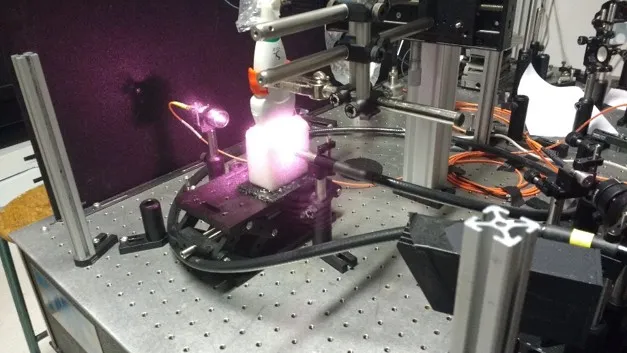
Acousto-optical imaging combining an optical laser and an ultrasound probe. The goal of this research is to develop an optical imaging device capable of detecting absorption or scattering contrast in tissues—for example, to detect a tumor in the breast. Credit: ESPCI

What does this involve? Observing the inside of the human body using light is much more difficult than it seems, as you can see by shining a flashlight under your hand in the dark: biological tissues strongly scatter light. This characteristic limits the depth to which it is possible to see. One solution is to combine light with ultrasound to obtain deeper and more precise images: this is the very principle of acousto-optical imaging.

“Changing disciplines is an extremely fertile ground for creativity, and I never miss an opportunity to spend time in a lab other than my own. This interdisciplinary approach allows us to identify both analogies and common challenges, and to generate new ideas in both fields. ”

Using the principles of acousto-optics, Maïmouna Bocoum is developing imaging technologies for the early detection of deep-tissue tumors, which could serve as non-invasive alternatives to biopsies.

Driven as always by interdisciplinary approaches, she has been interested—since a stint at the Niels Bohr Institute in Copenhagen—in imaging techniques that combine ultrasound with quantum magnetic field detectors.

“According to data in the medical literature, changes in tissue conductivity are among the first alterations observed on the surface of tumors. Here again, the hope is to detect tumors at an extremely early stage, well before they have begun to proliferate."

As a recipient of the Irène Joliot-Curie Prize—which since 2001 has honored women scientists distinguished by the quality of their research—Maïmouna Bocoum takes great pride in contributing, through her example, to advancing the role of women in science and, ultimately, science itself.


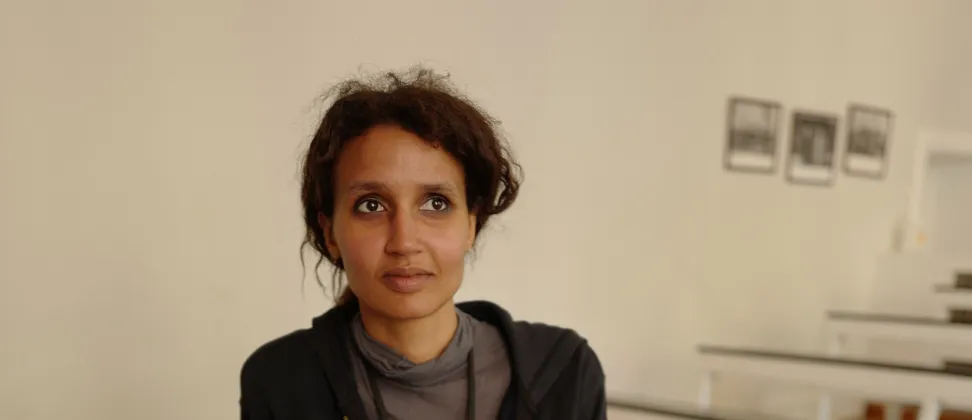
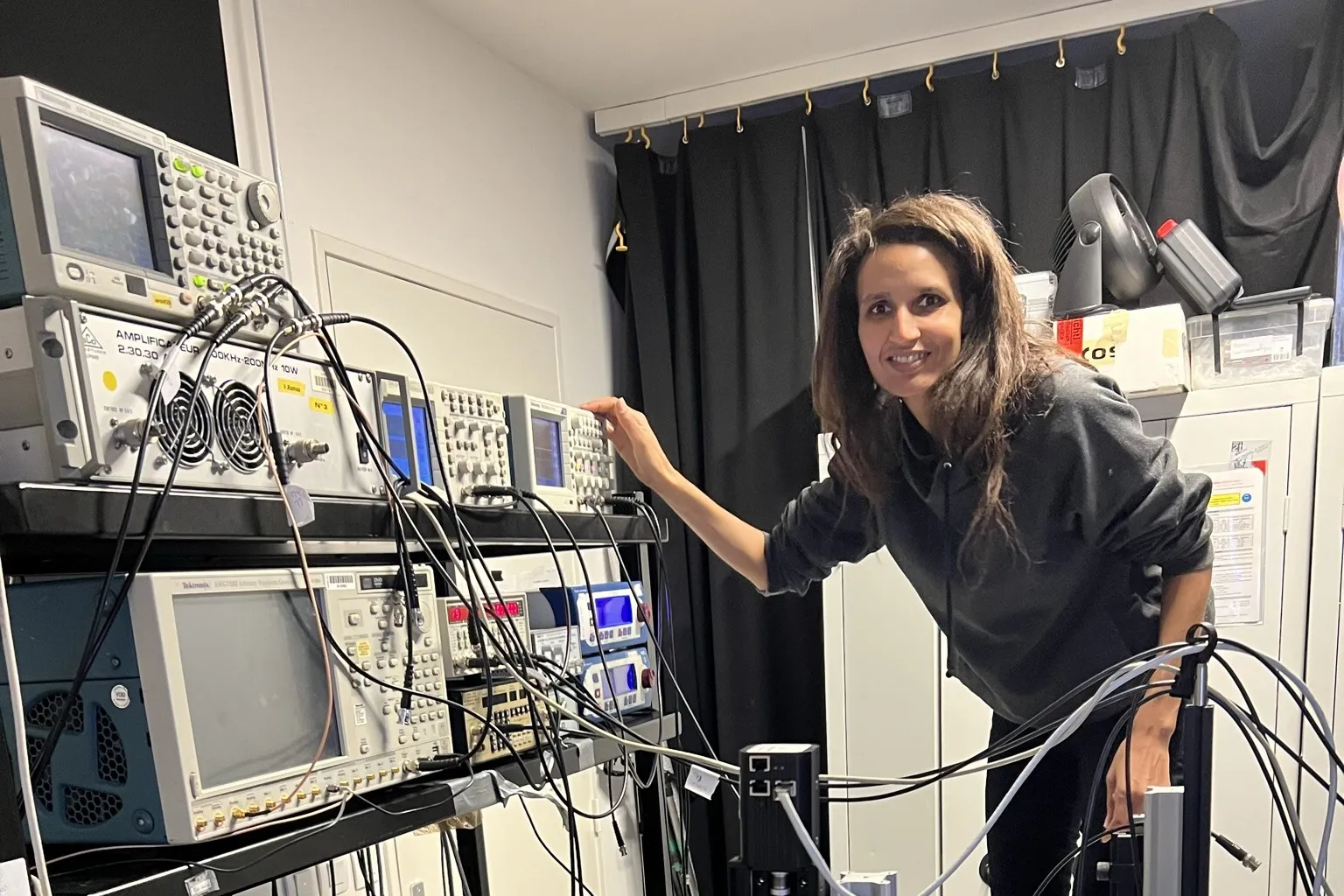
Maïmouna Bocoum in her Institut Langevin Lab

Whenever I have the opportunity to speak to an audience of young people—girls or boys, for that matter—I have just one very simple message to share with them: nurture your curiosity about science, go as far as that curiosity takes you, and put everything you’ve learned through it to work for the common good.

Maïmouna Bocoum Research Fellow at the CNRS - ENSTA 2012

Our latest news

Alumni
Lords of the Ocean, an adventure that challenges preconceptions about sharks

For over five years, the Lords of the Ocean team—founded by two ENSTA graduates—has been crisscrossing the seas in search of large sharks. They dive to help us understand them better, combat our preconceptions, and protect them more effectively. In 2026...

Lords of the Ocean, an adventure that challenges preconceptions about sharks

For over five years, the Lords of the Ocean team—founded by two ENSTA graduates—has been crisscrossing the seas in search of large sharks. They dive to help us understand them better, combat our preconceptions, and protect them more effectively. In 2026...

Company | Innovation | Research
ENSTA Welcomes You to VIVATECH 2026

From June 17 to 20, Paris Expo Porte de Versailles will host the 2026 edition of Viva Technology, Europe’s largest innovation and technology trade show. ENSTA will be represented there by four startups from its ecosystem, with the head of the ENSTARTUPS...

ENSTA Welcomes You to VIVATECH 2026

From June 17 to 20, Paris Expo Porte de Versailles will host the 2026 edition of Viva Technology, Europe’s largest innovation and technology trade show. ENSTA will be represented there by four startups from its ecosystem, with the head of the ENSTARTUPS...

Institute | Student Life
The ENSTA Foundation and its sponsors support student initiatives

Organized by the ENSTA Foundation, with support from its sponsors—including SAE* for the 2026 edition—“Make Us Dream” aims to provide financial support for innovative student projects with a technological focus. In 2026, the call for projects selected...

The ENSTA Foundation and its sponsors support student initiatives

Organized by the ENSTA Foundation, with support from its sponsors—including SAE* for the 2026 edition—“Make Us Dream” aims to provide financial support for innovative student projects with a technological focus. In 2026, the call for projects selected...