Digital Twins and Health: ENSTA Research on France Culture

Innovation, Research Engineering for health, Digital Science & Engineering
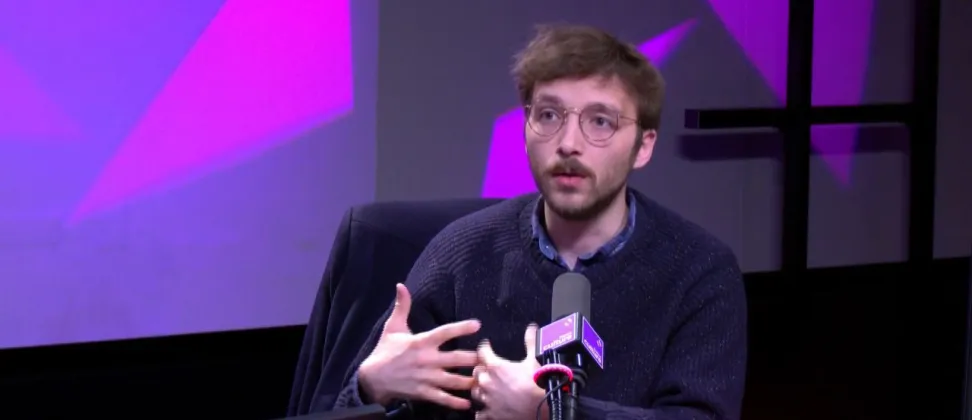
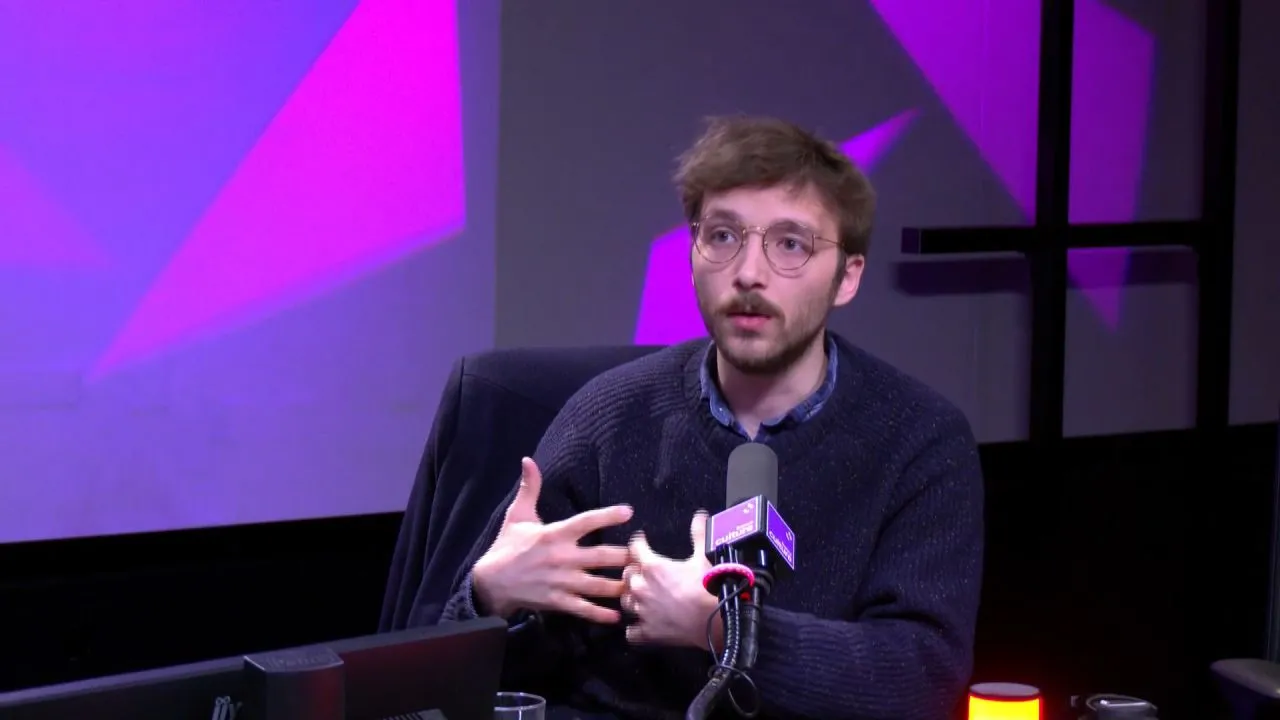
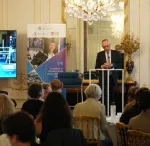
Alexandre Daby-Seesaram during his interview on France Culture

Will it one day be possible to predict how our vital organs will develop and how they will respond to certain treatments, or even to surgery? These are the possibilities opened up by digital twins applied to healthcare, a field in which Alexandre Daby-Seesaram, a lecturer and researcher at ENSTA’s Laboratory of Mechanics and Its Interfaces, is conducting research.

Mechanics, the science of motion, forces, and energy, enables us to understand and model the real world. It has been one of the key tools of engineering since the First Industrial Revolution. Today, advances in numerical simulation make it possible to solve the complex equations governing biological systems, thereby offering biomechanics an unprecedented field of application for deciphering living organisms.

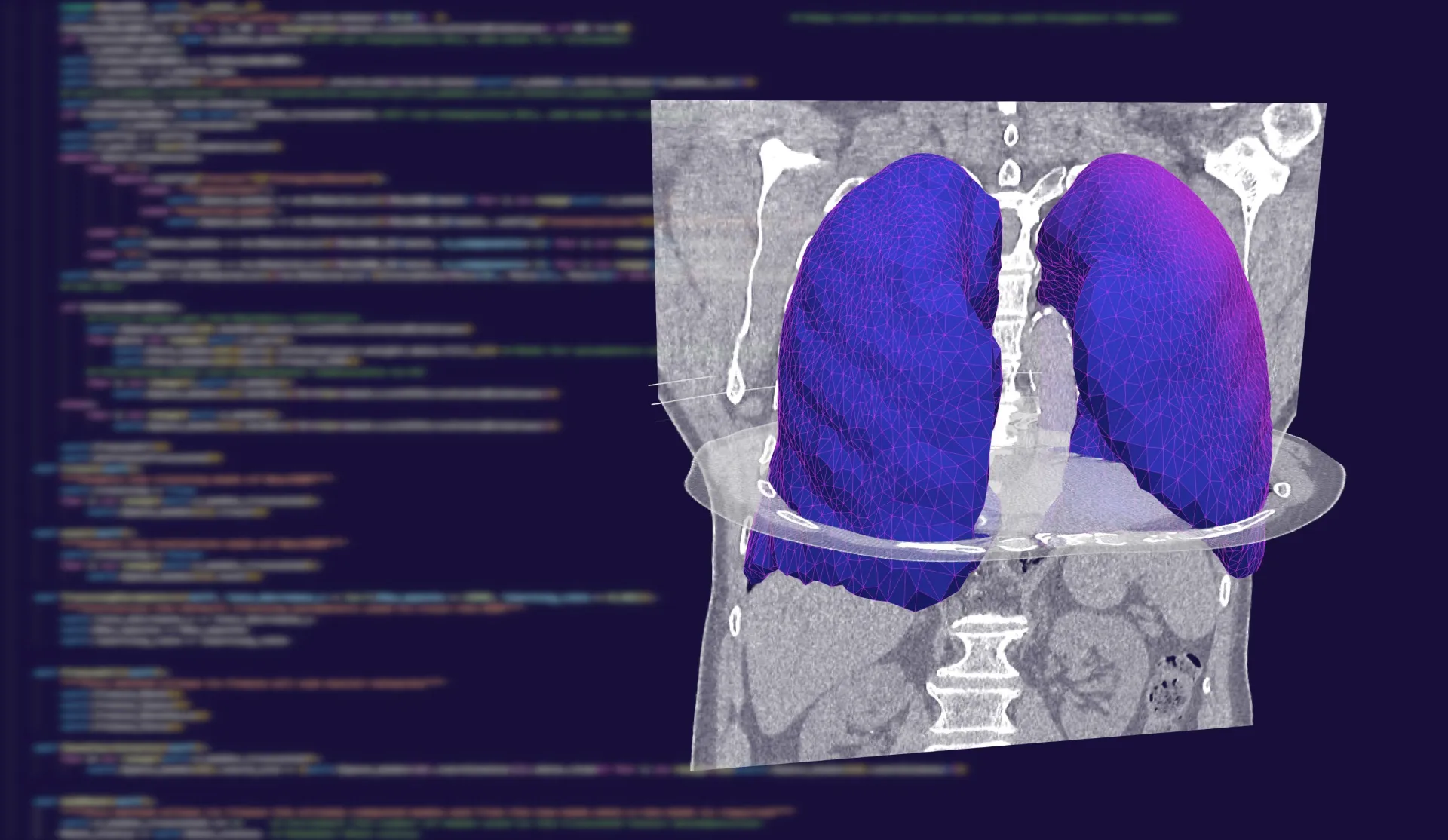
What are the applications? Alexandre Daby-Seesaram (LMI, ENSTA) and Martin Genet (LMS, École polytechnique) lead a research group focused on lung modeling. Their work involves reconstructing and registering 3D organ volumes—particularly those of human lungs—from medical images (CT scans, MRIs) in order to numerically solve the equations governing their behavior using supercomputers.

Digital twins of human lungs

Modeling can be taken to great lengths, down to the level of the alveoli—those tiny cavities, just one-tenth of a millimeter in size, that facilitate gas exchange with the blood. What are the implications for patient health? Learn more about their work in the France Culture series “Les chantiers de la recherche.” (in French language)

Alexandre Daby-Seesaram on France Culture

Our latest news

International | Research
Protection against unexploded ordnances: ENSTA’s expertise called upon in Japan

On 5 September 2025, an unexploded ordnance (UXO) was discovered on the seabed approximately 9 metres below the surface at Tokuyama-Kudamatsu Port in Shunan City, Yamaguchi Prefecture, Japan—specifically in the waters about 48 metres west of Berth No. 3...

Protection against unexploded ordnances: ENSTA’s expertise called upon in Japan

On 5 September 2025, an unexploded ordnance (UXO) was discovered on the seabed approximately 9 metres below the surface at Tokuyama-Kudamatsu Port in Shunan City, Yamaguchi Prefecture, Japan—specifically in the waters about 48 metres west of Berth No. 3...

International | Student Life
International students in the spotlight at both ENSTA campuses

Having pursued a successful internationalization strategy for years, ENSTA now welcomes students from 32 different countries, with international students accounting for more than 25% of the student body on average across both campuses. To highlight this...

International students in the spotlight at both ENSTA campuses

Having pursued a successful internationalization strategy for years, ENSTA now welcomes students from 32 different countries, with international students accounting for more than 25% of the student body on average across both campuses. To highlight this...

Company | Innovation | Student Life
Another victory for ENSTA at INNOV’NIGHT

While an ENSTA team had already distinguished itself at the previous edition, Foucault de Jerphanion, Aurélien Gilles, Ambrine Pujo, Thomas Carpentier, and Théotime Galmiche successfully rose to the challenge of designing an innovative solution to a...

Another victory for ENSTA at INNOV’NIGHT

While an ENSTA team had already distinguished itself at the previous edition, Foucault de Jerphanion, Aurélien Gilles, Ambrine Pujo, Thomas Carpentier, and Théotime Galmiche successfully rose to the challenge of designing an innovative solution to a...