Martin Hochhausen: anticipating the shipping routes of the future

Training, Research Marine Engineering

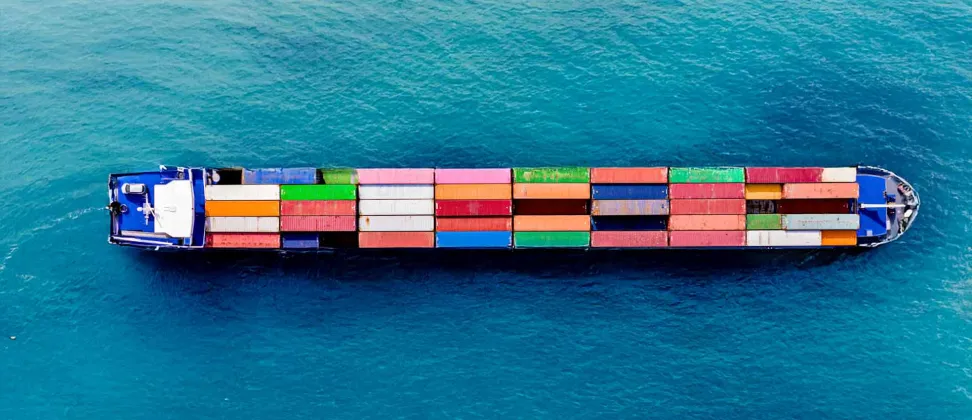
According to a report by the French Environment and Energy Management Agency (ADEME), by 2050, almost half of the world's commercial maritime fleet should be equipped with auxiliary propulsion technologies using wind power, in order to reduce their carbon footprint. What impact will this development have on the organization and safety of global maritime traffic? This is the subject of Martin Hochhausen's thesis, which has just begun at ENSTA's Brest campus.

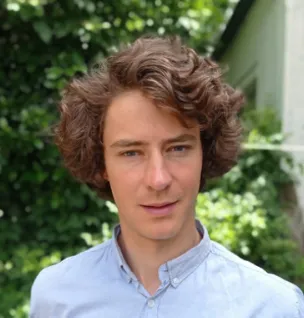
After graduating from ENSTA Bretagne's Brest campus apprenticeship program, Martin Hochhausen joined the “From Carbon to Olympic Goldproject as an engineer, which aimed to maximize the performance of sailing athletes for the 2024 Olympic Games.

There he met up again with Matthieu Sacher, a teacher-researcher he had already met during his training at the Brest campus, who offered him a new challenge at the end of the Olympic project: to embark on a doctoral thesis on the influence of auxiliary sailing propulsion on the organization and monitoring of maritime traffic.

This proposal rekindled the idea of going into research that I'd had since the end of my engineering course, without daring to take the plunge because at the time I didn't feel legitimate as a graduate of an apprenticeship scheme. But those two years as a research engineer made me realize that research also required very applied and concrete aspects in which I felt perfectly at ease.

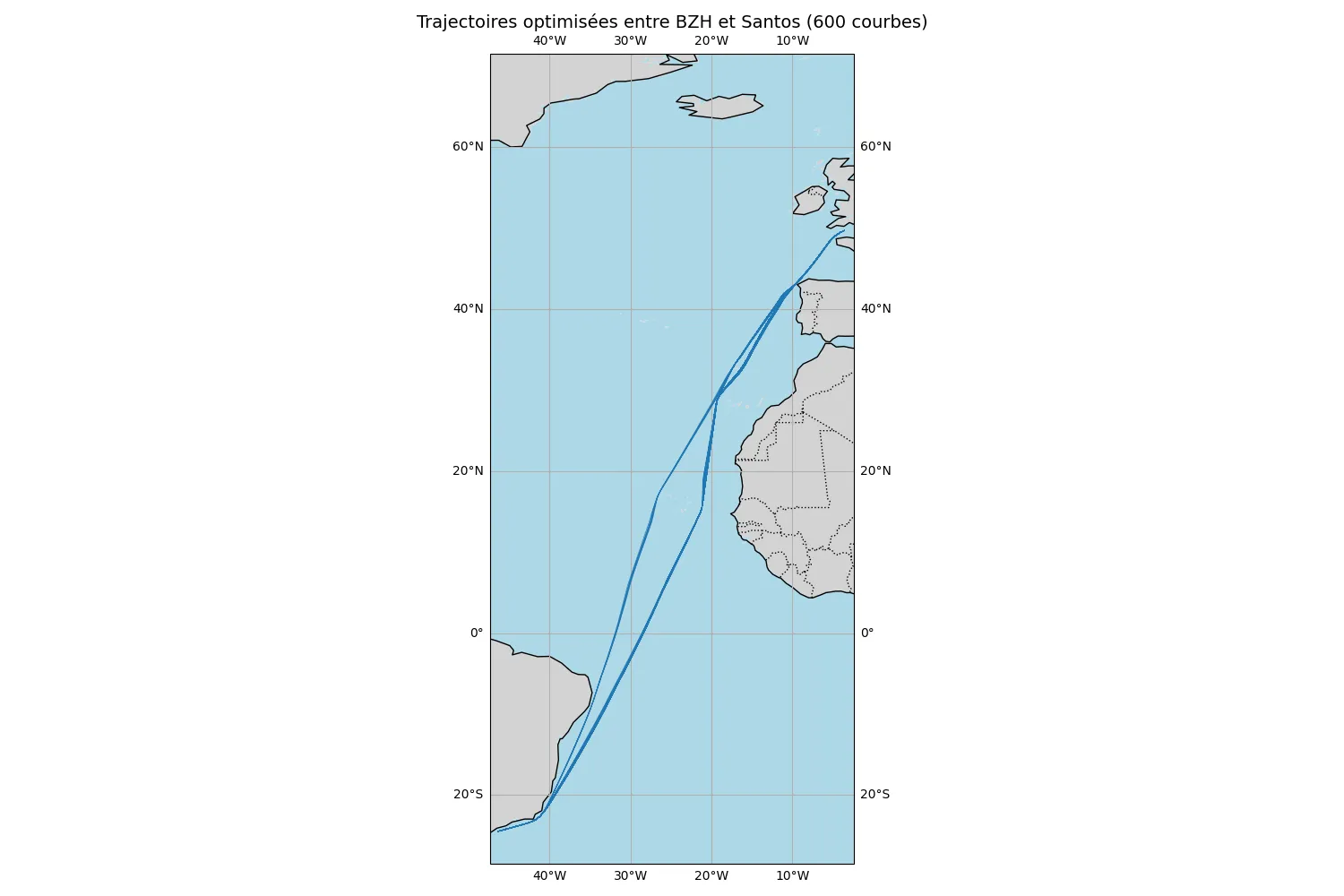
And this is typically the case with this thesis being carried out under the joint supervision of the École nationale supérieure maritime de Nantes (supervisor: Pédro Merino-Laso) and the ENSTA campus in Brest (supervisor: Matthieu Sacher, with Benoit Clément as thesis supervisor). In concrete terms, Martin Hochhausen will simulate maritime traffic by reproducing the trajectories of ships with conventional propulsion (thermal engines only), to which will be added a fraction of ships equipped with a hybrid propulsion system combining sail and thermal engine.

Adding semi-rigid sails or rotors, for example, will have an effect on the so-called leeway. The leeway, induced by the action of the wind on the ship's hull and its aerodynamic appendages, modifies the ship's actual trajectory in relation to its course. The effects of drift are well known on a local scale, particularly for maneuvering and coastal navigation. However, to study its impact on a global scale, for example on a transatlantic crossing, I'm going to use a trajectory simulator developed as part of the SOMOS project, which has the Ingeblue label and is funded by the French Defense Innovation Agency.

And if, as ADEME predicts for 2050, this drift concerns almost half of the merchant fleet, the consequences could be far from negligible in terms of congestion and therefore the safety of the busiest shipping routes, and even biodiversity in the event of an increase in the risk of collision with cetaceans if the new routes were to intersect with those of the great migrations. 

The simulator is extremely powerful, and allows you to adjust a wide range of parameters, such as the type and number of auxiliary thrusters. It allows us to directly measure the influence on ship maneuverability, and in particular to know the exact position of the rudder at each moment of the crossing.

While Martin Hochhausen's thesis work essentially involves replaying past trajectories to simulate maritime traffic in the light of new auxiliary propulsion parameters, it may well extend to the integration of speculative climatological files that would take into account changes in wind regimes linked to climate change.

These are ambitious goals that the young PhD student now feels fully capable of achieving, even though just a few years ago he doubted he was cut out for research.

With my main supervisor, Matthieu Sacher, we worked together for over two years on the “From Carbon to Olympic Goldproject. I know I can count on his support, and ask him any questions he may have, which he will welcome sympathetically, and there's a great deal of trust between us. It's very reassuring for a PhD student to be so well supported, and that's essential if we're to move forward with serenity.

While Martin Hochhausen's thesis work essentially involves replaying past trajectories to simulate maritime traffic in the light of new auxiliary propulsion parameters, it may well extend to the integration of speculative climatological files that would take into account changes in wind regimes linked to climate change.

These are ambitious goals that the young PhD student now feels fully capable of achieving, even though just a few years ago he doubted he was cut out for research.

With my main supervisor, Matthieu Sacher, we worked together for over two years on the “From Carbon to Olympic Goldproject. I know I can count on his support, and ask him any questions he may have, which he will welcome sympathetically, and there's a great deal of trust between us. It's very reassuring for a PhD student to be so well supported, and that's essential if we're to move forward with serenity.

Our latest news

Institute | Training
IETA military engineering students training at ENSTA marched in the July 14 parade

About 40 IETA military students marched on July 14, 2026, on the Champs-Élysées on behalf of ENSTA and the DGA. For the past three weeks, they had been preparing together for this major event for the French armed forces, whose theme was “Europe’s...

IETA military engineering students training at ENSTA marched in the July 14 parade

About 40 IETA military students marched on July 14, 2026, on the Champs-Élysées on behalf of ENSTA and the DGA. For the past three weeks, they had been preparing together for this major event for the French armed forces, whose theme was “Europe’s...

Research
Chaos in Caracas : the role of sediments

During the double earthquake that struck Venezuela on June 24, 2026, damage extended as far as Caracas, the capital, more than 150 km from the epicenter. How can such extensive damage be explained at such a great distance? Jean-François Semblat, a...

Chaos in Caracas : the role of sediments

During the double earthquake that struck Venezuela on June 24, 2026, damage extended as far as Caracas, the capital, more than 150 km from the epicenter. How can such extensive damage be explained at such a great distance? Jean-François Semblat, a...

Research
APRO : Teaching Drones to Go Unnoticed

Whether used for urgent deliveries or autonomous flying taxi services, drones could help solve many of the problems plaguing our congested city centers—provided, that is, that their main nuisance is reduced: that annoying, giant-mosquito-like buzz caused...

APRO : Teaching Drones to Go Unnoticed

Whether used for urgent deliveries or autonomous flying taxi services, drones could help solve many of the problems plaguing our congested city centers—provided, that is, that their main nuisance is reduced: that annoying, giant-mosquito-like buzz caused...