



Daniel, a Colombian student in the dual-degree program between Universidad Nacional de Colombia and ENSTA

Why did you choose ENSTA?
I chose ENSTA because it is a top-tier French engineering school and I wanted to take on a challenge in my life. Since I applied to enroll in 2024, I consider it one of the most important choices I’ve made, because I’ve received a multidisciplinary education of the highest caliber that addresses the major challenges of 21st-century society.
What are the benefits of studying at ENSTA? What do you like most about it?
One of the most obvious benefits of studying at ENSTA is being part of one of the world’s leading university groups, the Institut Polytechnique de Paris. This is reflected in the rigor and quality of the courses and the opportunity to conduct applied research projects. It’s an education that gives you the freedom to pursue your goals, such as participating in an international exchange, earning a dual French degree, developing innovation projects for business startups, or embarking on a path toward a Ph.D.
Similarly, I believe ENSTA has a fairly diverse student body, with over 20 nationalities represented, which gives you insight into how engineering is approached in other parts of the world and the chance to start learning other languages, such as Portuguese, Arabic, or even Ukrainian.
What I appreciate most about ENSTA is the career placement it offers in the French job market. I’ve seen several colleagues and recruiters strongly endorse this reputation—in other words, having an ENSTA engineer is highly recognized and well-regarded. This gives me great satisfaction, because advanced studies lead to high-level jobs.
What do you think of student life?
It’s quite diverse and makes me think a lot about what exists in my home country, Colombia. At ENSTA, you can devote yourself to whatever you really want, from sailing at sea to screening a movie in the school’s auditoriums. This gives the impression that engineering at ENSTA isn’t just about numbers, but also involves a humanistic education.
Right now, I’m not part of a student council, but with my Brazilian friends, I’ve gotten a little involved with the BRENSTA association, as a representative for Spanish speakers.
Do you live in a dorm? How would you describe your campus? What do you like about the campus?
I don’t currently live in a dorm, but during my first year in France, I had the pleasure of living there. I think the dorms are pretty good, because they’re very modern facilities and the rent is quite affordable for us international students. On campus, there’s a strong sense of camaraderie with students from other schools like École Polytechnique, Télécom Paris, or AgroParisTech. This also makes it easy to meet lots of people at meetings or events, such as the Coupe de l’X. Plus, the school is very well located, just 10 minutes from the Massy RER station.
What advice would you give to a student from your country, Colombia, who wants to come to ENSTA?
To all Colombian students who want to come study at ENSTA, I recommend learning French very well, because that’s generally what
poses the most difficulty for us. Similarly, the curriculum at ENSTA is quite different from what we’re used to in Latin America, which is why a thorough review of mathematics is essential to avoid getting lost in class. However, the professors understand this challenge and have always been there to help everyone fully grasp the topics covered in class.
What do you like most about France?
It’s hard to name just one thing I like about France, but I can say it’s the peace and security I feel here. France is a country that, in my opinion, does a great job of separating the academic world, the professional world, and the social world. Even though you’re a student and the program is clearly very demanding, you have time to grow as a person, to go out for a drink or listen to music by the Seine—which, unfortunately, isn’t possible in Latin America, where you don’t have time to “live.”
I also think that France seeks to attract a lot of international talent, which explains why there are many scholarships available to help you live well here, such as the Eiffel Scholarship that I’m receiving. It’s a country of opportunities.
How do you see your professional future?
I’m currently writing my thesis, as I don’t know if I’ll continue my studies or go straight into the industry. It’s a question that’s been on my mind for a long time, but fortunately, ENSTA offers plenty of advice from professors and alumni, which has helped me a lot.
A final word
I invite all Latin Americans to join ENSTA; even though I know that for many, the studies are quite difficult and demanding, it’s really worth making the effort to move forward!
Discover their testimonials
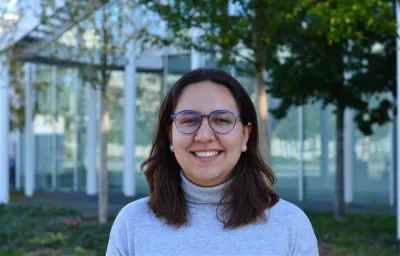
Ana Isabella
GraduateAna Isabella graduated in 2025 from a dual-degree program between the Universidad Nacional de Colombia and ENSTA. A native of Colombia who arrived in France in 2023 to pursue her two-year degree, Ana Isabella received an Eiffel Scholarship.

Joachim
Graduate, pursuing a Ph.D.Joachim has graduated. A Brazilian graduate of the Federal University of São Carlos (UFSCar / Brazil), Joachim began his sophomore year at the start of the 2025 academic year on the Paris-Saclay campus

Mathilde Hancock
Student in the Offwind Master’s programWith a keen interest in maritime issues, Mathilde naturally chose ENSTA after completing her preparatory classes. In 2025, following two years of general engineering training, she joined the Offwind Master’s program to focus her career on marine renewable...