

The shortcomings of additive manufacturing under the scrutiny of FRACADDI

Research Defense and Security, Transport and mobility
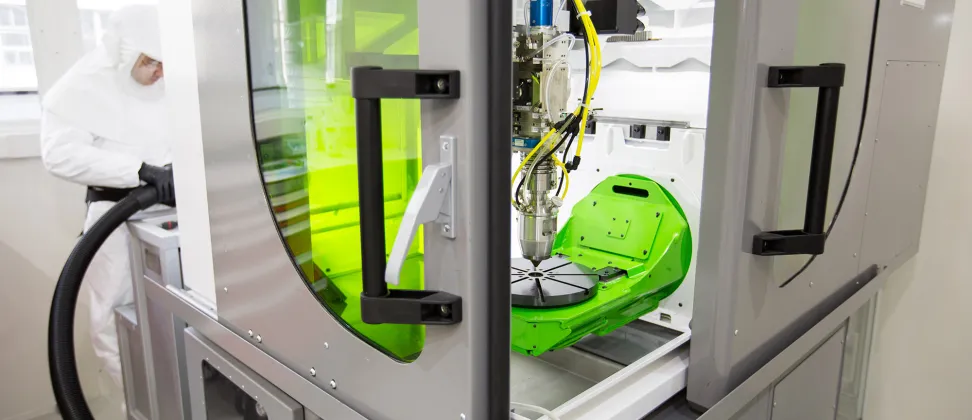
BeAM ENSTA/École polytechnique 3D metal additive manufacturing machine

Additive manufacturing, another name for industrial 3D printing, refers to all processes used to manufacture a part by successively adding material based on a digital model. Thanks to the specific properties of the parts produced in this way and the great design flexibility it affords, additive manufacturing is playing an increasingly significant role in cutting-edge industrial sectors such as aerospace, defence and energy. But are these components as strong as those produced using more traditional techniques such as machining or forging? This is the central question addressed by FRACADDI, a research programme conducted at IMSIA, one of ENSTA’s 13 laboratories.

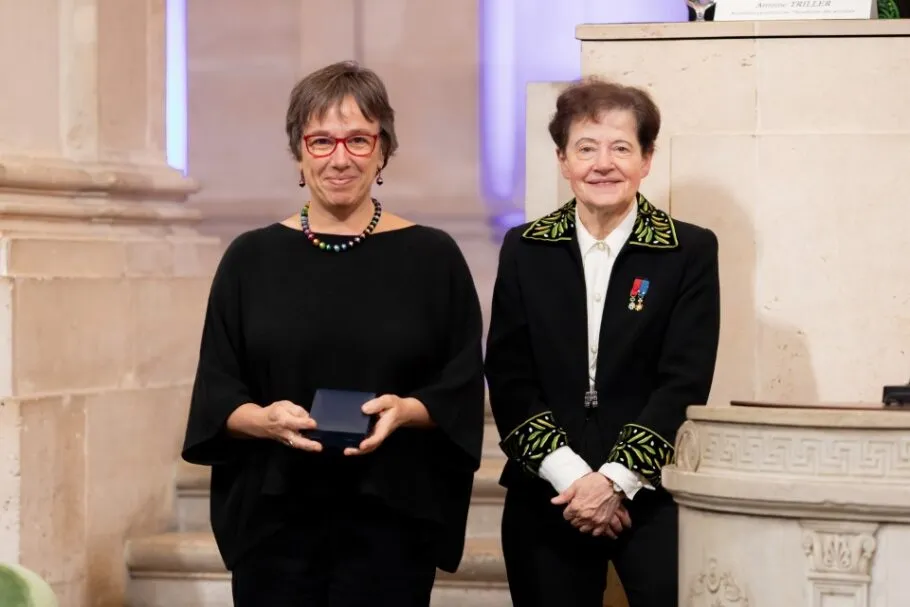
Véronique Lazarus, an ENSTA professor and researcher at IMSIA, is the scientific lead for the FRACADDI research project, funded by the Defence Innovation Agency through the CIEDS.

Immediately after completing her PhD in 1997, Véronique Lazarus became a specialist in fracture mechanics and three-dimensional crack propagation. This recognised expertise led her to become the first woman to be awarded the ONERA-Mechanical Sciences Prize for Aeronautics and Aerospace by the Academy of Sciences in 2023.

As reducing greenhouse gas emissions becomes an imperative in the face of the climate emergency, the question arises as to whether it is possible to optimise safety margins – particularly in the aeronautics sector – and reduce energy consumption by refining predictive models. To achieve the zero-carbon target by 2050, the wider use of additive manufacturing for critical components is being considered. However, it is important to ensure that this does not give rise to new risks.

Véronique Lazarus ENSTA Professor and researcher at IMSIA

One of the distinctive features of additive manufacturing is the production of materials whose properties vary depending on orientation (anisotropy) and which exhibit areas of differing composition, structure or density (micro-heterogeneity).
“The behaviour of these materials when cracks occur is still poorly understood,” continues the researcher. To advance this understanding, the FRACADDI project is being carried out along two lines of inquiry: an experimental approach involving tests on materials produced by additive manufacturing, and a theoretical approach using numerical models that incorporate the characteristics of anisotropy and heterogeneity inherent in additive manufacturing.

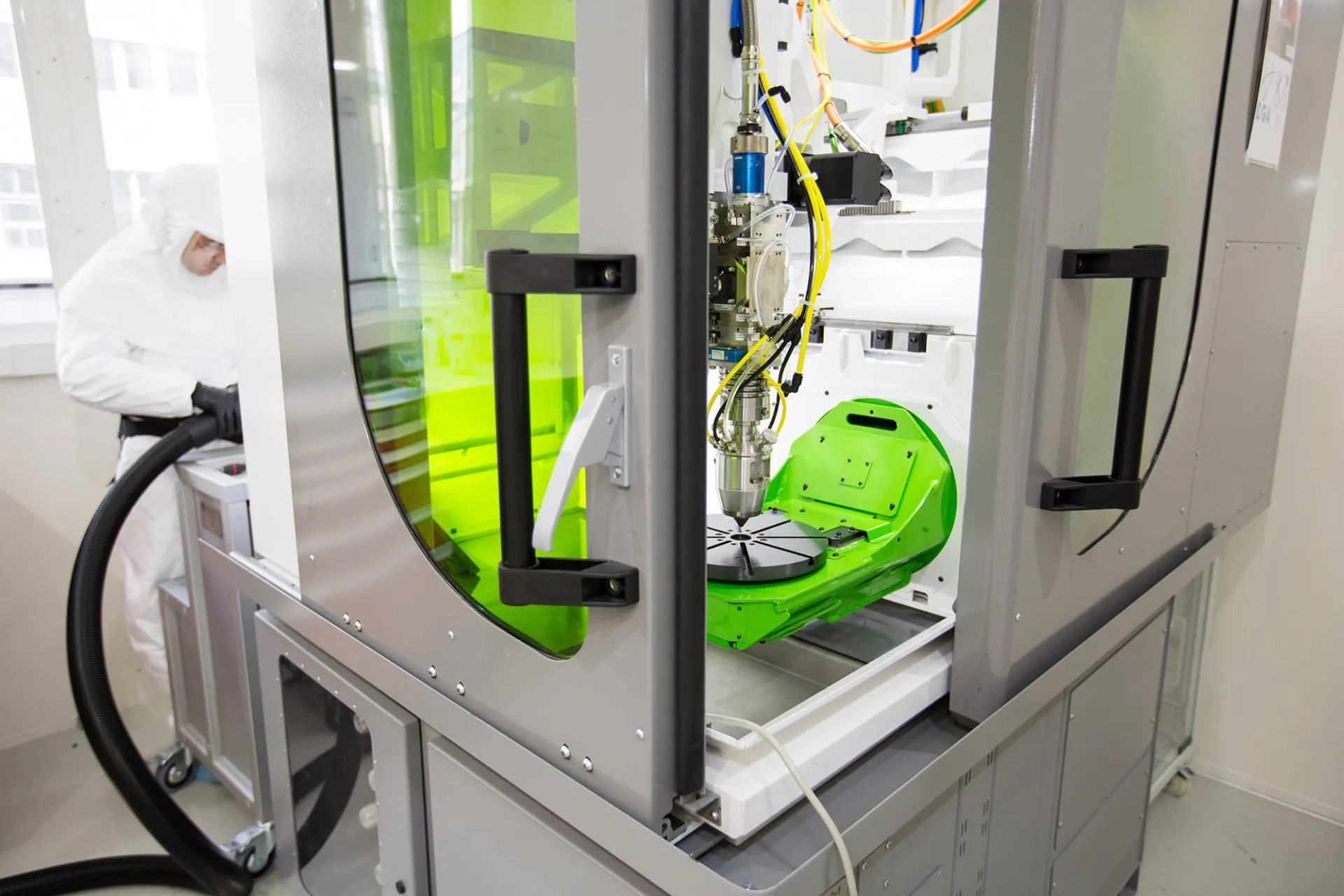
BeAM ENSTA/École polytechnique 3D metal additive manufacturing machine

“Together with Flavien Loiseau, we published a study last June in the International Journal of Solids and Structures in which we analysed different methods for simulating crack propagation. This publication was a milestone as it enables a very precise determination of crack propagation. The open-access software gcrack and fragma associated with this publication have led to new collaborations for us.”

On the experimental side, the PhD research of Xinyuan Zhai has highlighted the fact that, in materials printed using fused deposition modelling, the crack propagation path is not the same under monotonic loading as it is under cyclic loading, i.e. under fatigue conditions.

“Under cyclic loading, we do not see the effect of anisotropy, whereas under monotonic loading, the crack interacts with the microstructure. We did not expect these results,” comments the researcher.

“When we speak to people involved in aircraft maintenance, their challenge is to determine whether an observed crack is likely to lead to a catastrophic failure, and, based on that, when to replace the part. At present, the models currently in use assume that the material is isotropic, and our experimental results support this assumption. But we do not yet know to what extent this result can be generalised,” concludes Véronique Lazarus.

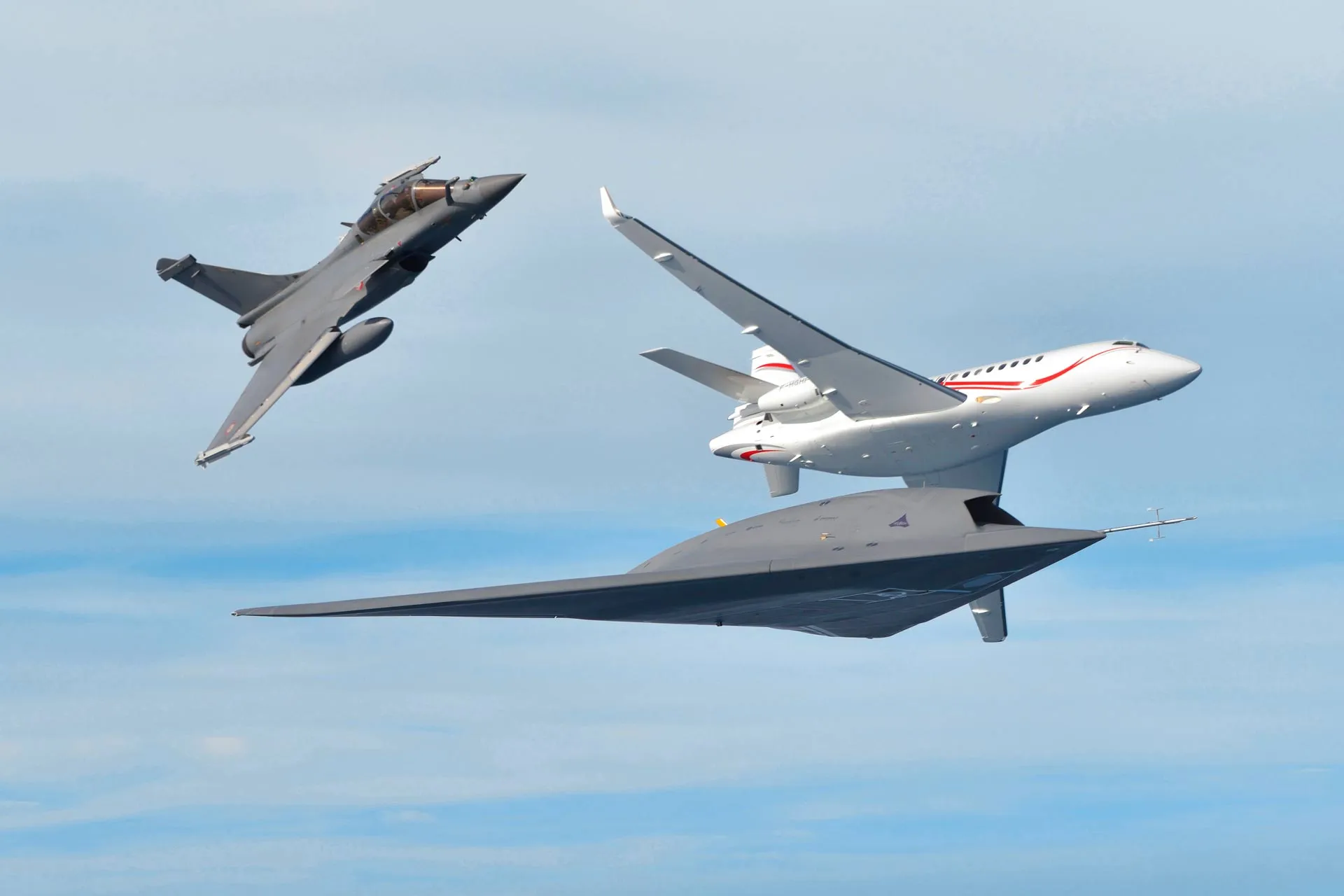
Experience shows, in fact, that over the years, all critical aircraft components – from the wings to the landing gear, including the engines and the fuselage – develop microcracks. The use of additive manufacturing in these critical components raises further questions. The challenge is to demonstrate to what extent it is possible to tolerate these defects before they become dangerous. And thanks to the FRACADDI research project, we now know more about this issue.

Our latest news

Innovation | Research
SEARENITY, the magnetic hull-cleaning robot designed to decarbonise maritime transport

ENSTA is one of the partners in the SEARENITY project, which was selected under the ‘CORIMER Low-Carbon Ships’ call for proposals (funded by Ademe, France 2030). The project aims to develop an autonomous robot capable of continuously cleaning ship hulls...

SEARENITY, the magnetic hull-cleaning robot designed to decarbonise maritime transport

ENSTA is one of the partners in the SEARENITY project, which was selected under the ‘CORIMER Low-Carbon Ships’ call for proposals (funded by Ademe, France 2030). The project aims to develop an autonomous robot capable of continuously cleaning ship hulls...

Institute | Training
Training a generation of committed engineers

One afternoon in September, in the lecture theatres at ENSTA, groups of around ten students are discussing ideas whilst gathered around large sheets of white paper. Together, with the help of a facilitator, they are placing cards relating to climate...

Training a generation of committed engineers

One afternoon in September, in the lecture theatres at ENSTA, groups of around ten students are discussing ideas whilst gathered around large sheets of white paper. Together, with the help of a facilitator, they are placing cards relating to climate...

Alumni | Institute | Training | Innovation | International
Catherine Delcroix, building the future with the ENSTA Foundation

It has already been several years since, following a highly successful career in engineering, Catherine Delcroix could have retired to the Mont Blanc massif to enjoy a well-deserved retirement. But as one of the first women to graduate from ENSTA, she is...

Catherine Delcroix, building the future with the ENSTA Foundation

It has already been several years since, following a highly successful career in engineering, Catherine Delcroix could have retired to the Mont Blanc massif to enjoy a well-deserved retirement. But as one of the first women to graduate from ENSTA, she is...