Pooling anchor lines for floating wind turbines: an appropriate solution?

Training, Research Marine Engineering

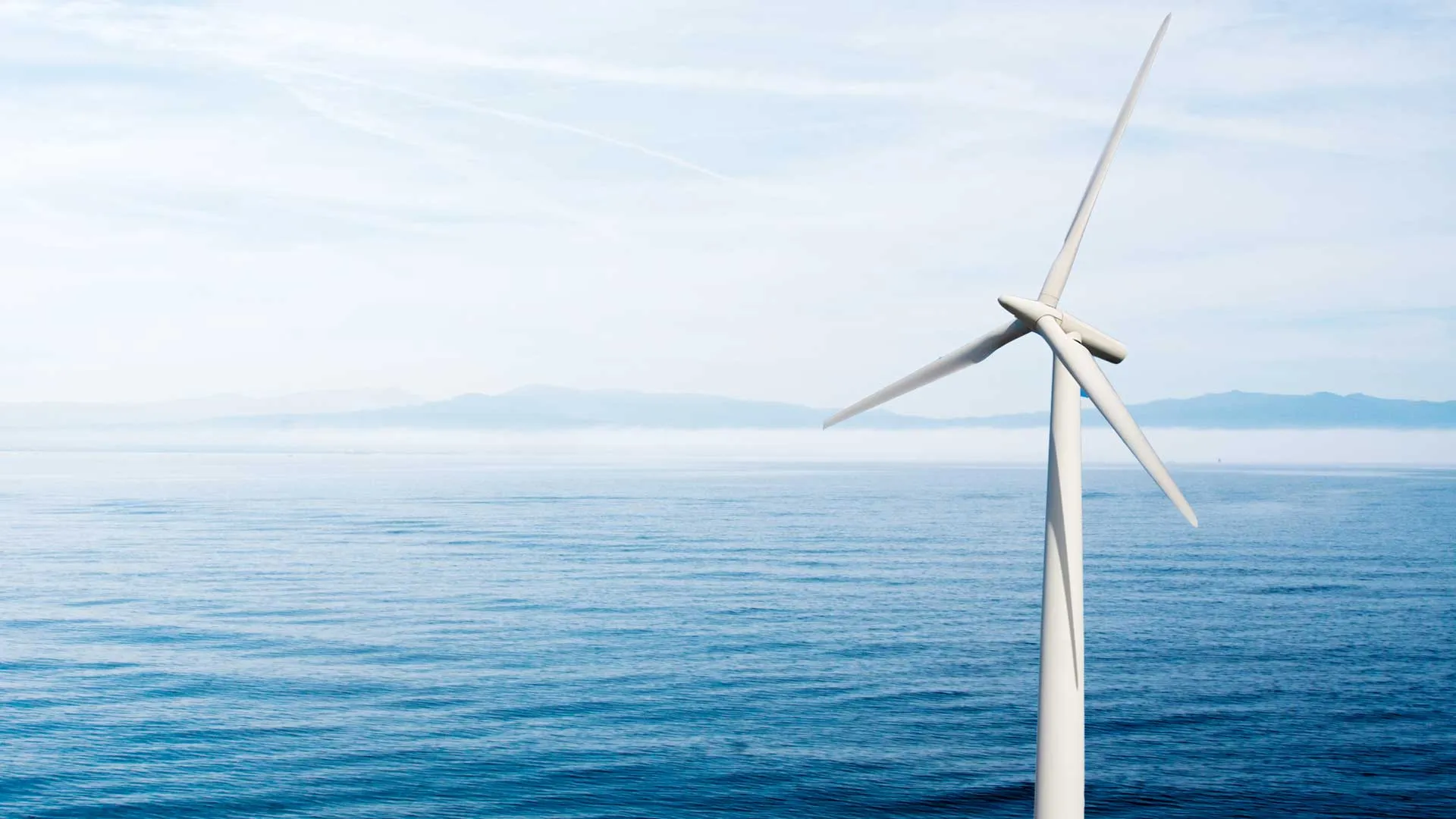
In early 2025, a dozen European industrial and academic partners, including ENSTA, got together to launch the ESOMOOR project. This project, dedicated to polyester or polyamide rope anchor lines, seeks to measure the effects of pooling anchoring systems for offshore wind farms in order to limit costs.

The 3-year ESOMOOR projectEnhancing Shared Mooring SysteM Design for floating Offshore Wind Farms” is co-financed by the European Union and European agencies (including ANR) as part of the “Clean Energy Transition” call for projects. Initiated by DTU University (Denmark), the project is structured into 8 main parts.

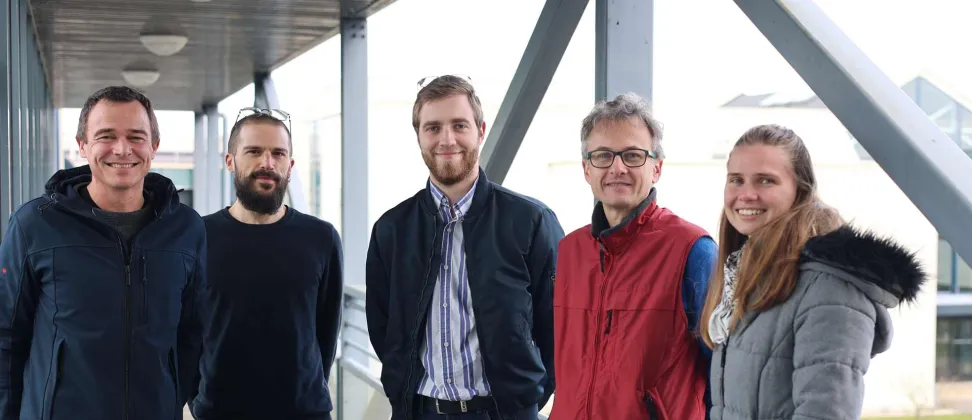
Guillem Blès, teacher-researcher at ENSTA in mechanics (Brest campus, IRDL laboratory): 

ENSTA's contribution concerns rope testing and numerical modeling. In particular, we'll be interacting with BEXCO, part of the Bekaert group, which designs and produces ropes. They will provide us with samples and be involved in the scale 1 tests. We'll also be working with France Énergies Marines (FEM), particularly on technology transfer. The behavioral law developed by ENSTA will be transferred to the DTU teams responsible for coding the software.

Tom Armand, an ENSTA graduate, has just started his PhD on this project:

The aim of my thesis is to study the influence of rope construction parameters (type of material, manufacturing process, etc.) on rope behavior. Each rope is made up of several strands, which in turn are made up of several strands combining several wires. As part of my thesis, I'm seeking to understand the behavior of the material at different scales, in order to gain a fine-tuned perception of the mechanical phenomena encountered.

This research work echoes the projects, led by France Energies Marines, Monamoor (behavior of polyamide anchor lines), Polyamoor (durability of polyamide anchor lines) carried out in recent years and in which ENSTA was involved, or the BAMOS project (behavior and aging of synthetic rope anchors) launched at the end of 2023. All these projects are helping to improve our understanding of synthetic ropes, their behavior and durability.

This technological solution offers a number of advantages: polymer ropes are lighter than steel cables, making them easier to handle. Their greater elasticity and viscosity help to dampen the effect of swell and reduce the footprint on the ground. Our current and ongoing research work is helping us to define the most suitable materials and to dimension future anchors as accurately as possible.

Focus on training


ENSTA offers several training courses dedicated to marine renewable energies 

Our latest news

Institute | Innovation
MEKA Solutions: A Robot to Make Harvesting Traditional Breton Vegetables Easier

An engineer and the son of a farmer, Corentin Le Méhauté founded MEKA Solutions to provide practical solutions to the challenges facing the agricultural sector. His startup, incubated at ENSTARTUPS, offers a robot designed to assist with vegetable...

MEKA Solutions: A Robot to Make Harvesting Traditional Breton Vegetables Easier

An engineer and the son of a farmer, Corentin Le Méhauté founded MEKA Solutions to provide practical solutions to the challenges facing the agricultural sector. His startup, incubated at ENSTARTUPS, offers a robot designed to assist with vegetable...

Institute | Training | Student Life
First Joint Start of the School Year at ENSTA’s Two Campuses

Marking the completion of the merger that officially began on January 1, 2025, ENSTA’s 2026 academic year was the first to take place simultaneously and via a dual-campus format between the Paris-Saclay and Brest campuses. August 31 was a doubly historic...

First Joint Start of the School Year at ENSTA’s Two Campuses

Marking the completion of the merger that officially began on January 1, 2025, ENSTA’s 2026 academic year was the first to take place simultaneously and via a dual-campus format between the Paris-Saclay and Brest campuses. August 31 was a doubly historic...

Alumni | Innovation
We.Deploy(Science): The Startup Optimizing Vessel Performance

Founded in late 2024, the startup We.Deploy(Science) was created by Nedeleg Bigi and Hugo Kerhascoët, two childhood friends with a passion for sailing and engineering. Thanks to their complementary skills, they specialize in the control and optimization...

We.Deploy(Science): The Startup Optimizing Vessel Performance

Founded in late 2024, the startup We.Deploy(Science) was created by Nedeleg Bigi and Hugo Kerhascoët, two childhood friends with a passion for sailing and engineering. Thanks to their complementary skills, they specialize in the control and optimization...