

Land and naval systems

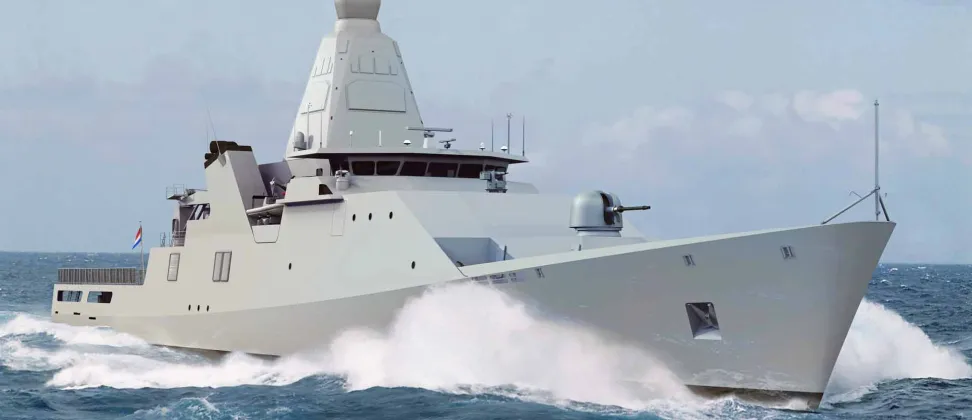
H. Franssen ©THALES

The “Land and Naval Systems” track is offered in the fourth and fifth semesters of the engineering program specializing in “Defense and Security.” It is held at ENSTA on the Brest campus.

Objective: to train engineers capable of designing and managing complex land and naval systems, ranging from land vehicles and drones to surface vessels and submarines, from the engineering of individual technological components to the design of system architectures, including the integration of defense systems onto platforms.

The program covers mechanical engineering, systems architecture, sustainability, information processing, and operational safety, integrating digital technologies and AI for threat detection and decision-making. The program prepares students to address the strategic and technological challenges of defense, security, and cutting-edge naval and land-based industries.

Key courses in Semester 4

  • Drones
  • Mechanical Engineering
  • Software and Computer Architectures
  • Structural Design in Naval and Land Environments (strength and durability, etc.)
  • Innovative Materials Subject to Severe Stresses (armor, thermal protection, etc.)
  • Image Processing

Main courses in Semester 5

  • Fundamentals of Land and Naval Systems
  • Land Systems Architecture: architecture and propulsion, vehicle dynamics, information and energy management
  • Naval Systems Architecture: surface vessels and submarines, stability and resistance to forward motion, sonar and acoustic detection
  • Land and naval drones: visual guidance, inertial control, robotic architecture
  • Systems engineering and operational safety: safety management and operational safety, weapons systems integration, multiphysics modeling of system architectures, surveillance and stealth, AI for decision-making.

Career prospects

By choosing this track, you will prepare to:

  • Design and operate the naval and land systems of the future, from drones to land vehicles or surface and submarine vessels, with a comprehensive vision and the skills acquired in mechanics and digital systems
  • Develop new architectures to optimize the autonomy, signature, response capability, or safety of these systems
  • Integrate defense and security programs in systems engineering, operational safety, and robotic architecture.
  • Innovate in the naval, land, and advanced robotics industries, in propulsion, detection, automation, and applied AI, while adhering to standards and respecting the environment.
  • Hold strategic positions in government agencies, industrial groups, and their research centers, in support of the armed forces or in major civil society transportation and mobility projects.
© Arquus

Our latest news

Institute | Student Life
Schoolgirls today, engineers tomorrow

On Thursday, March 19, nearly 100 high school girls from three schools in Finistère were welcomed to the ENSTA Brest campus as part of the event “100 Women, 100 Careers: Engineers Tomorrow.” The afternoon’s program included a tour of the campus and...

Schoolgirls today, engineers tomorrow

On Thursday, March 19, nearly 100 high school girls from three schools in Finistère were welcomed to the ENSTA Brest campus as part of the event “100 Women, 100 Careers: Engineers Tomorrow.” The afternoon’s program included a tour of the campus and...

Alumni | Institute | Training
Graduation Ceremony in Brest: ENSTA Celebrates the Class of 2025, “Marie Marvingt”

March is graduation season for ENSTA’s community of young engineers, master’s students, and specialized master’s students across the school’s two campuses. Following the ENSTA Paris graduation ceremony, it was the turn of the 310 graduates from the ENSTA...

Graduation Ceremony in Brest: ENSTA Celebrates the Class of 2025, “Marie Marvingt”

March is graduation season for ENSTA’s community of young engineers, master’s students, and specialized master’s students across the school’s two campuses. Following the ENSTA Paris graduation ceremony, it was the turn of the 310 graduates from the ENSTA...

Research
A national library of dolphin vocalizations

Launched in late 2024, the PAMCéClass project, entrusted to ENSTA by the Offshore Wind Observatory and funded by the French Office for Biodiversity (OFB), aims to create a national library of vocalizations from several species of dolphins found along the...

A national library of dolphin vocalizations

Launched in late 2024, the PAMCéClass project, entrusted to ENSTA by the Offshore Wind Observatory and funded by the French Office for Biodiversity (OFB), aims to create a national library of vocalizations from several species of dolphins found along the...