

Mobility of the future: New-generation steels to lighten vehicles

Research

In the automotive industry, decarbonization means making vehicles lighter, which in turn reduces energy consumption and increases the range of electric vehicles. The main lever is the choice of materials.

The introduction of third-generation steels in body-in-white would reduce vehicle weight by up to 20%.

These steels offer an excellent compromise between formability and high mechanical properties. This balance is achieved by mastering microstructure and material forming techniques (via phase transformation under plastic deformation). Nevertheless, the risk of cracking during or after shaping remains, due to the phenomenon of hydrogen embrittlement (HE).

Assessing the risk of cracking as a function of hydrogen content is a major scientific challenge for the H2Form3G project.

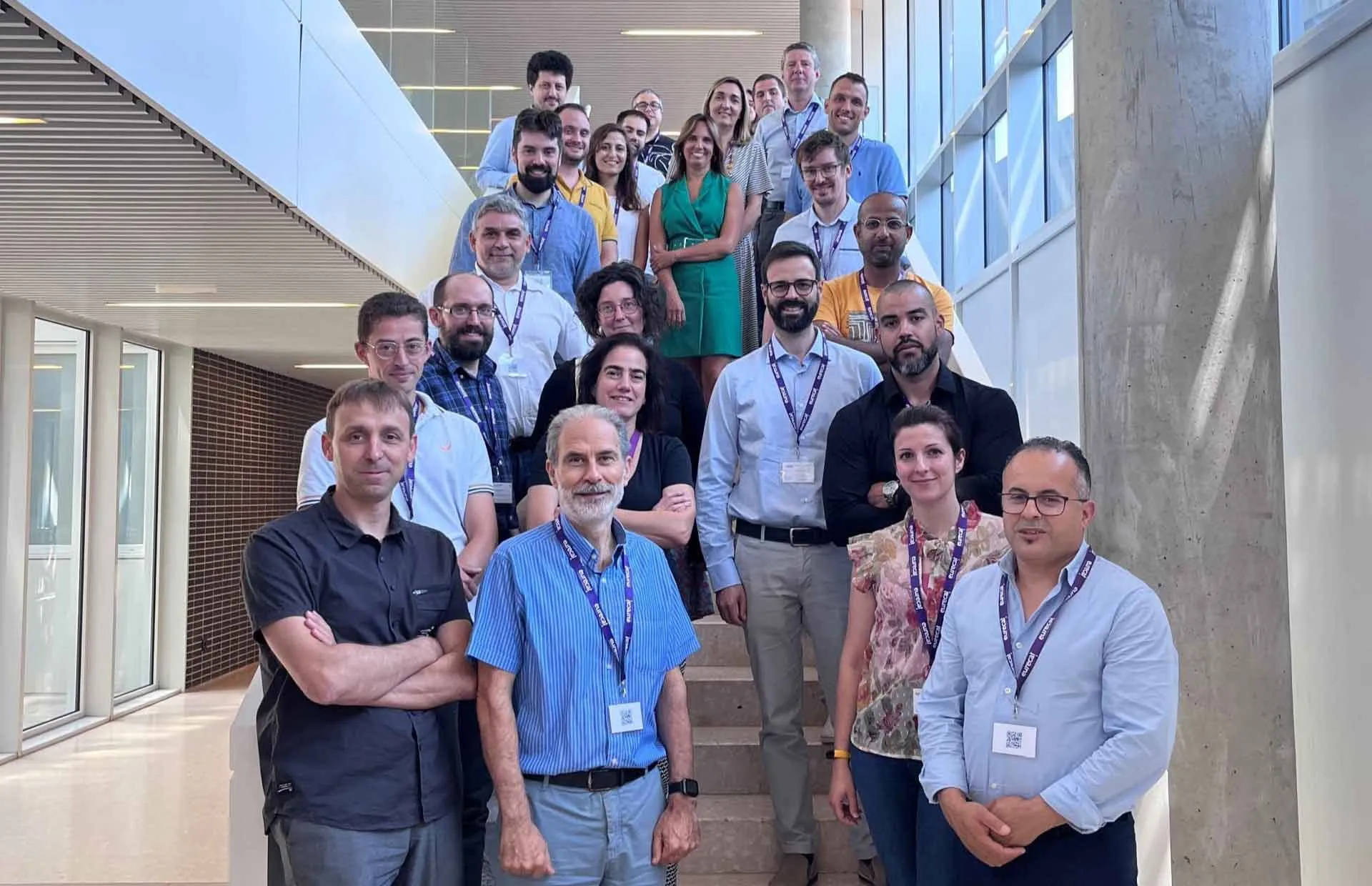
In order to remove this barrier, gain a better understanding of the behavior of these materials and predict the risk of cracking, 11 partners from 4 European countries are working together as part of the European H2Form3G project to establish guidelines for their safe use.

Younes Demmouche, associate-researcher and project leader at ENSTA:

In ENSTA's mechanical engineering department, we are used to working on the fatigue behavior of materials, particularly steels. The originality of this project lies in the inclusion of hydrogen in the manufacturing process and the establishment of recommendations to guarantee the integration of these materials in the manufacture of the vehicles of the future.

The H2Form3G project has a total budget of almost 2.9 million euros, financed by the European Union's RFCS research fund, with the aim of contributing to the advancement of the European Green Deal roadmap. It brings together academics, research centers, steel producers and suppliers, and end-user automakers.

Within the IRDL laboratory, teams from ENSTA and the Université de Bretagne Sud are involved in modeling and experimentation.  A behavioral model - accounting for the effect of hydrogen on the mechanical properties of materials - will be developed and implemented in numerical simulations of the shaping of structural details. A hydrogen diffusion model coupled with a fracture criterion will be developed to predict delayed fracture after forming. To feed these models, the testing and analysis resources of the Masmeca technology platform will be used for experimental characterization of materials and analysis of fracture mechanisms. The project will fund the work of one thesis and two post-docs.

H2Form3G fact sheet

  • Launch: July 1, 2024
  • Duration: 42 months
  • Budget: €2,892,540.70
  • Funding: European Union (RFCS)
  • Project partners: Eurecat, synchrotron Alba-Cells, ENSTA, Arcelormittal Maizieres Research, Voestalpine Stahl, Centro Richerche Fiat, MA SRL, Letomec, Université de Bretagne Sud, Universitá di Pisa et Institut de la Corrosion Sasu.


Our latest news

Institute | Training | Innovation | Research
The education and the research at ENSTA at the core of the development of IP Paris

The Institut Polytechnique de Paris’s back-to-term press conference took place on Tuesday 29 September. In particular, it provided an opportunity to highlight ENSTA’s specific contributions and new developments in education that benefit the Institute.
The education and the research at ENSTA at the core of the development of IP Paris

The Institut Polytechnique de Paris’s back-to-term press conference took place on Tuesday 29 September. In particular, it provided an opportunity to highlight ENSTA’s specific contributions and new developments in education that benefit the Institute.

Innovation | Research
SEARENITY, the magnetic hull-cleaning robot designed to decarbonise maritime transport

ENSTA is one of the partners in the SEARENITY project, which was selected under the ‘CORIMER Low-Carbon Ships’ call for proposals (funded by Ademe, France 2030). The project aims to develop an autonomous robot capable of continuously cleaning ship hulls...

SEARENITY, the magnetic hull-cleaning robot designed to decarbonise maritime transport

ENSTA is one of the partners in the SEARENITY project, which was selected under the ‘CORIMER Low-Carbon Ships’ call for proposals (funded by Ademe, France 2030). The project aims to develop an autonomous robot capable of continuously cleaning ship hulls...

Institute | Training
Training a generation of committed engineers

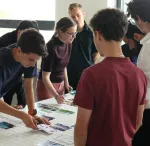
One afternoon in September, in the lecture theatres at ENSTA, groups of around ten students are discussing ideas whilst gathered around large sheets of white paper. Together, with the help of a facilitator, they are placing cards relating to climate...

Training a generation of committed engineers

One afternoon in September, in the lecture theatres at ENSTA, groups of around ten students are discussing ideas whilst gathered around large sheets of white paper. Together, with the help of a facilitator, they are placing cards relating to climate...