Become a naval architect: analyze and design all types of ships (sailboats, passenger ships, cargo ships, military vessels, etc.) or offshore installations (offshore platforms, floating wind turbines) in accordance with specifications and regulatory constraints, taking into account all the requirements specific to naval architecture (hydrodynamics, seaworthiness, structure, propulsion, etc. ).
A three-year work-study program dedicated to naval architecture
As the successor to the first maritime engineering schools, ENSTA trains naval architects with a wide range of skills. This apprenticeship program prepares you to work in naval architecture firms, shipbuilding workshops, or design offices.
Participation in applied projects and work placements punctuate the program and support your gradual development of skills. The final “Ship Loop” project gives you the opportunity to apply all your skills and correlate them: a modification to the propulsion system will require a review of the ship's structure and many associated parameters.
This holistic approach to naval systems is complemented by courses in humanities and social sciences, modern languages, sports, and courses dedicated to ecological and social transition.
Key points
A program offering a comprehensive overview of naval systems
Input from numerous experts in the field
Progressive specialization combined with numerous projects to support your skills development
Teaching that incorporates humanities to teach you how to manage a project, a team, and an organization
A minimum of 12 weeks of international mobility
An introduction to research and innovation
A stimulating living and learning environment
Program objective
To train engineers capable of carrying out design, production, integration, and maintenance activities for structural assemblies or sub-assemblies, on-board equipment, or engines in a shipbuilding and/or offshore construction yard, a naval design office, or a naval architect's office.
A balanced curriculum combining professional and academic components
Year 1 / Fundamentals
During the first year of the program, courses aim to provide you with a foundation of fundamental knowledge in mathematics, mechanics, and electronics.
This year, which is common to all mechanical engineering programs (2 options), includes a variety of courses on mathematical and digital tools, continuum mechanics, solid mechanics, sensors, electrical engineering, Python programming, and more.
It also includes courses in humanities such as English, labor law, entrepreneurship, engineering, and transition. The year concludes with a minimum 12-week period abroad.
Year 2 / Progressive specialization
The second year offers a transition between continuing core courses (materials, finite elements, fluid mechanics, etc.) and specialized courses in naval architecture.
During this year, you will learn about ship stability, naval structures, fatigue, and more, and you will have the opportunity to complete your first ship design project.
This preliminary ship design project concludes the academic year. It combines calculations of resistance to forward motion, buckling calculations (numerical simulations), and overall design, while incorporating compliance with regulatory constraints.
Finally, to prepare you to work on complex international projects, you will continue to learn English, supplemented by courses in management, industrial marketing, innovation management, and more.
Year 3 / Professionalization
In the final year, courses are dedicated to specialization. Maneuverability, resistance and propulsion, seaworthiness, naval structure, alternative propulsion modes, and more will complete your training and enable you to master the entire naval system.
During this specialization, the focus is on structural aspects, through an advanced naval structure (SNA) course that will enable you to precisely define the dimensions of naval structures (digital modeling) taking into account the main modes of failure (ultimate strength, fatigue, buckling, etc.).
Throughout the year, company visits, conferences, and shipyard tours are organized in collaboration with our industry partners.
At the end of the program, the highlight of the training is the completion of a “ship loop”: this project, carried out in teams over several weeks, allows you to put all your skills to use in the construction of a naval or offshore platform.
At the end of the first year, you will have an international experience: an opportunity to prepare yourself to work in an international and multicultural environment. Mobility opportunities are available at research centers, where you will discover the challenges of innovation and R&D.
Rapid professional integration into the targeted employment sectors
Recent recruiters (work-study and first job): a few examples
Alpha Technique, Agence Frédéric Neuman, Bureau Veritas, Cabinet Archi Delion, CNN MCO, Chantiers de l’Atlantique, Coprexma, Damen Shiprepair, Efinor Allais, Grand Large Yachting, JPK Composites, Mer Concept, Naval Group, Navinov, Naviwatt, OCEA SA, Piriou Ingénierie, Shoreteam, Sogestran Group, Thales, Windelo Catamaran
(list to be adjusted/completed)
Examples of final projects carried out by our apprentice engineers specializing in naval architecture
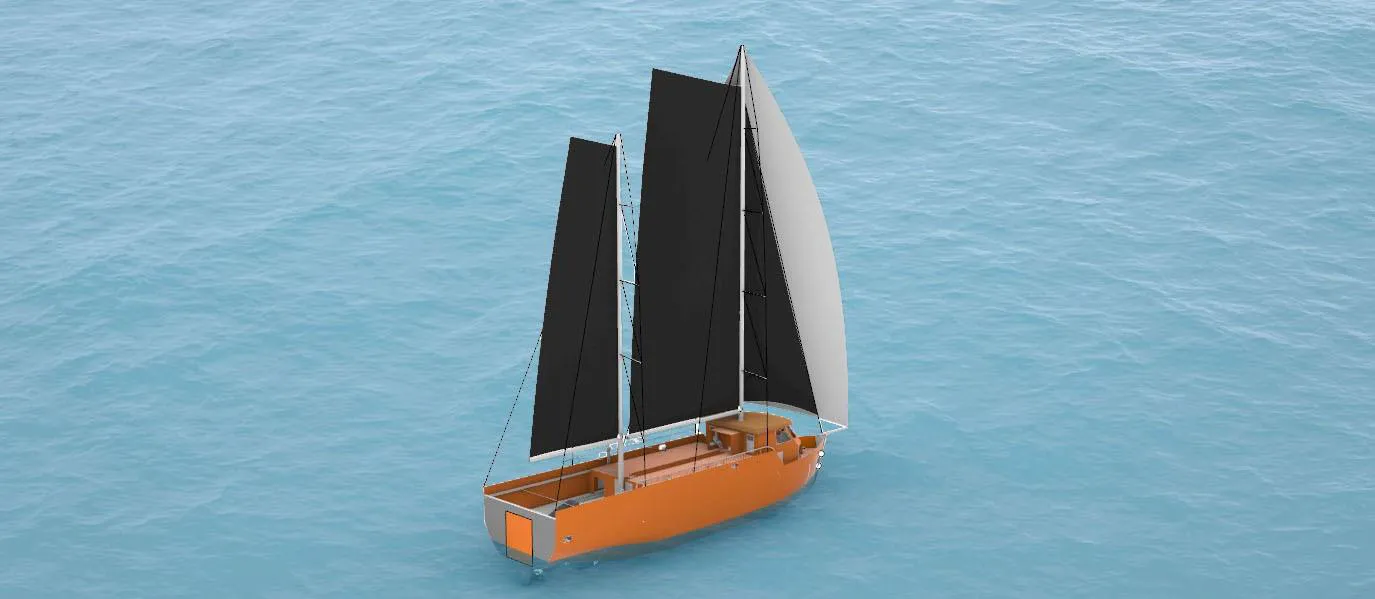
Study on the shipyard's future sailboat, JPK Composites
Ensuring the watertightness of a nuclear-powered ballistic missile submarine before its launch, Naval Group
Study and dimensioning of a mechanical system in a marine environment, Alpha Techniques
Stability, structural calculations, conversion project, design of a gantry on a trawler, Navinov
Boucle Navire, Agence Frédéric Neuman
Design of a careening barge for Alpha Techniques.
Control of gas emissions on board submarines for Naval Group.
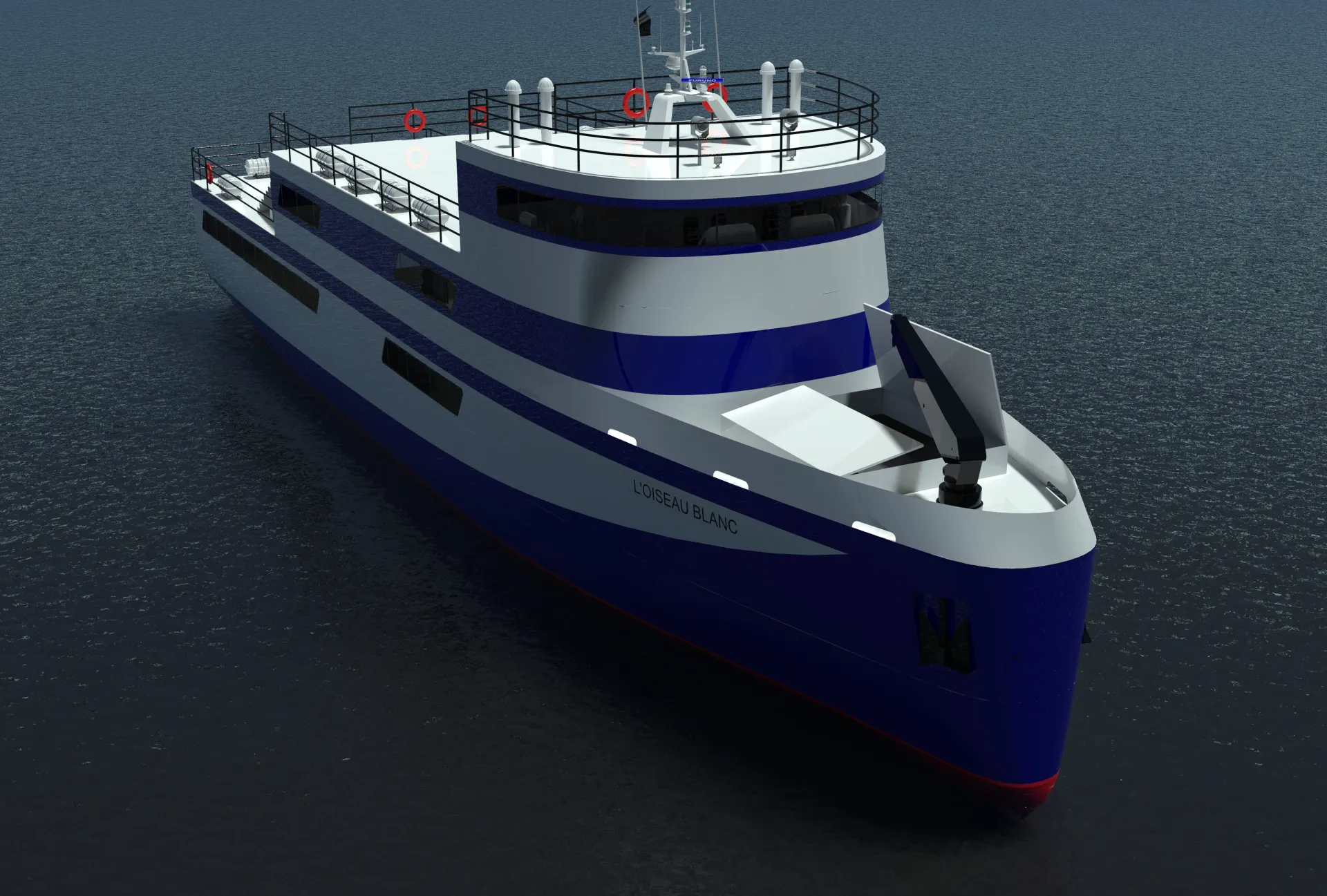
Design of a multi-purpose offshore service vessel for Chantiers Allais.
Submarine transfer and launch system for Naval Group.
Design of a 12-meter trawler-longliner for Archi Delion.
Integration of helicopter capabilities aboard an Offshore Patrol Vessel for OCEA S.A.
Assistant site manager - Monitoring of technical shutdown of a French Navy vessel for CNN-MCO.
(check that we have the right to make these items visible)
Examples of jobs
Naval expert
Naval architect
Design engineer/manager
Program director
Operations manager
Naval project manager
Project manager
Operations manager
Production management manager
Admission based on application after 2-3 years of higher education
BUT2 and BUT3: Mechanical and Production Engineering, Physical Measurements, Industrial Engineering and Maintenance, Thermal and Energy Engineering, Materials Science and Engineering
BTS + ATS prep: Shipbuilding, Industrial Product Design, Design and Implementation of Automatic Systems
Are you an employee of a company and want to obtain an engineering degree? This training is available as part of continuing education for holders of a BTS/DUT or a VAE combined with 3 years of professional experience.
Continuing education trainees have a program tailored to their profile: they may be exempted from certain courses with the program manager's approval.
Tuition
As an apprentice engineer, the cost of your training is covered by the State, the Region, and the company. You do not have to pay any tuition fees. However, you are responsible for the student and campus life contribution (CVEC).
Application fees
For admission based on application, candidates must pay a €30 application fee to validate their application. Payment must be made before the deadline for submitting online registration forms via a secure online payment system in your personal online account (Aurion). For any other payment method, please contact Laurent Gogé at agence-comptable.brest(a)ensta.fr.
* Non-refundable.
Presentation of the training program: webinar replay
L’écoconception, ça vous concerne aussi !
Nous avons développé ce site internet dans le cadre d’une démarche forte
d’écoconception.
Si vous aussi, vous souhaitez diminuer drastiquement les besoins
énergétiques nécessaires à votre navigation, vous pouvez le parcourir
dans son Mode Eco. Celui-ci sollicitera très peu nos serveurs et vous
deviendrez ainsi un acteur majeur de l’écoconception.