
Centre interdisciplinaire Engineering for Health (E4H)

Centre interdisciplinaire Engineering for Health (E4H)

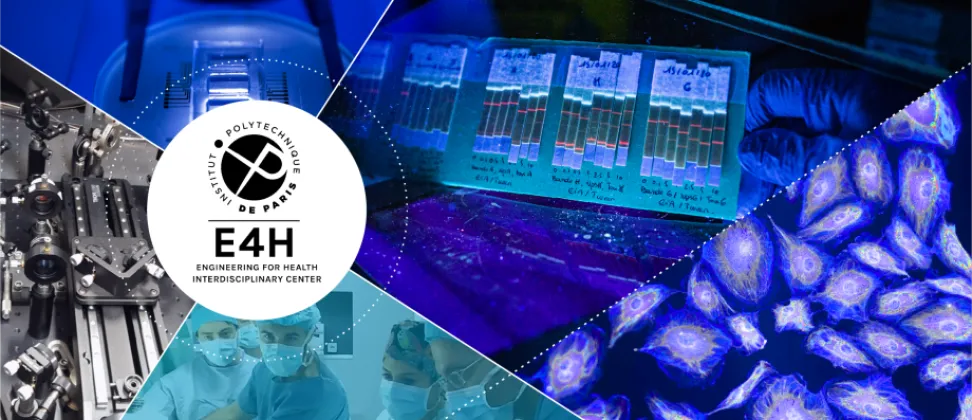
Le centre de recherche interdisciplinaire Engineering for Health (E4H) a pour ambition de façonner l'avenir des sciences de la vie et de la santé et de relever des enjeux sociétaux majeurs.

Notre société est en train de vivre une révolution qui va redéfinir fondamentalement notre approche des sciences biologiques et de la médecine. Cette révolution est rendue possible par la convergence d'un ensemble de technologies et de pratiques médicales et sociales qui offrent des opportunités sans précédent pour des approches innovantes de la pratique médicale et de la recherche en sciences de la vie.

La vision qui anime le Centre interdisciplinaire Engineering for Health (E4H) de l'Institut Polytechnique de Paris (IP Paris) est que pour saisir ces opportunités et réaliser leur plein potentiel, il faut une approche hautement interdisciplinaire où les spécialistes des sciences quantitatives et sociales collaborent étroitement avec les communautés des sciences de la vie et de la médecine.

Our latest news

Institute | Innovation | Student Life
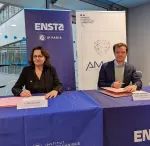
Artificial intelligence at the service of sailors with the SPASEA hackathon

How can we help sailors identify suspicious vessels? On December 4 and 5, around fifty students from ENSTA, IMT Atlantique, and Ecole Navale gathered at the ENSTA campus in Brest for the SPASEA hackathon. Organized by Naval Group and the DGA in...

Artificial intelligence at the service of sailors with the SPASEA hackathon

How can we help sailors identify suspicious vessels? On December 4 and 5, around fifty students from ENSTA, IMT Atlantique, and Ecole Navale gathered at the ENSTA campus in Brest for the SPASEA hackathon. Organized by Naval Group and the DGA in...

Innovation | Research
DyNNamo, AI for the benefit of people with disabilities

While artificial intelligence is gradually being deployed in all areas of mobility, the field of disability presents particular challenges in terms of robustness, reliability, and adaptation to a wide variety of situations.

DyNNamo, AI for the benefit of people with disabilities

While artificial intelligence is gradually being deployed in all areas of mobility, the field of disability presents particular challenges in terms of robustness, reliability, and adaptation to a wide variety of situations.

Training | Innovation | Student Life
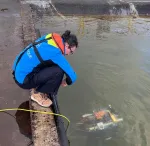
Two ENSTA teams take part in the FWC international challenge dedicated to floating wind turbines

In July, two teams of ENSTA students (from the Paris-Saclay and Brest campuses) will be in Zeebrugge, Belgium, to test their floating wind turbine prototypes. The two projects were selected as finalists in the international Floating Wind Challenge...

Two ENSTA teams take part in the FWC international challenge dedicated to floating wind turbines

In July, two teams of ENSTA students (from the Paris-Saclay and Brest campuses) will be in Zeebrugge, Belgium, to test their floating wind turbine prototypes. The two projects were selected as finalists in the international Floating Wind Challenge...