Happy New Year 2026
The entire ENSTA community wishes you all the best for 2026!
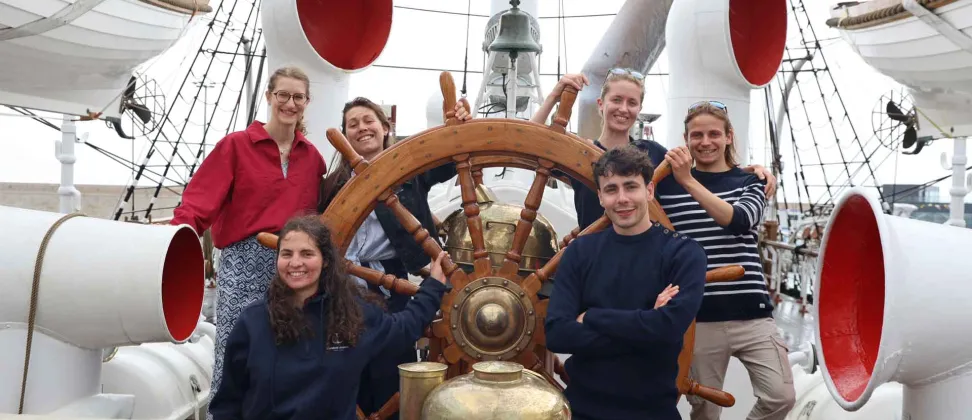
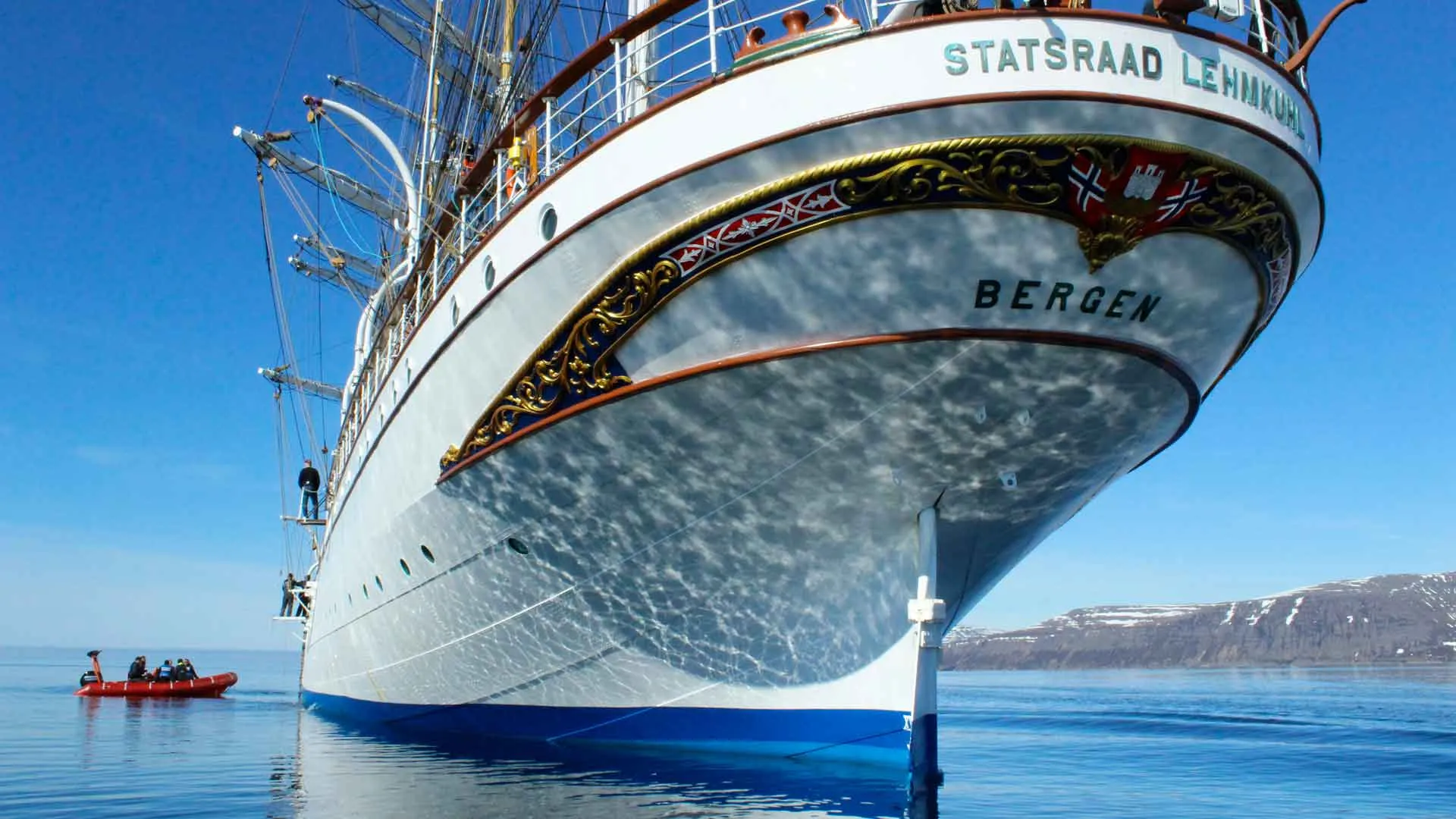
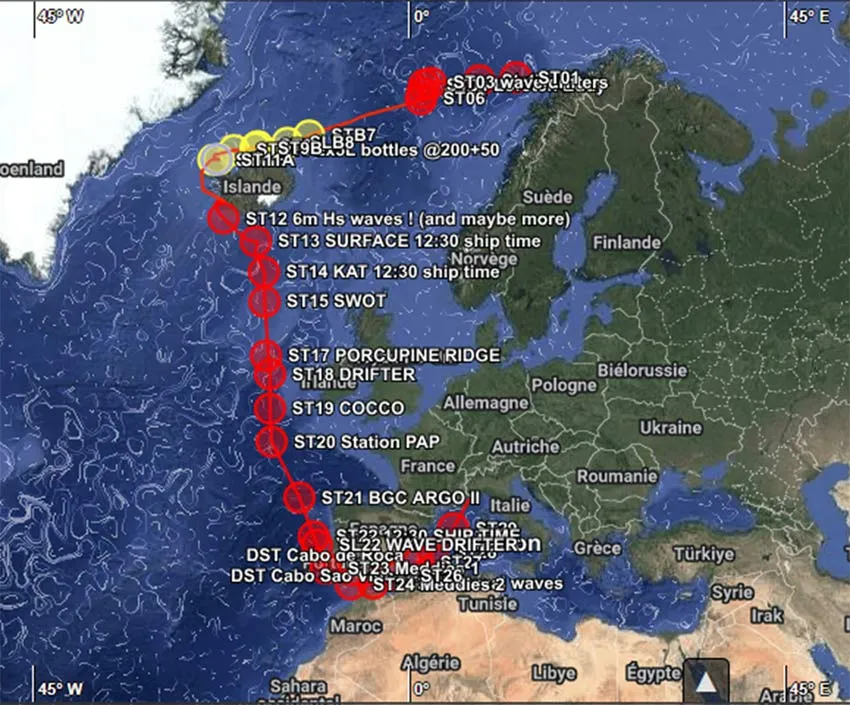
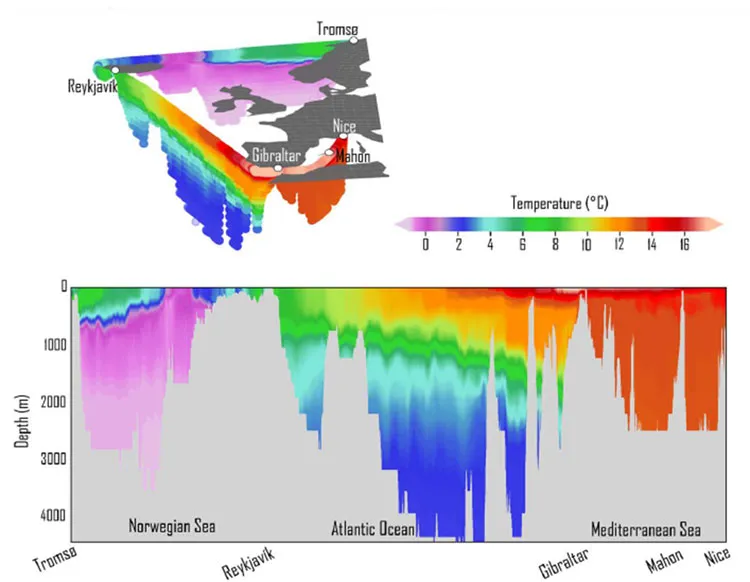
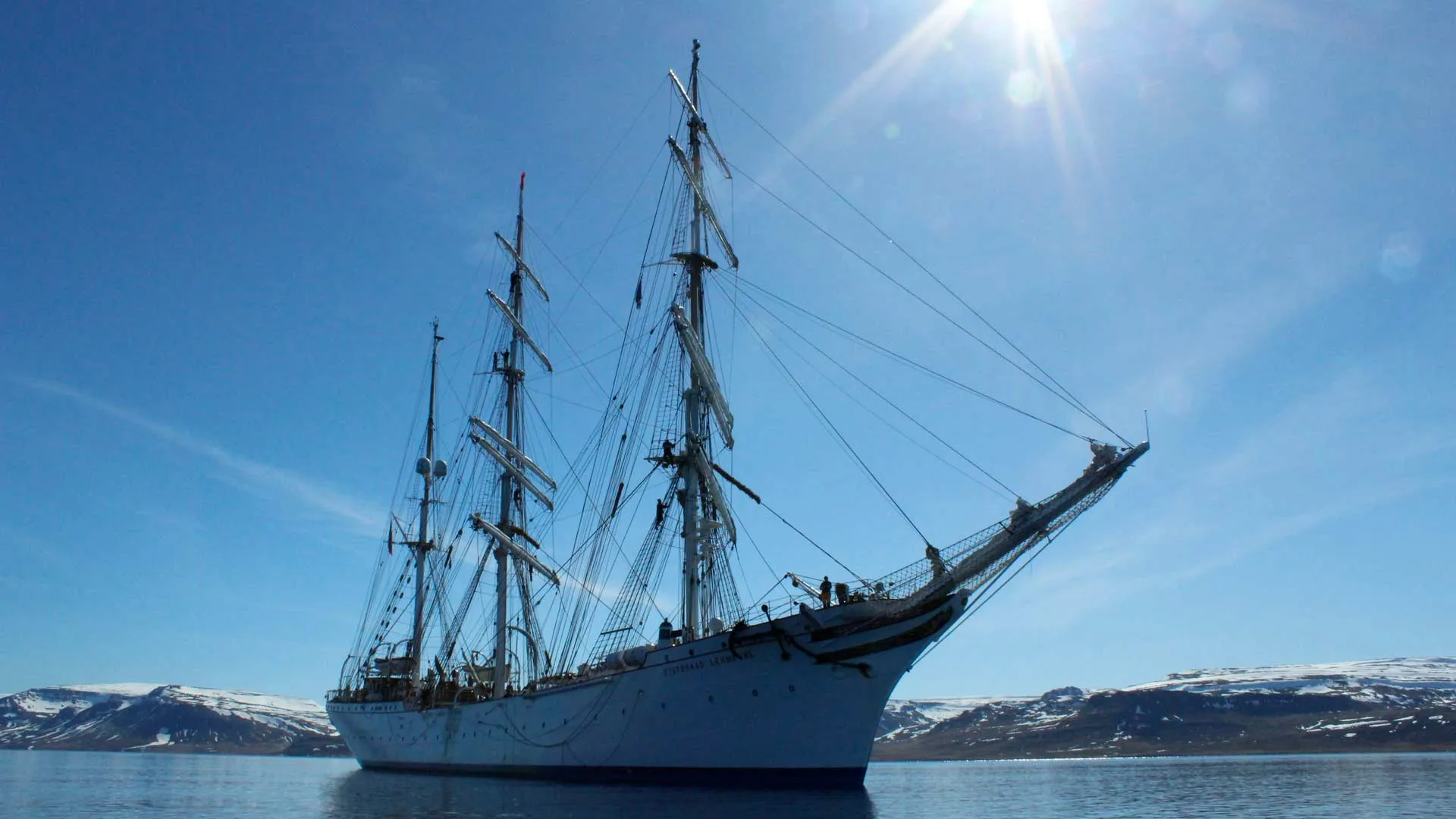
It was a human and scientific adventure that they will remember for a long time. Martin Cornille, Maturin Simonneau, and Kim Monoury-Homet are all in their final year of general engineering program at ENSTA, specializing in hydrography and oceanography. For 45 days, they sailed on the Norwegian three-masted ship Statsraad Lehmkuhl from Tromsø, Norway, to Nice, alongside some of the world's leading ocean experts.
At the start of the academic year last September, ENSTA students were informed about this program. To apply, they had to detail their scientific knowledge, as well as their experience at sea and their ability to live in confined spaces, and present a scientific research project. Martin:
I contacted my advisors at ENSTA for help with the selection process. At the same time, I immersed myself in scientific literature on the regions covered by the mission (the Norwegian Sea, the North Atlantic, and the Mediterranean Sea) to identify a relevant issue. After discussions with Xavier Carton and Jean-Baptiste Roustan, the subject of my project took shape around an initial question: Can oceanographic satellite measurements detect sub-mesoscale phenomena such as small eddies?
At the start of the academic year last September, ENSTA students were informed about this program. To apply, they had to detail their scientific knowledge, as well as their experience at sea and their ability to live in confined spaces, and present a scientific research project. Martin:
I contacted my advisors at ENSTA for help with the selection process. At the same time, I immersed myself in scientific literature on the regions covered by the mission (the Norwegian Sea, the North Atlantic, and the Mediterranean Sea) to identify a relevant issue. After discussions with Xavier Carton and Jean-Baptiste Roustan, the subject of my project took shape around an initial question: Can oceanographic satellite measurements detect sub-mesoscale phenomena such as small eddies?
The "One Ocean Expedition" adventure included a training program called the Advanced Training Course on Ocean Synergy Remote Sensing 2025 , organized by the European Space Agency and spread over several months.
Starting in November, the selected students attended lectures on satellite ocean observation, covering the physical principles of measuring instruments, observable oceanographic parameters, and possible applications for environmental and climate research.
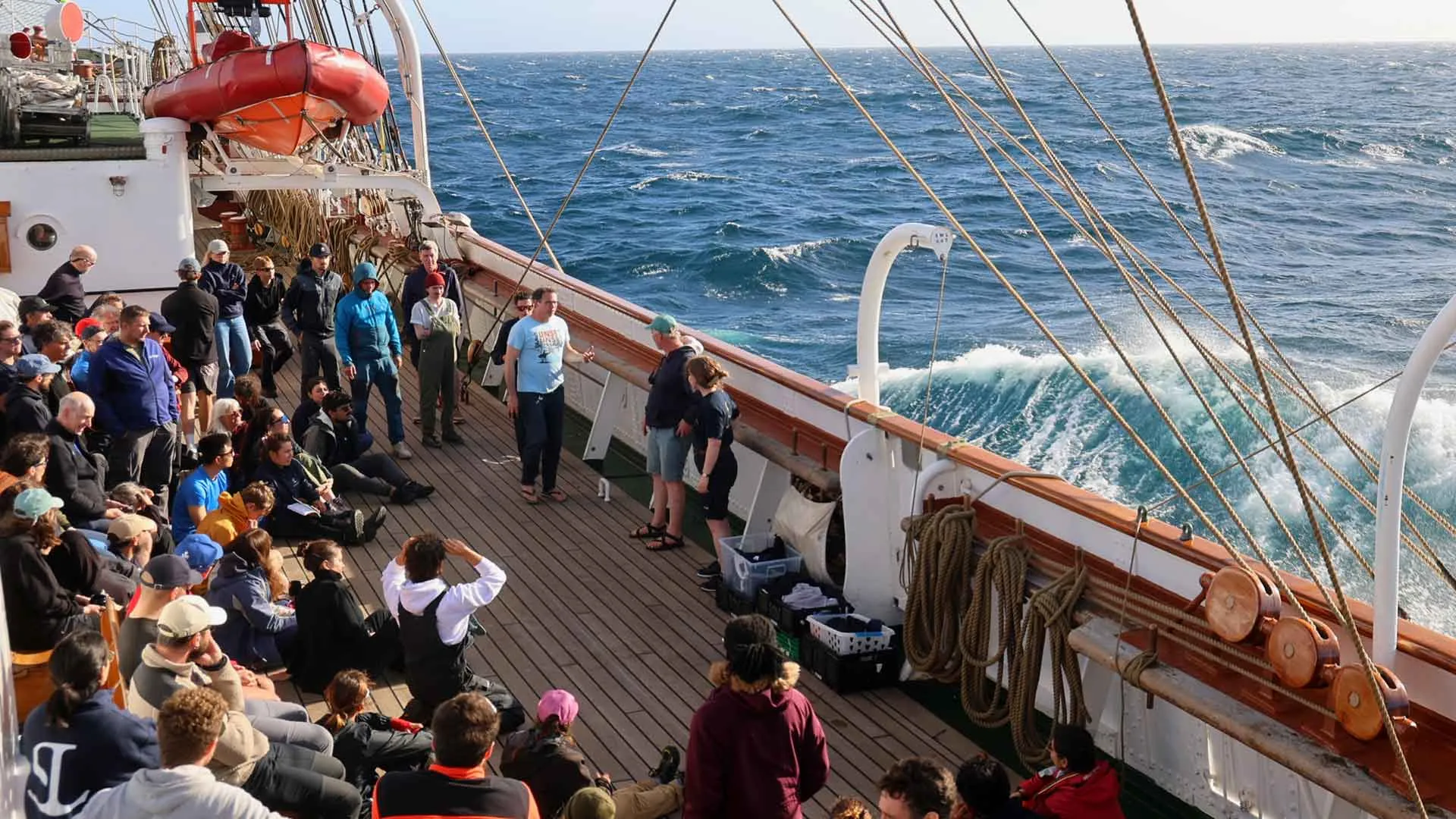
And once at sea, the lectures continued. Every evening, between 7 and 8 p.m., a scientist spoke on a specific topic. Maturin:
The presentations were of a very high standard. They enabled us to develop a wide range of complementary knowledge that is essential for a better understanding of the ocean. To share an analogy that was made on board, imagine the ocean as a human body. If we go to the doctor and they focus on one isolated parameter, such as our blood pressure, they won't be able to understand what's wrong. It is therefore essential to observe a set of physical, chemical, and biological parameters and study them over time to understand the phenomena at work.
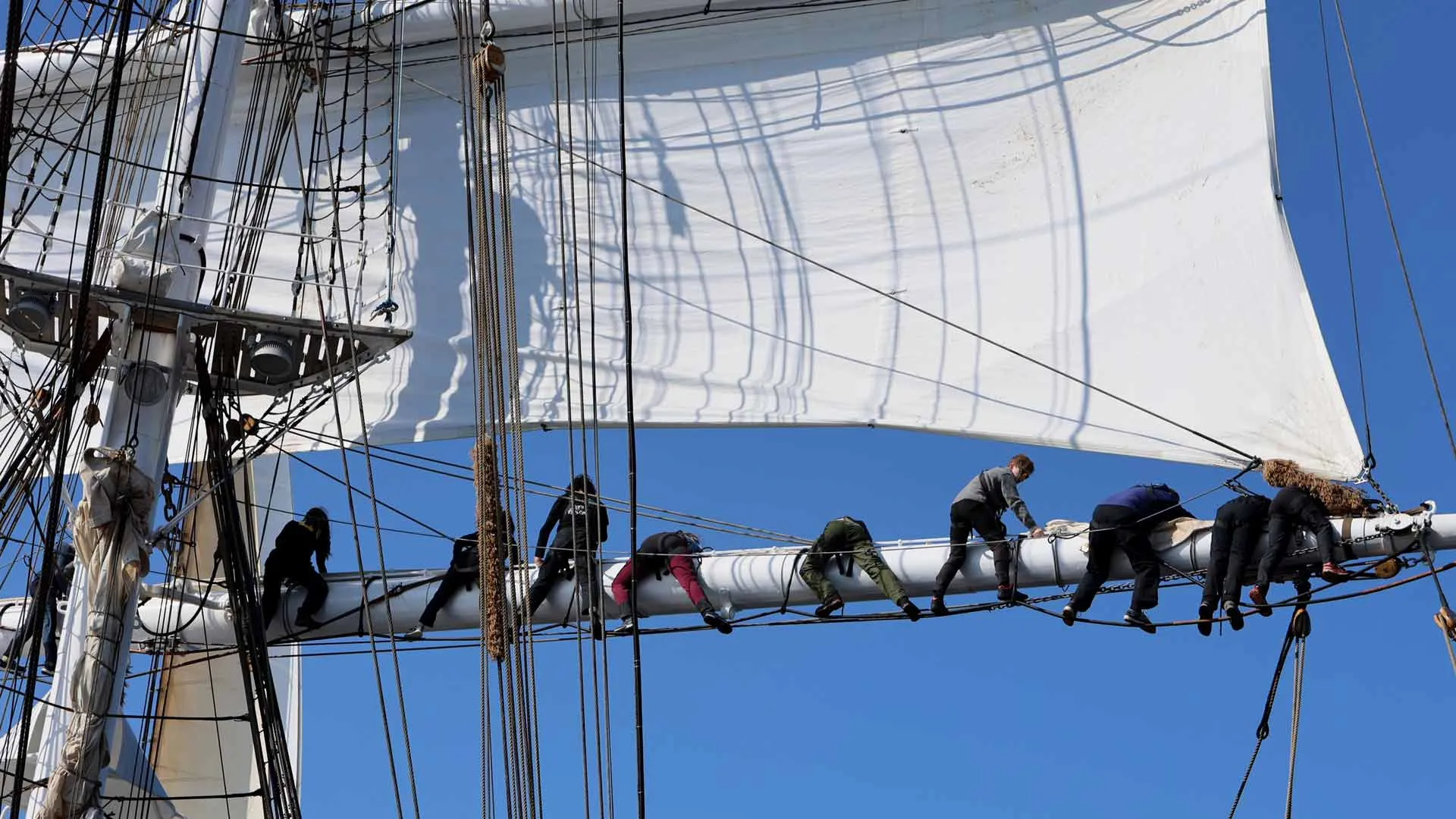
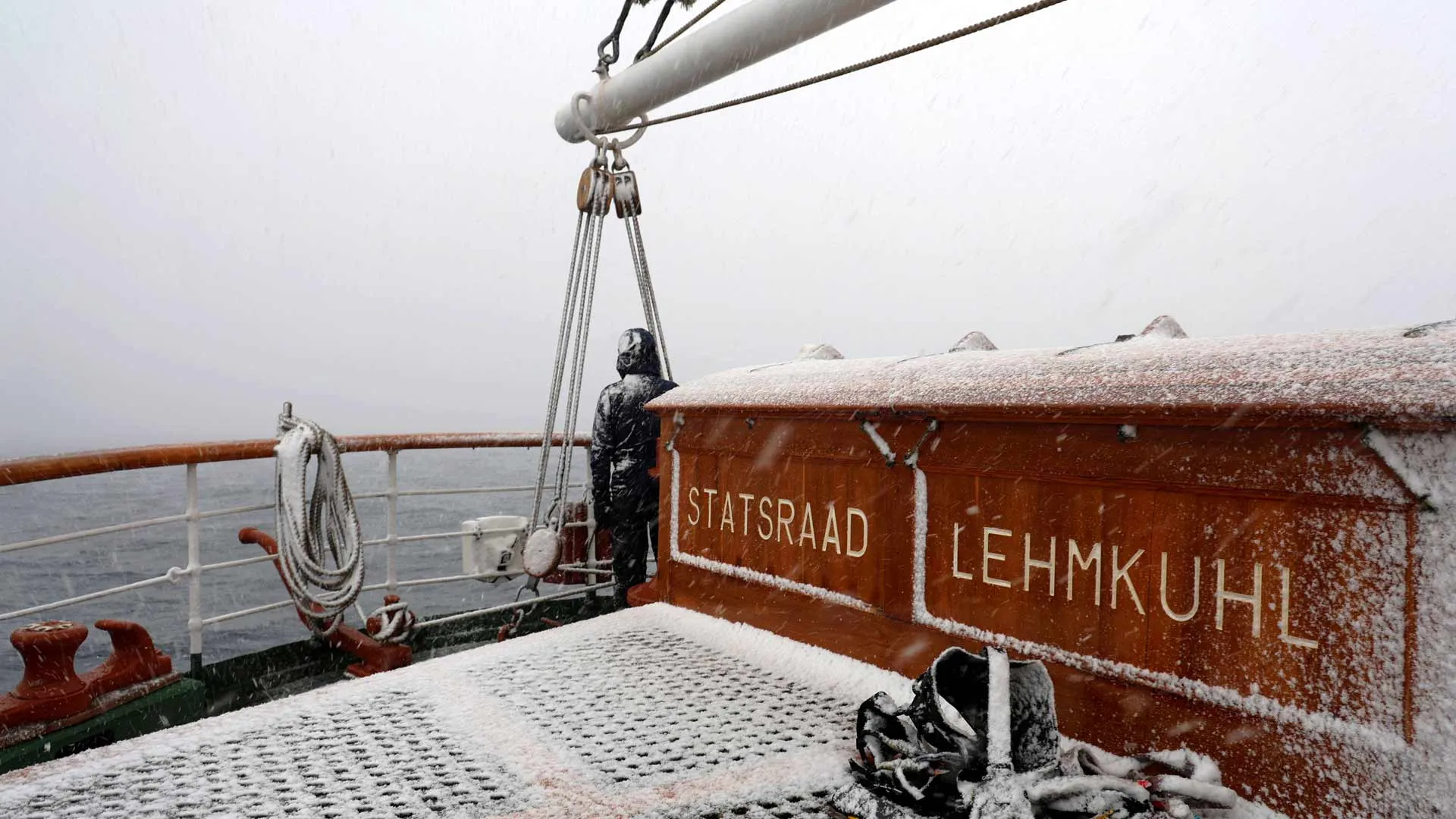
On April 22, our three students boarded the Statsraad Lehmkuhl. It's snowing and cold! The crew is divided into three groups (red, white, and blue). Each group had to work two shifts every day, i.e. two four-hour periods during which they performed seamanship tasks (rigging and furling the sails, maintaining the boat, steering the ship, etc.), deployed scientific measuring instruments (probes, drifting mud, floats) and processed data.
Each group worked on scientific projects in three fields of study: biology, physics, and ocean-atmosphere interaction. The days were busy. Kim and Martin, for example, were part of the red team. They had to work a shift between midnight and 4 a.m. and another between noon and 4 p.m. The rest of the time was spent eating, debriefing the day, attending conferences, etc., which left little time for rest. Kim:
It's a busy, tiring schedule, but the excellent team spirit and the many scientific projects make the days exciting.
On April 22, our three students boarded the Statsraad Lehmkuhl. It's snowing and cold! The crew is divided into three groups (red, white, and blue). Each group had to work two shifts every day, i.e. two four-hour periods during which they performed seamanship tasks (rigging and furling the sails, maintaining the boat, steering the ship, etc.), deployed scientific measuring instruments (probes, drifting mud, floats) and processed data.
Each group worked on scientific projects in three fields of study: biology, physics, and ocean-atmosphere interaction. The days were busy. Kim and Martin, for example, were part of the red team. They had to work a shift between midnight and 4 a.m. and another between noon and 4 p.m. The rest of the time was spent eating, debriefing the day, attending conferences, etc., which left little time for rest. Kim:
It's a busy, tiring schedule, but the excellent team spirit and the many scientific projects make the days exciting.
On April 22, our three students boarded the Statsraad Lehmkuhl. It's snowing and cold! The crew is divided into three groups (red, white, and blue). Each group had to work two shifts every day, i.e. two four-hour periods during which they performed seamanship tasks (rigging and furling the sails, maintaining the boat, steering the ship, etc.), deployed scientific measuring instruments (probes, drifting mud, floats) and processed data.
Each group worked on scientific projects in three fields of study: biology, physics, and ocean-atmosphere interaction. The days were busy. Kim and Martin, for example, were part of the red team. They had to work a shift between midnight and 4 a.m. and another between noon and 4 p.m. The rest of the time was spent eating, debriefing the day, attending conferences, etc., which left little time for rest. Kim:
It's a busy, tiring schedule, but the excellent team spirit and the many scientific projects make the days exciting.
At the end of the six weeks, the three engineering students returned with new technical skills and an incredible network. Maturin:
We had leading figures at our side, internationally recognized scientists who became friends over the course of the program. I was hesitating about pursuing a thesis, but one of the scientists I worked with offered me a PhD, and I'm very likely to accept.
When they arrived in Nice, the students were greeted by Mediterranean sunshine, a stark contrast to their departure six weeks earlier in snowy northern Norway. A journey that echoes global warming and reminds us of the urgent need to use science to better understand the phenomena at work and their consequences, and to identify the solutions that need to be implemented.
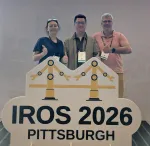
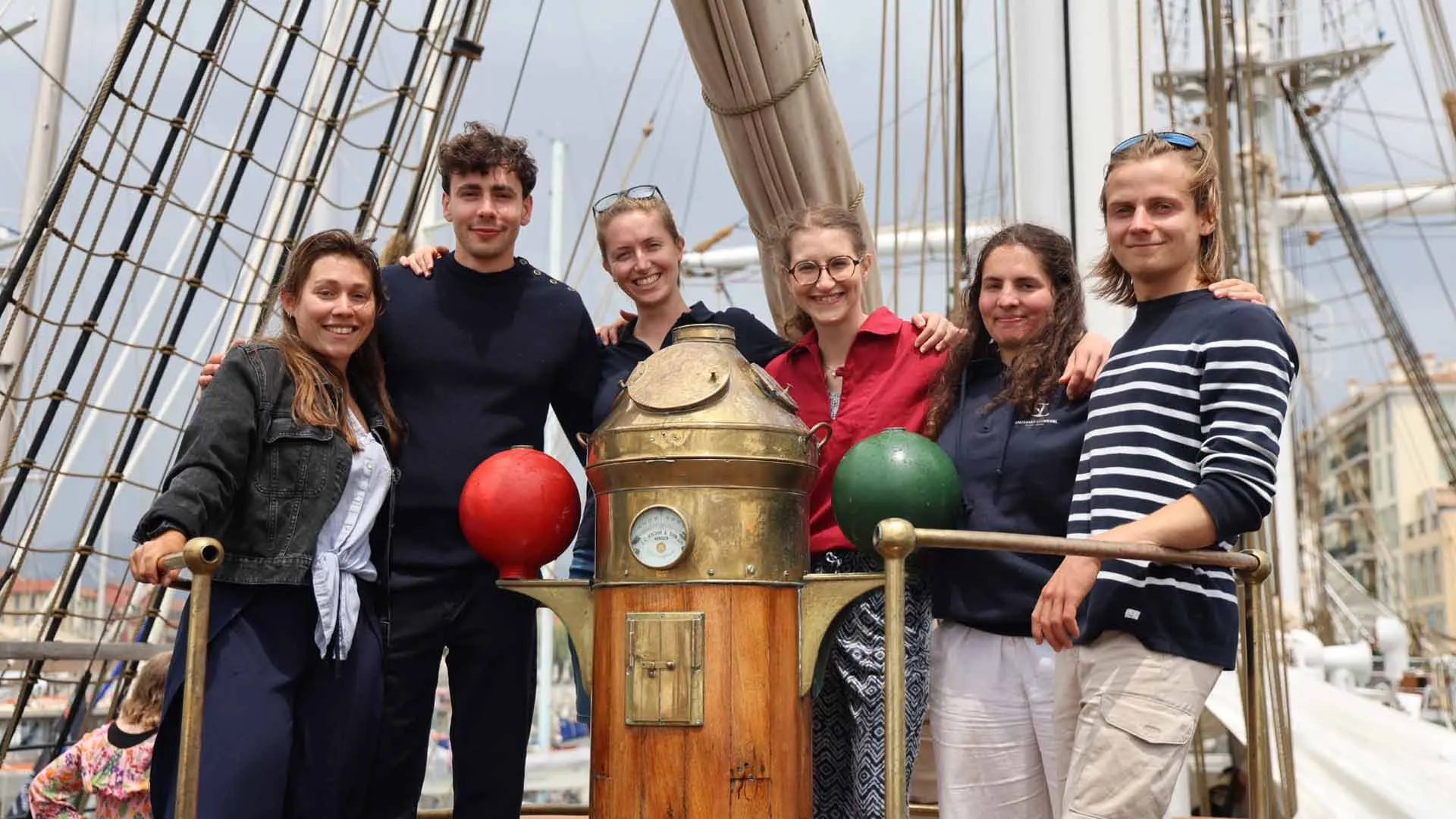
First photo, our participating students and alumni (from left to right):
Happy New Year 2026
The entire ENSTA community wishes you all the best for 2026!
The sixth edition of the Institut Polytechnique de Paris Prématuration call for projects has selected three projects led by ENSTA researchers.
Tested since September 2025 on the Paris-Saclay campus, menstrual leave is now a right that is gradually being extended to female students on both campuses. This is a major step forward for young women, placing ENSTA among the pioneers of engineering...
Nous avons développé ce site internet dans le cadre d’une démarche forte d’écoconception.
Si vous aussi, vous souhaitez diminuer drastiquement les besoins énergétiques nécessaires à votre navigation, vous pouvez le parcourir dans son Mode Eco. Celui-ci sollicitera très peu nos serveurs et vous deviendrez ainsi un acteur majeur de l’écoconception.
Merci pour votre contribution !