

Stratégie & Partenariats

L’international est au cœur de la stratégie de l’École, qui souhaite être connue et reconnue sur le plan international, tant dans sa mission d’enseignement supérieur que dans ses coopérations scientifiques, mais aussi pour enrichir l’expérience internationale de ses étudiants.

Pour atteindre ces objectifs, l'ENSTA développe des partenariats forts, notamment avec l’Institut Polytechnique de Paris dont elle est membre, ses deux campus offshore à Tunis (ENIT-TA) et Shanghai (SPEIT-SJTU) mais aussi grâce à des partenariats tels que le réseau T.I.M.E. et le programme Erasmus+.

Découvrez en détails notre stratégie et nos partenaires :

Our latest news

Training | Innovation | Research
Rozali Badaoui honored at IEEE ETECOM 2025

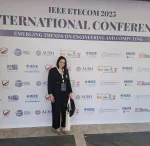
Rozali Badaoui's early thesis work has just been recognized with the Best Paper Award in the “Engineering Education” category at the IEEE ETECOM 2025 conference on emerging trends in engineering and computing, held in Bahrain last October.
Rozali Badaoui honored at IEEE ETECOM 2025

Rozali Badaoui's early thesis work has just been recognized with the Best Paper Award in the “Engineering Education” category at the IEEE ETECOM 2025 conference on emerging trends in engineering and computing, held in Bahrain last October.

Training | Innovation | Research
Success for the first edition of the Seas and Ocean Forum

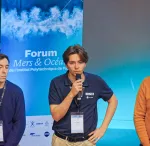
On Tuesday, January 13, ENSTA's Paris-Saclay campus hosted the first edition of the Institut Polytechnique de Paris's Seas and Ocean Forum, which is part of the activities of the Interdisciplinary Seas and Ocean Center (CIMO). This unifying event brought...

Success for the first edition of the Seas and Ocean Forum

On Tuesday, January 13, ENSTA's Paris-Saclay campus hosted the first edition of the Institut Polytechnique de Paris's Seas and Ocean Forum, which is part of the activities of the Interdisciplinary Seas and Ocean Center (CIMO). This unifying event brought...

Innovation | Research
Adnan Saood: a touch of feeling in robotics

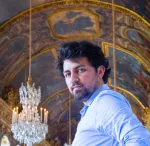
Robots can already see, hear, and even smell, but their sense of touch remains very rudimentary and is more akin to obstacle detection than any kind of dexterity. How can this be improved? This is the focus of the thesis work of Adnan Saood, a doctoral...

Adnan Saood: a touch of feeling in robotics

Robots can already see, hear, and even smell, but their sense of touch remains very rudimentary and is more akin to obstacle detection than any kind of dexterity. How can this be improved? This is the focus of the thesis work of Adnan Saood, a doctoral...