


Menstrual leave, a natural right at ENSTA

Institute, Student Life
Image generated by an artificial intelligence tool

Tested since September 2025 on the Paris-Saclay campus, menstrual leave is now a right that is gradually being extended to female students on both campuses. This is a major step forward for young women, placing ENSTA among the pioneers of engineering schools.

Menstruation is undoubtedly the most misnamed physiological phenomenon: from one month to the next, its effects can vary considerably, ranging from simple temporary discomfort to severe incapacitating pain, with this variability itself likely to change throughout a woman's life.

Above all, it is a subject that has long been invisible in the public sphere, a “women's issue” that had to be dealt with silently and discreetly, regardless of the pain suffered.

With the gradual feminization of the workforce, this topic has also become one of interest to engineering schools. It was undoubtedly destined to receive particular attention at ENSTA, whose general management has been held by women for many years, with Élisabeth Crépon from 2012 to 2024 and Estelle Iacona since 2025.

It was ultimately on the initiative of the last student council that the issue was raised in a very pragmatic and open manner.

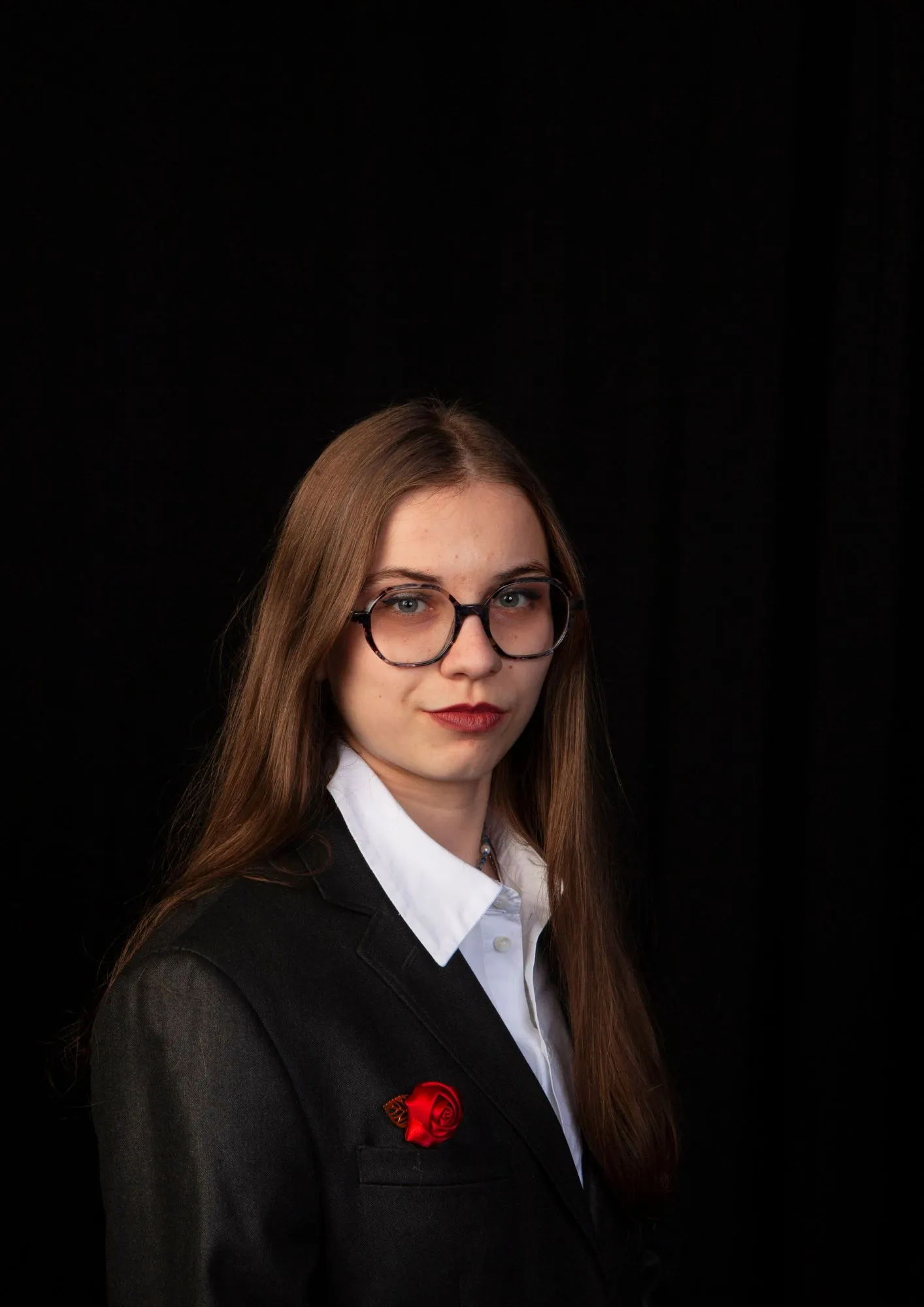
Aure Le Biannic, inclusion officer for the FeliciTA student union, had a decisive influence on the issue by conducting a very thorough impact study based on similar initiatives carried out in universities, which are traditionally more feminized than engineering schools.

Once the conclusions of this study were known, discussions with an administration that was very open to the subject quickly led to a simplified protocol that met the expectations and needs of female students: ENSTA's menstrual leave takes the form of two half-days per month of authorized absence after a simple declaration on honor submitted to the study administrators.

“My comparative study showed that this was the best formula, offering both flexibility and simplicity of implementation, which was immediately agreed upon by the management,” says Aure Le Biannic.

Aure Le Biannic, Student Union Inclusion Officer

On the administrative side, Naouelle Owen, who is responsible for student support within the student life department, is also delighted with the introduction of menstrual leave at ENSTA:

“Having already accompanied students to healthcare professionals, I have seen that doctors refuse to issue certificates for past absences, which administratively translates into unjustified absences that may impact the academic records of those concerned. Menstrual leave is therefore proving to be what it is: a truly fair measure and a step forward for women.”

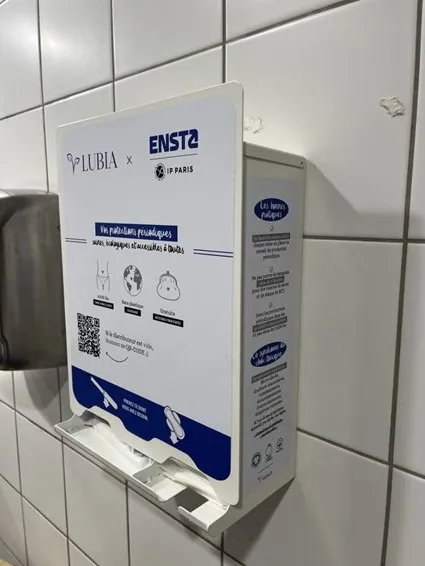
This leave system is complemented by measures to combat period poverty, with the installation of sanitary product dispensers in strategic locations on campus and the provision of period panties at a negotiated price, or even completely free of charge for students receiving scholarships who request them.

"These two demands were included in our list's program for the BDE election, and I am proud to have seen them come to fruition during this term of office. I am also very proud that ENSTA is, after Télécom SudParis, the second school in the Institut Polytechnique de Paris to adopt menstrual leave for its students. With this direct demonstration of the positive effects of this new right in two pioneering schools, I hope that the other four will quickly follow suit," concludes Aure Le Biannic.

Our latest news

Institute | Training | Innovation | Research
The education and the research at ENSTA at the core of the development of IP Paris

The Institut Polytechnique de Paris’s back-to-term press conference took place on Tuesday 29 September. In particular, it provided an opportunity to highlight ENSTA’s specific contributions and new developments in education that benefit the Institute.

The education and the research at ENSTA at the core of the development of IP Paris

The Institut Polytechnique de Paris’s back-to-term press conference took place on Tuesday 29 September. In particular, it provided an opportunity to highlight ENSTA’s specific contributions and new developments in education that benefit the Institute.

Innovation | Research
SEARENITY, the magnetic hull-cleaning robot designed to decarbonise maritime transport

ENSTA is one of the partners in the SEARENITY project, which was selected under the ‘CORIMER Low-Carbon Ships’ call for proposals (funded by Ademe, France 2030). The project aims to develop an autonomous robot capable of continuously cleaning ship hulls...

SEARENITY, the magnetic hull-cleaning robot designed to decarbonise maritime transport

ENSTA is one of the partners in the SEARENITY project, which was selected under the ‘CORIMER Low-Carbon Ships’ call for proposals (funded by Ademe, France 2030). The project aims to develop an autonomous robot capable of continuously cleaning ship hulls...

Institute | Training
Training a generation of committed engineers

One afternoon in September, in the lecture theatres at ENSTA, groups of around ten students are discussing ideas whilst gathered around large sheets of white paper. Together, with the help of a facilitator, they are placing cards relating to climate...

Training a generation of committed engineers

One afternoon in September, in the lecture theatres at ENSTA, groups of around ten students are discussing ideas whilst gathered around large sheets of white paper. Together, with the help of a facilitator, they are placing cards relating to climate...