Artificial intelligence at the service of sailors with the SPASEA hackathon

Institute, Innovation, Student Life Marine Engineering, Digital

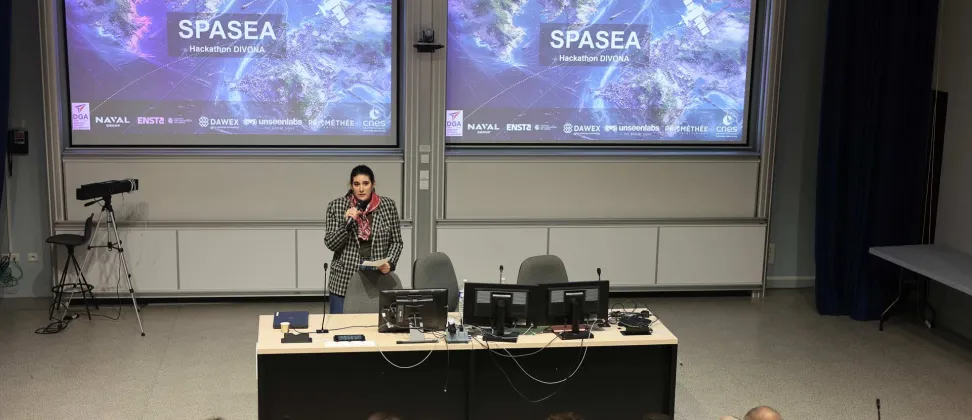
How can we help sailors identify suspicious vessels? On December 4 and 5, around fifty students from ENSTA, IMT Atlantique, and Ecole Navale gathered at the ENSTA campus in Brest for the SPASEA hackathon. Organized by Naval Group and the DGA in partnership with ENSTA, the students had access to a wealth of data and tools to develop a decision support system for sailors.

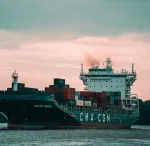
Using a large data set including AIS* vessel positioning, radar observations, and satellite photos, the students sought to identify suspicious vessel behavior in a specific area. The absence of an AIS signal could be due to a system failure or a clear desire on the part of the crew not to be detected. Cross-referencing the data made it possible to determine the ship's trajectory and provide useful information to the sailor.

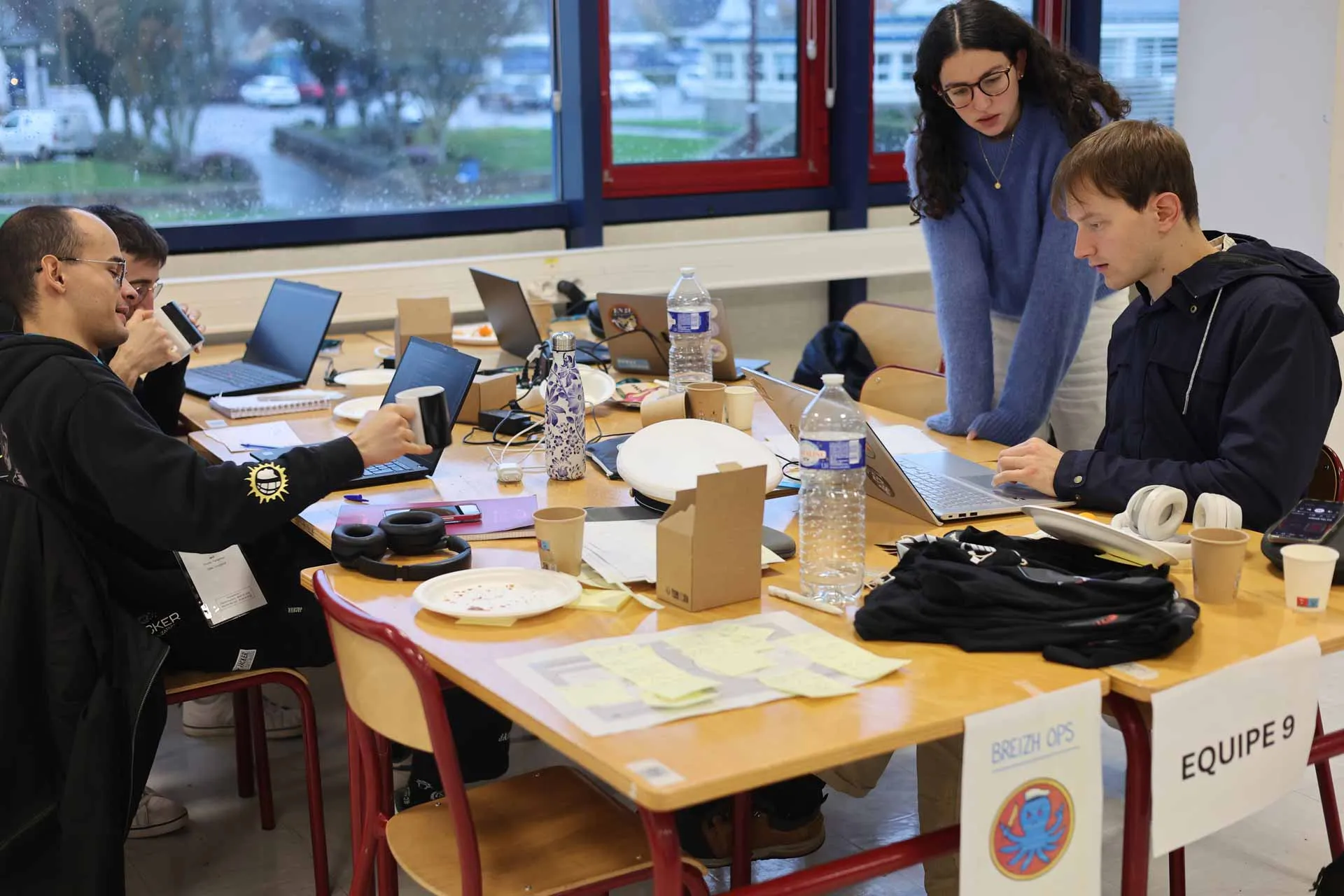
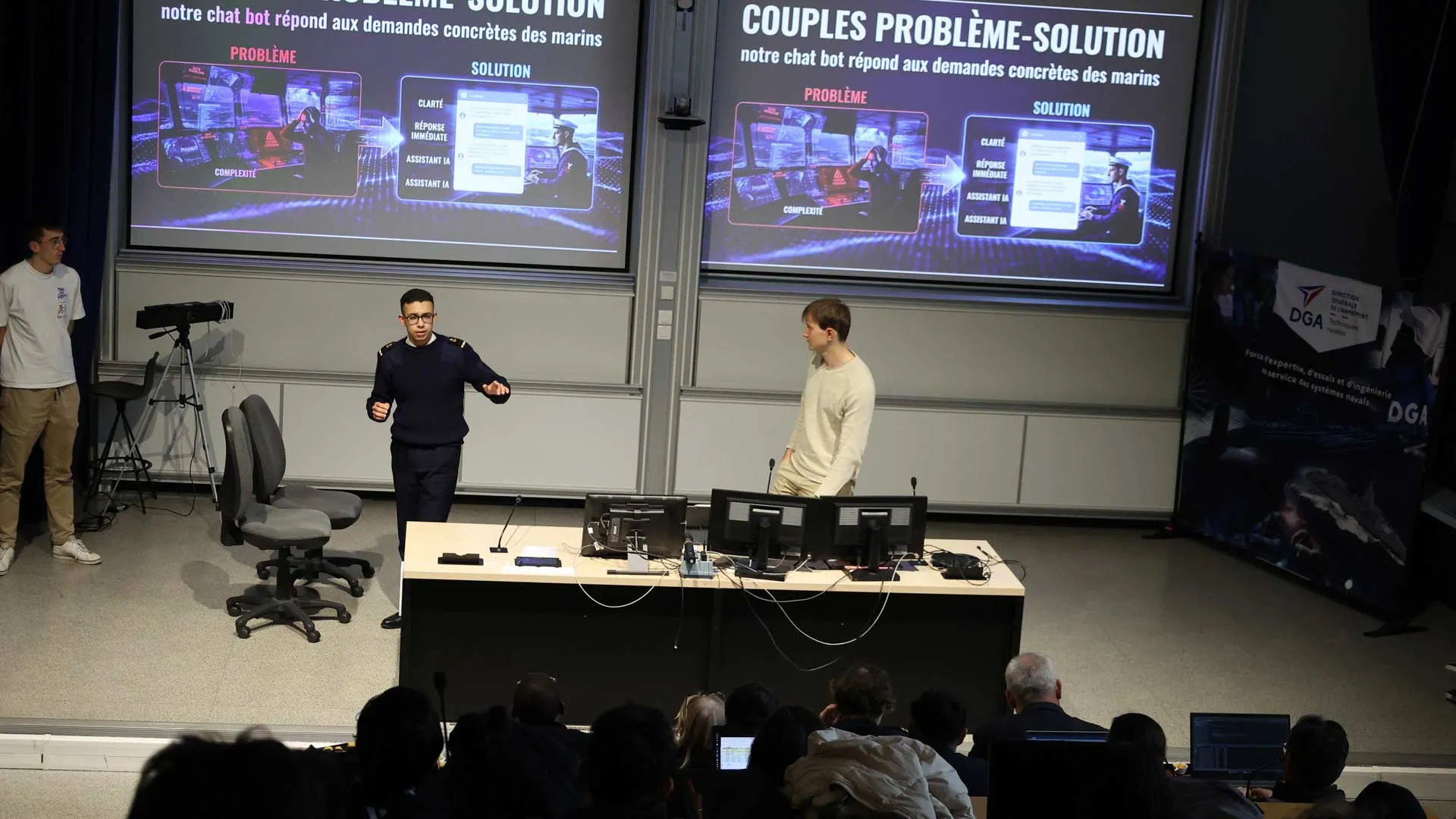
Each team had 27 hours to develop code capable of processing this data and extracting useful information for the sailor via an LLM system, similar to Chat GPT for sailors, as well as to create a demo and present it during a pitch. The ten teams were truly committed to solving the problem they had been given. Numerous facilitators and experts were on hand to assist them with the technical aspects of the project, as well as with the organizational aspects and pitch preparation.

Maryline Besnard Head of the ENSTARTUPS incubator and co-organizer of this event.

Around fifty students, divided into teams of five from different partner institutions, worked on this real-world challenge set by the French Defense Procurement Agency. Their creativity was needed to bring a fresh perspective to the problem, propose effective code, and find an innovative solution.

The jury, composed of members from ENSTA (pitch quality and team performance), Ecole Navale (operational relevance), DGA Techniques Navales (technical feasibility), and Naval Group (technical relevance and feasibility), awarded each team a score out of five.

The three winning teams

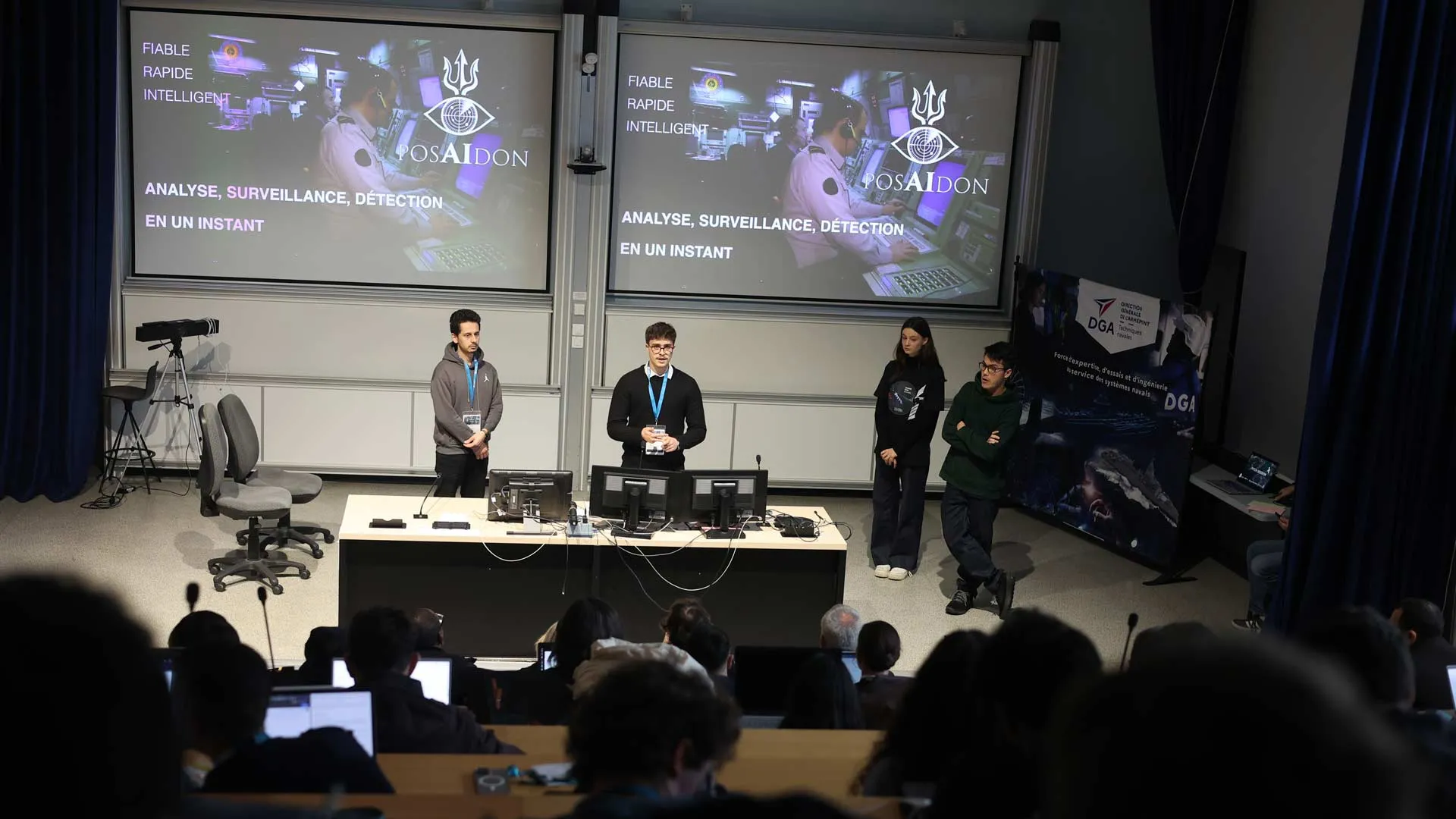
1st prize: PosAIdon
Team ENSTA & IMT Atlantique

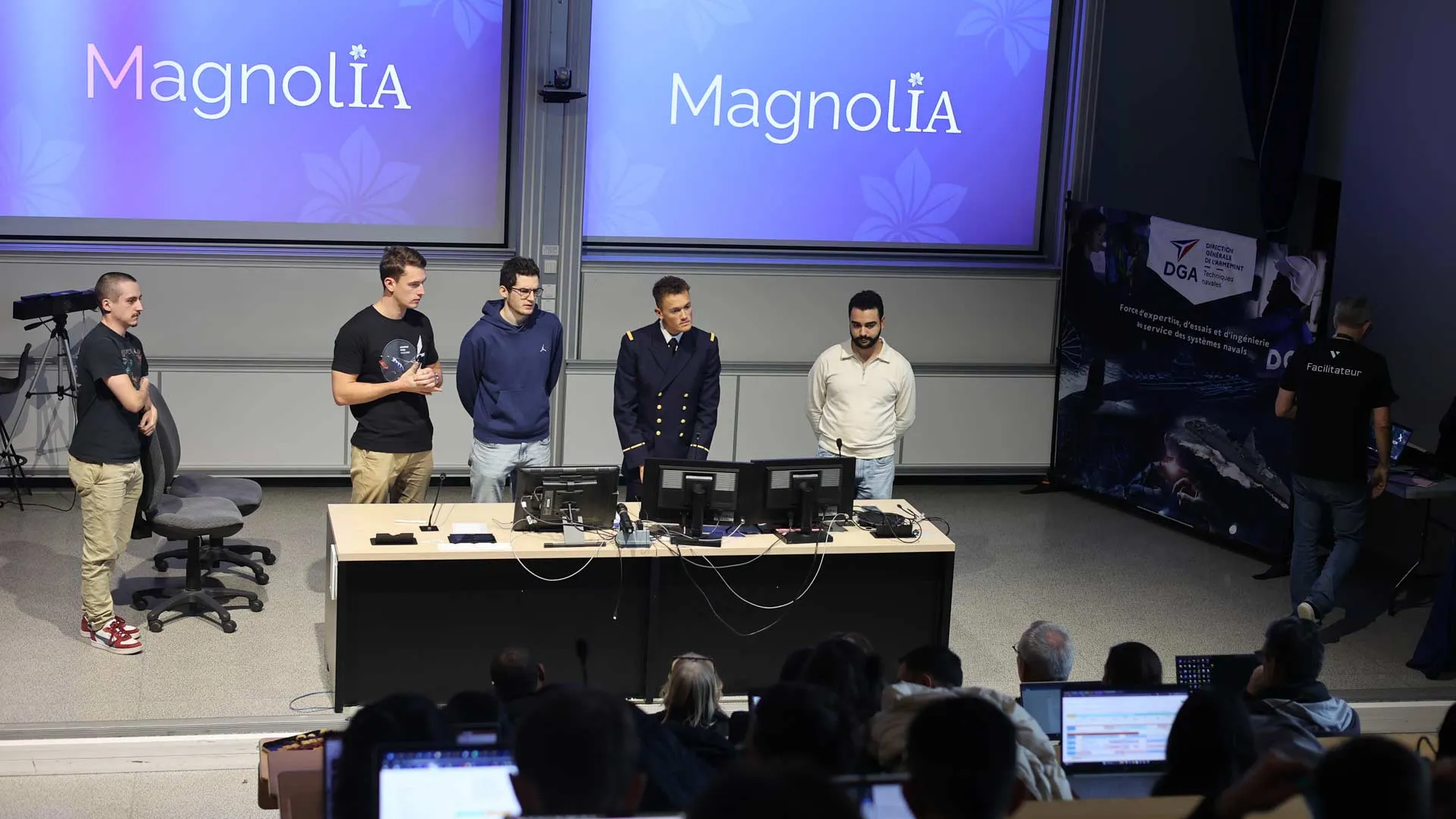
2nd prize: MagnolIA
Team ENSTA & Ecole Navale

3rd prize: Breizh Ops 
Team ENSTA & IMT Atlantique & Ecole Navale

The three winning teams received a total of €5,000 in vouchers.

We were impressed by the quality of the presentations and solutions provided by the teams. It was a great experience for the students and for all the partners involved in this event.

ENSTA would like to thank Naval Group and the DGA for organizing this hackathon, as well as all of the partners: Promethée, Unseenlabs, CNES, and Dawex.

* AIS: Automatic Identification System. This technology broadcasts each ship's position, speed, and course, as well as the identity of the owner.

Our latest news

Innovation | Research
DyNNamo, AI for the benefit of people with disabilities

While artificial intelligence is gradually being deployed in all areas of mobility, the field of disability presents particular challenges in terms of robustness, reliability, and adaptation to a wide variety of situations.

DyNNamo, AI for the benefit of people with disabilities

While artificial intelligence is gradually being deployed in all areas of mobility, the field of disability presents particular challenges in terms of robustness, reliability, and adaptation to a wide variety of situations.

Training | Innovation | Student Life
Two ENSTA teams take part in the FWC international challenge dedicated to floating wind turbines

In July, two teams of ENSTA students (from the Paris-Saclay and Brest campuses) will be in Zeebrugge, Belgium, to test their floating wind turbine prototypes. The two projects were selected as finalists in the international Floating Wind Challenge...

Two ENSTA teams take part in the FWC international challenge dedicated to floating wind turbines

In July, two teams of ENSTA students (from the Paris-Saclay and Brest campuses) will be in Zeebrugge, Belgium, to test their floating wind turbine prototypes. The two projects were selected as finalists in the international Floating Wind Challenge...

Research
Ensuring the reliability of electronic chips at the heart of many strategic digital systems

As the brains of electronic devices, semiconductors or microchips are essential components in every computer, smartphone, car, airplane, MRI machine, and more. At the heart of our daily lives, their reliability is essential to ensuring that systems...

Ensuring the reliability of electronic chips at the heart of many strategic digital systems

As the brains of electronic devices, semiconductors or microchips are essential components in every computer, smartphone, car, airplane, MRI machine, and more. At the heart of our daily lives, their reliability is essential to ensuring that systems...