In June, our teams rallied together to promote greater awareness of the ocean

Recherche Ingénierie marine

June 2025 was focused on the ocean, mobilizing many ENSTA faculty members and students on both campuses. Highlights included the One Ocean Congress, the 3rd United Nations Ocean Conference (UNOC), and finally the OCEANS 2025 conference.

The sequence began on June 3 with the opening of the “One Ocean Science Congress” in Nice, organized by the CNRS and Ifremer, with ENSTA as a partner. Two ENSTA teacher-researchers, Matthieu Sacher and Laurent Mortier, participated, presenting their research on reducing the impact of maritime transport and marine observatories.

  • Laurent Mortier was chairman of two sessions dedicated to European research infrastructures for the ocean and the governance of ocean observation systems. He explained how integrating the many marine research infrastructures can make operations at sea much more efficient and less costly.
  • Matthieu Sacher presented his research aimed at reducing the carbon footprint of maritime transport by combining digital and experimental modeling approaches for naval engineering.

Following on from this, and also in Nice, the third United Nations Ocean Conference (UNOC3) took place from June 9 to 13, bringing together scientists, economic actors, and political decision-makers to initiate concrete actions for the conservation and sustainable use of marine and coastal ecosystems.

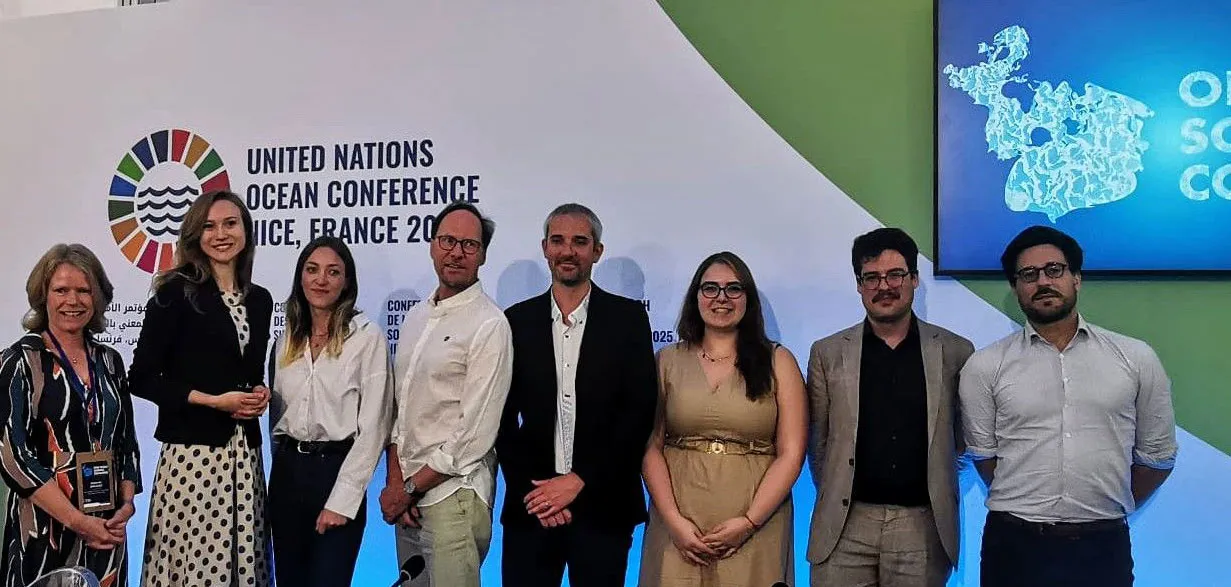
Photo opposite: Matthieu Sacher, fifth from left, surrounded by colleagues at the OOSC 2025.

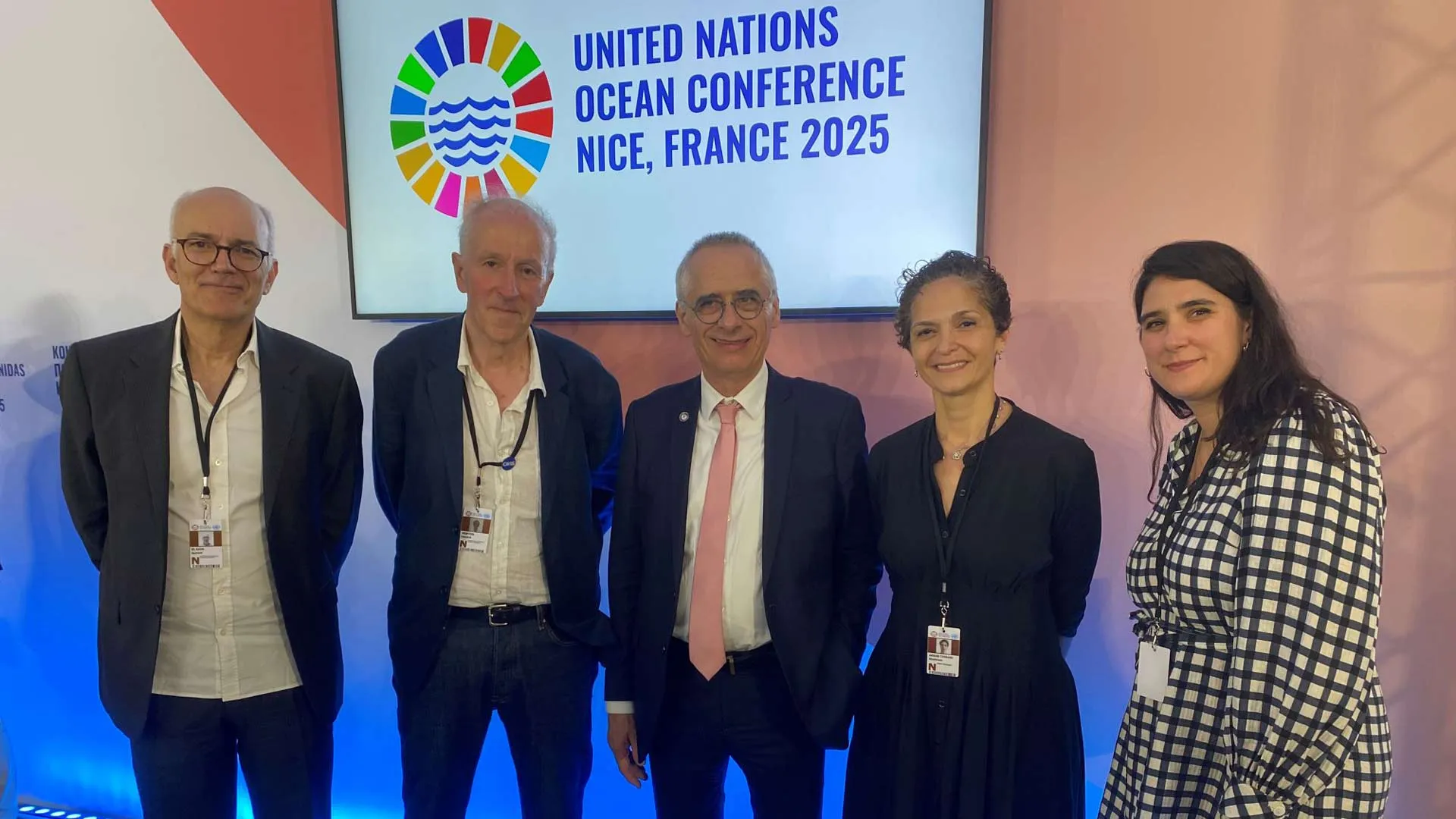
Laurent Mortier, in his capacity as Scientific Director of the Interdisciplinary Center for Sea and Ocean Studies (CIMO) at the Institut Polytechnique de Paris, led a parallel session during which he presented the project “10,000 boats for the ocean,” which involves equipping at least 10,000 commercial vessels with technology to collect a wide range of scientific data on the oceans. This is a win-win partnership with shipowners, as by improving weather and ocean forecasts, this data will also help optimize shipping routes, helping shipowners reduce their fuel consumption and greenhouse gas emissions.

This project is being carried out in collaboration with four United Nations agencies: the World Meteorological Organization (WMO), the International Hydrographic Organization (IHO), the International Maritime Organization (IMO), and UNESCO.

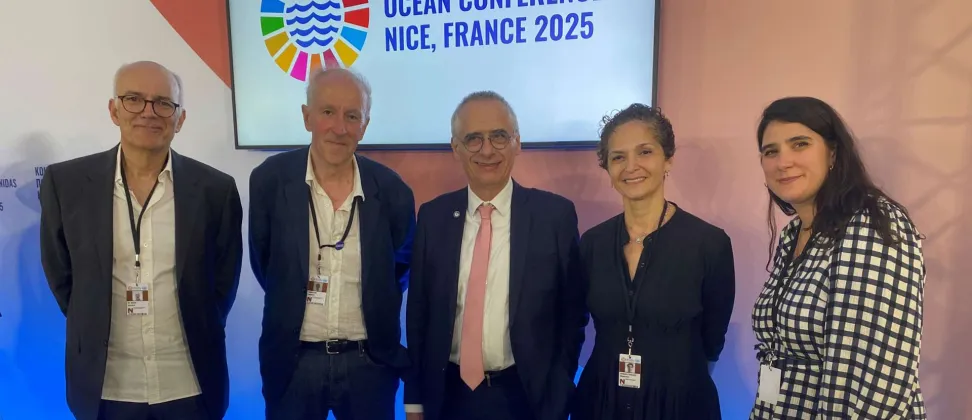
From left to right in the photo: Laurent El Kaïm, Director of Research and Innovation at ENSTA, Laurent Mortier, Scientific Director of CIMO, Thierry Coulhon, Chairman of the Executive Board of the Institut Polytechnique de Paris, Shabnam Arbab Chirani, Professor at ENSTA, and Margot Provost, Deputy Director of Research and Innovation at ENSTA.

This parallel session was attended by representatives of shipowners Alcatel Submarine Networks (one of the world leaders in submarine cable laying), MSC, the world's leading shipping company, Maersk, its closest rival, BIMCO, the largest association of shipowners representing 60% of the world's fleet, and GICAN, the Groupement des Industries de Construction et Activités Navales (Group of Shipbuilding and Naval Activities Industries), which brings together more than 280 companies in the French maritime sector. Also present were representatives from Eumetnet, the European meteorological network, and the European Centre for Medium-Range Weather Forecasts, the world's largest weather forecasting center.

Finally, from June 16 to 19, the OCEANS 2025 conference was held in Brest, organized by the IEEE Oceanic Engineering Society and co-chaired by Isabelle Quidu, senior lecturer at ENSTA and specialist in sonar imaging.

This year's main themes were digital twins of the ocean and the detection of debris and pollution at sea.

The conference brought together 850 scientists from around the world, who attended more than 430 presentations, including those given by 17 faculty members from ENSTA's two campuses.

Students from ENSTA's Brest campus also volunteered their time to help make the event a success.

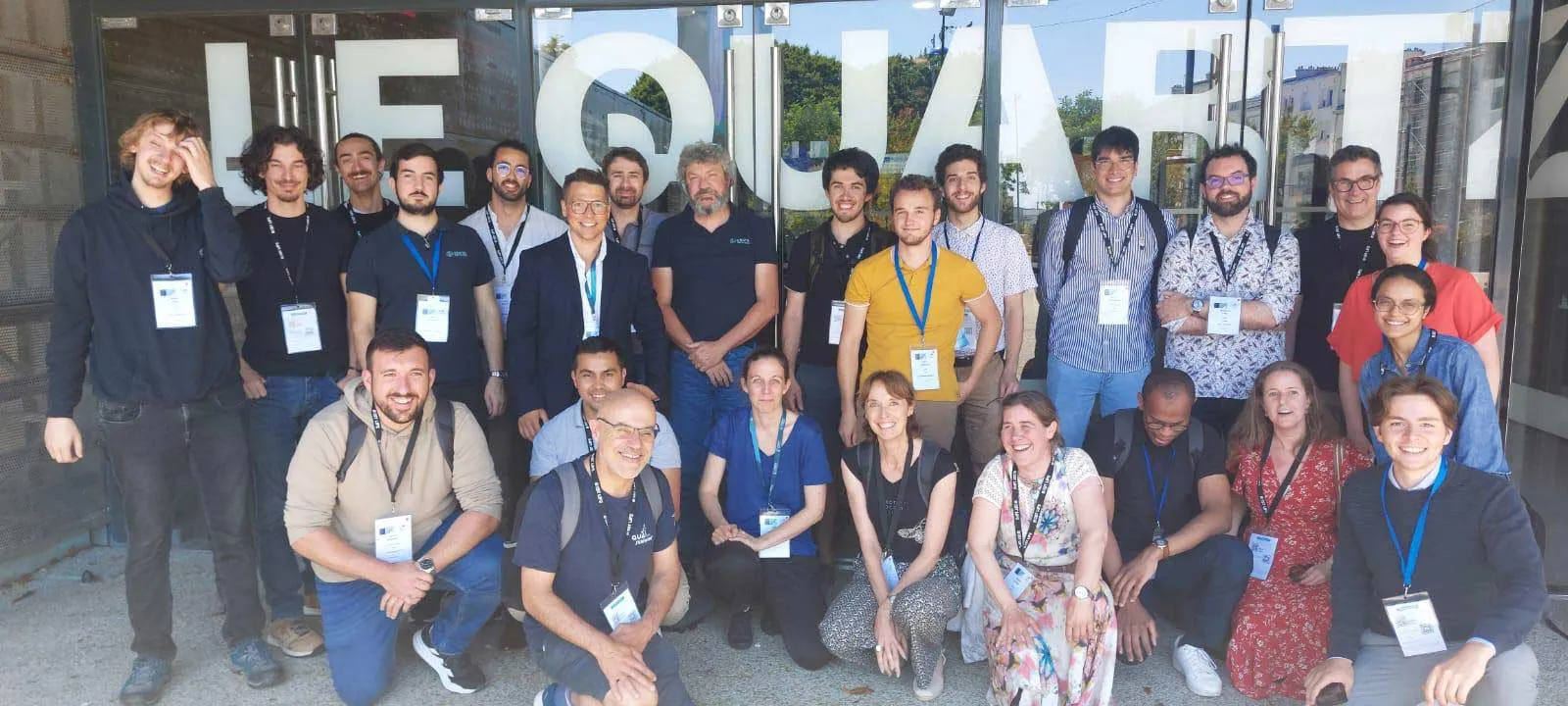
Photo opposite: A large delegation from ENSTA at OCEANS 2025 in Brest.

Nos dernières actualités

Innovation | Recherche
DyNNamo, l’IA au bénéfice des personnes en situation de handicap

Si l’intelligence artificielle est progressivement déployée dans tous les secteurs de la mobilité, celui du handicap représente un enjeu particulier en termes de robustesse, de fiabilité, mais également en matière d’adaptation à des situations de vie très...

DyNNamo, l’IA au bénéfice des personnes en situation de handicap

Si l’intelligence artificielle est progressivement déployée dans tous les secteurs de la mobilité, celui du handicap représente un enjeu particulier en termes de robustesse, de fiabilité, mais également en matière d’adaptation à des situations de vie très...

Innovation | International | Recherche
L’innovation de défense en question

Comment les expertises scientifiques de nos ingénieurs et chercheurs permettent de développer l’innovation et la croissance ? L’Europe doit-elle mutualiser ses efforts de recherche et développement en matière de défense, y compris au risque d’une perte de...

L’innovation de défense en question

Comment les expertises scientifiques de nos ingénieurs et chercheurs permettent de développer l’innovation et la croissance ? L’Europe doit-elle mutualiser ses efforts de recherche et développement en matière de défense, y compris au risque d’une perte de...

Formation | Recherche
L’expertise ENSTA sur RMC Découverte

Dans un documentaire diffusé pour la première fois jeudi 27 novembre 2025 sur RMC Découverte, Luc Pastur, enseignant-chercheur de l’Unité de formation et de recherche de mécanique de l’ENSTA, détaille le fonctionnement des sondes Pitot qui permettent de...

L’expertise ENSTA sur RMC Découverte

Dans un documentaire diffusé pour la première fois jeudi 27 novembre 2025 sur RMC Découverte, Luc Pastur, enseignant-chercheur de l’Unité de formation et de recherche de mécanique de l’ENSTA, détaille le fonctionnement des sondes Pitot qui permettent de...